
Antique Country Art
Antique country art gathers paintings and domestic objects that record rural life and traditional landscapes across past centuries.
Antique Country Art
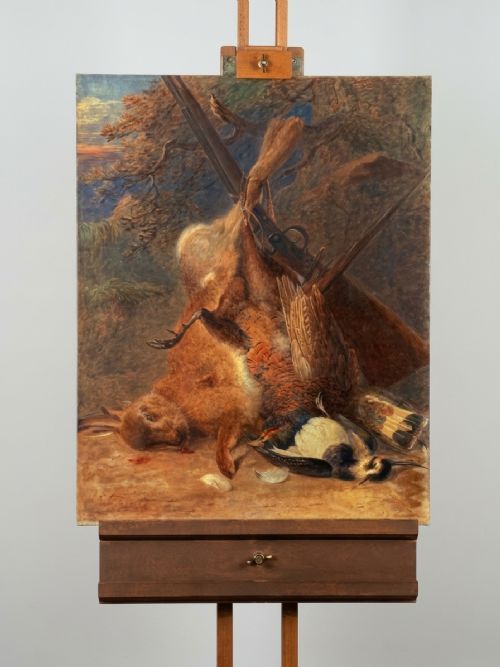
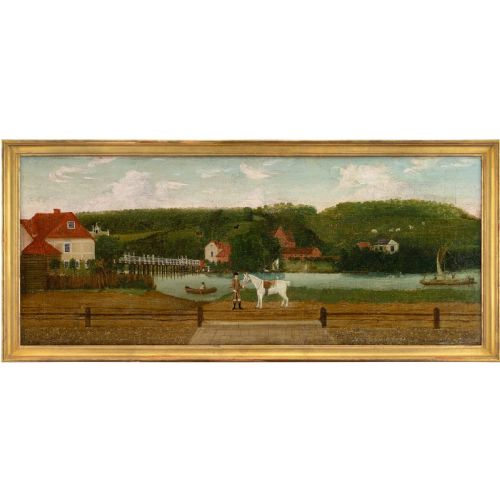
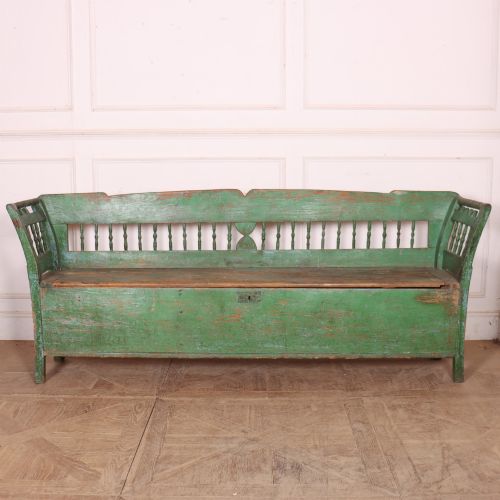
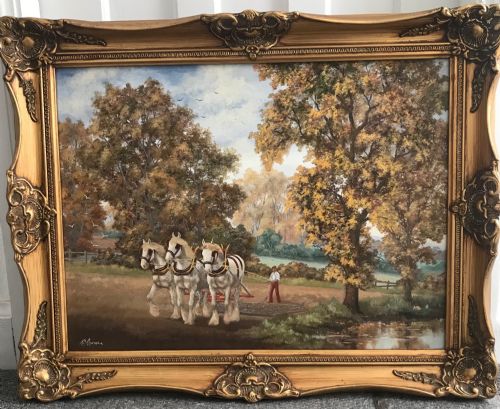
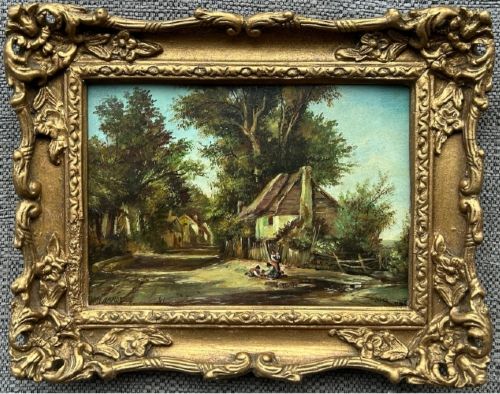
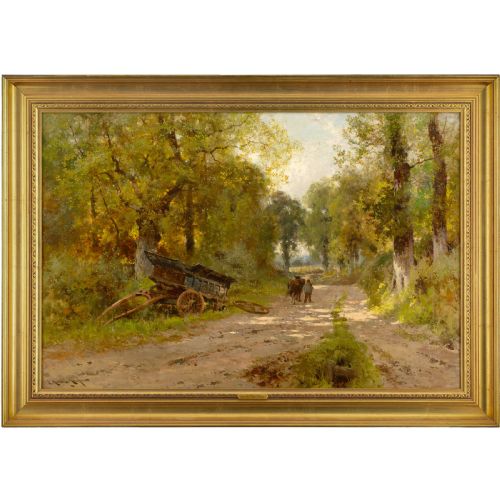
When you search for antique country art, you encounter oil paintings, watercolours, and pastels depicting farmhouses, livestock, and rural paths alongside rustic furniture and household items.
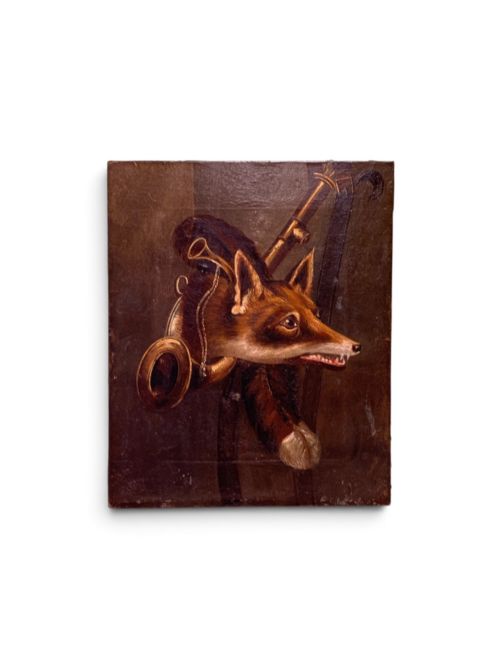
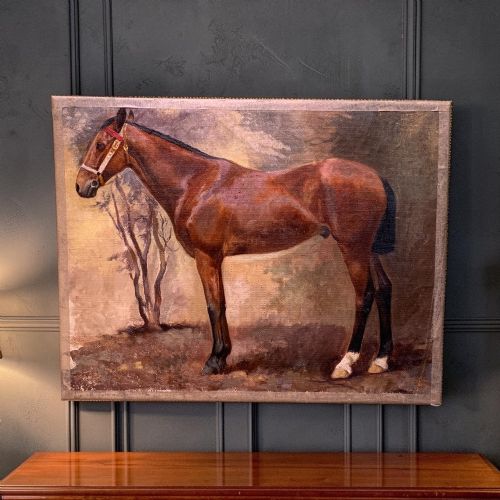
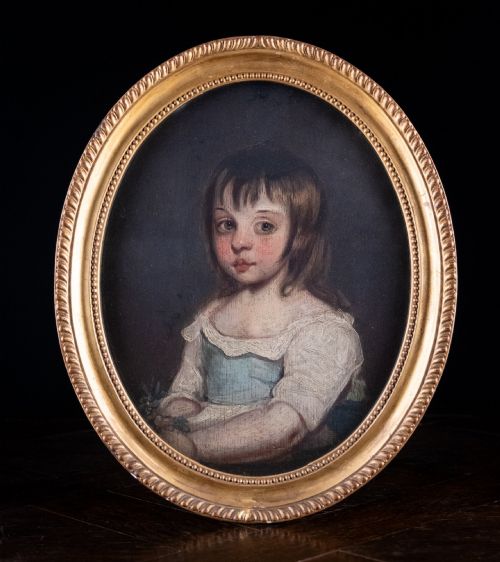
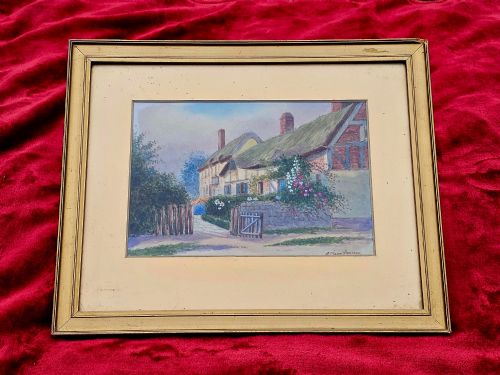
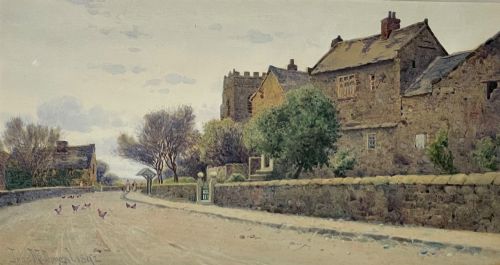
The most common examples on this page are nineteenth and early twentieth-century oil paintings on canvas or board, featuring landscapes, animals, and cottages.
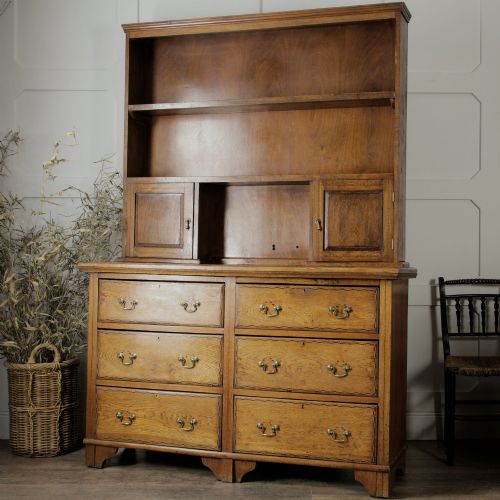
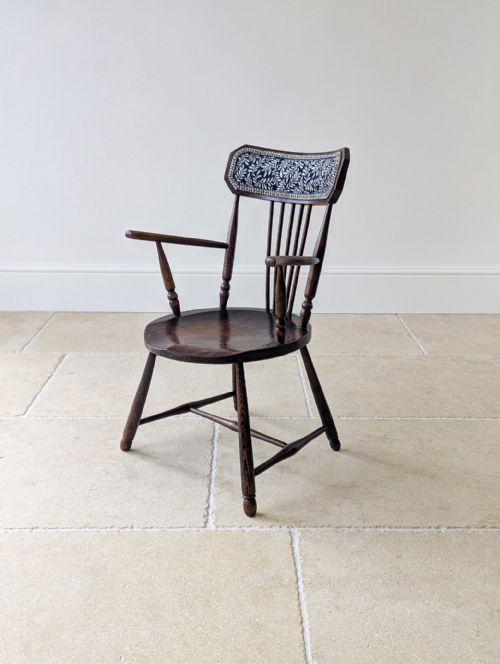
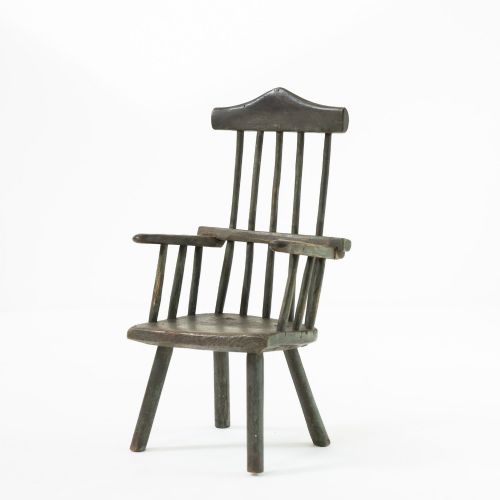
Surviving pieces range from signed works by regional British and French artists to vernacular furnishings like Windsor chairs and oak dressers.
Materials and construction
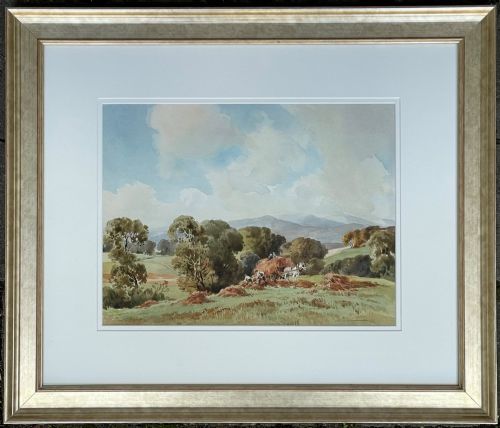
Painters used oil and watercolour pigments on canvas, panel, board, and paper, capturing light and texture with brushwork.
Wooden items rely on native timbers such as elm, beech, and oak, shaped into chairs, benches, and cabinets using traditional joinery.
Finishes include wax, hand-painted details, and gold leaf on frames, reflecting the methods of provincial workshops and academic studios alike.
Listings feature works in oil, watercolour, and pastel alongside oak furniture and elm chairs spanning the Victorian and Edwardian eras.
Assessing quality and execution
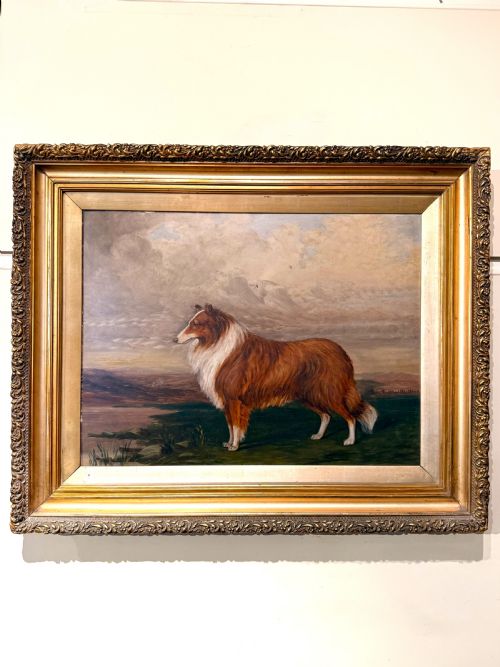
Superior works demonstrate confident draftsmanship and tonal depth, particularly in the rendering of animal anatomy, foliage, and atmospheric light.
Material selection divides standard utilitarian items from finer regional pieces, such as chairs constructed from well-figured elm rather than plain softwood.
Original frames and known signatures elevate an artwork, while later alterations or heavy overpainting diminish the integrity of the piece.
Percy Lancaster·William Howard Hardy·John Horace Hooper·A. Marie Parsons·John McDougal·Kershaw Schofield·Stephen Samuel Lewin·Arthur Gué·Henry Silkstone Hopwood·Walter Heath Williams
The Antique Country Art Glossary
- Vernacular
- An object made by a regional craftsman for local domestic or agricultural use rather than to a metropolitan design. These pieces often show idiosyncratic local styles.
- Windsor chair
- A wooden seat constructed with a solid elm or beech saddle seat into which turned legs and bentwood back spindles are wedged. This form is a staple of rural seating.
- Barbizon School
- A mid-nineteenth-century French art movement focused on realistic landscape painting en plein air. Practitioners drew inspiration directly from farmyards and forests.
- Pastel
- A dry medium of powdered pigment bound into stick form and applied to paper. It creates a velvety surface favoured for portraits and equestrian studies.
Antique Country Art: Frequently Asked Questions
What subjects appear in these paintings?
Canvases typically depict rural landscapes, farm animals, agricultural workers, and village cottages. Many capture quiet moments in fields or domestic interiors.
Scenes range from detailed animal portraits to broad watercolours of regional British and French scenery.
How do I date an oil painting?
Dating relies on stylistic evidence, stretcher construction, canvas type, and artist biographical records. Pigment analysis and framing styles offer further chronological clues.
Inscribed signatures and dates on the reverse of boards or frames often confirm the exact year of creation.
Where were these wooden chairs used?
Seating such as Windsor chairs and Orkney chairs served farmhouses, cottages, and country estates across Britain. They provided sturdy, practical seating for kitchens and parlours.
Many reflect distinct regional joinery traditions passed down through local workshops.
How should I care for oil paintings?
Artworks require stable indoor humidity away from direct sunlight and heat sources to prevent canvas warping and pigment cracking. Dusting should be done gently with a dry, soft brush.
Professional conservation is recommended for cleaning yellowed varnish or repairing tears in canvas.