




Antique Copper Lustre
Antique copper lustre brings a warm, metallic brilliance to earthenware, shaped into jugs, bowls and figures across the nineteenth century.
Antique Copper Lustre
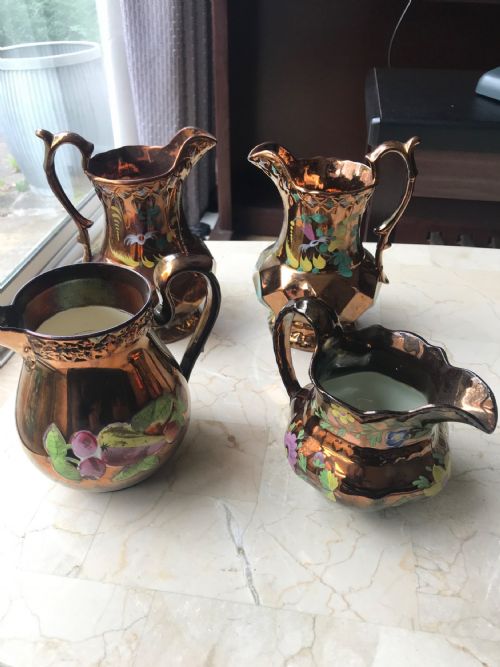
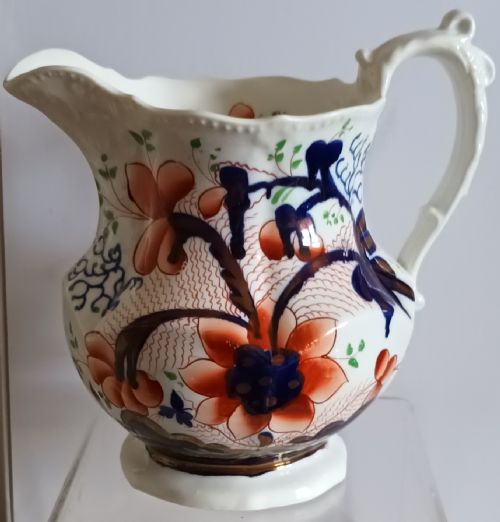
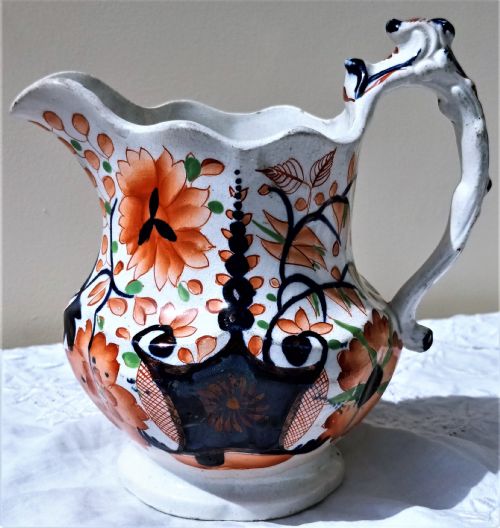
When you search for antique copper lustre, you encounter earthenware vessels and figures coated in a metallic glaze that catches the light. The pieces span the nineteenth century, including Georgian and Victorian eras, with styles ranging from Staffordshire figures to Gaudy Welsh patterns.
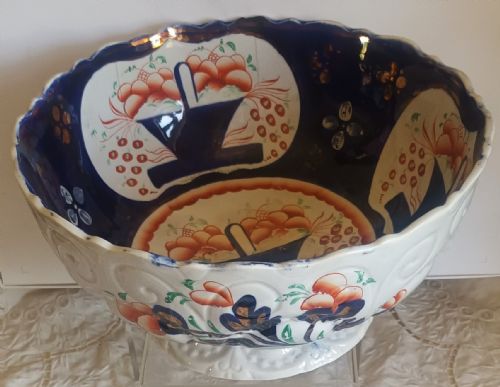
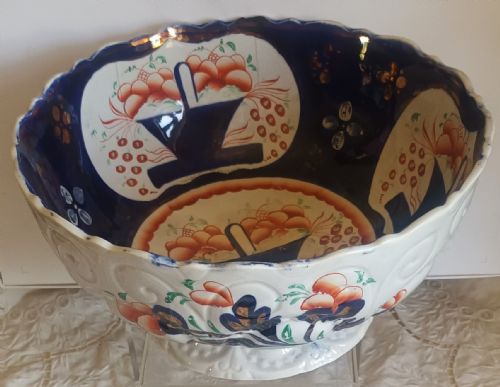
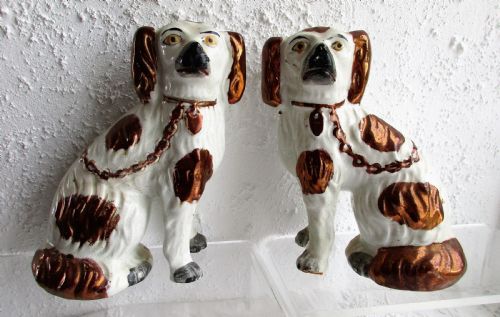
The most common forms on this page are jugs, pitchers and footed bowls, alongside ceramic comforter spaniels and decorative bowls. They originate mainly from English potteries, often decorated with hand-painted fruit or distinct transfer-printed motifs such as the pagoda and grape designs.
How they were made
Potters shaped these pieces from earthenware and ironstone, applying a specialised glaze containing metallic copper salts to achieve the characteristic sheen. Firing in a kiln reduced the metallic oxides to produce the reflective, lustrous surface.
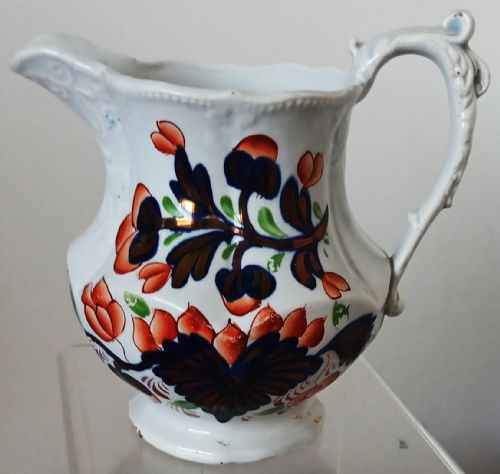
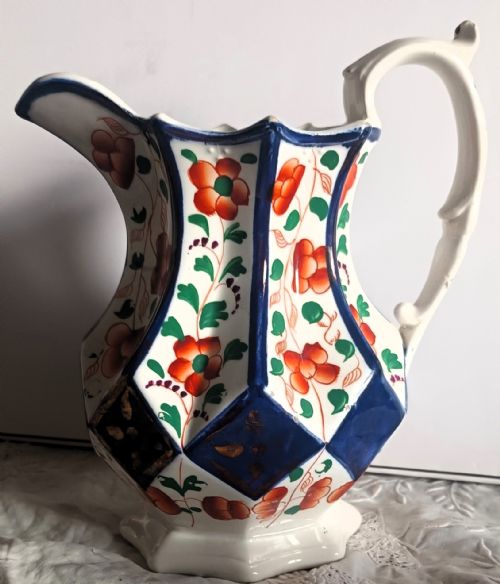
Many items received additional hand-painted decoration in colours like cobalt blue and enamel over the glaze, while others incorporated transfer-printed patterns before the final firing.
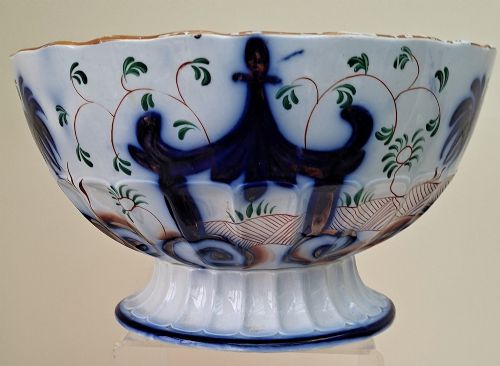
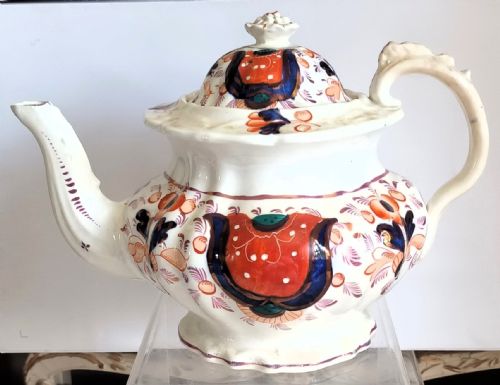
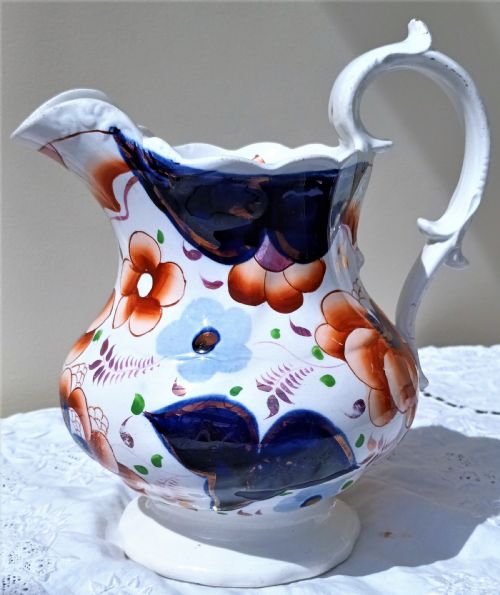
The selection includes Staffordshire comforter spaniels alongside named Gaudy Welsh transfer patterns such as Pagoda and Grape.
What varies in quality
The quality of antique copper lustre rests on the depth and evenness of the metallic glaze, alongside the crispness of any hand-painted or transfer-printed details. Superior pieces display a rich, unblemished copper sheen that covers the earthenware cleanly without dull patches or heavy firing scars.
Form and modelling also divide the range, as seen in the finer definition of Staffordshire animal figures and the balanced proportions of large Georgian jugs compared to simpler utilitarian vessels.
Livesley Powell And Co
The Antique Copper Lustre Glossary
- Copper Lustre
- A pottery glaze containing metallic compounds that fire to create a reflective, copper-coloured metallic finish. It was widely used on nineteenth-century earthenware.
- Earthenware
- A porous type of pottery fired at a lower temperature than stoneware or porcelain, requiring a glaze to hold liquids. It forms the body of most lustre jugs and bowls.
- Gaudy Welsh
- A style of colourful, hand-painted pottery produced in the nineteenth century, often featuring cobalt blue, copper lustre, and ironstone bodies. It frequently includes named patterns like Pagoda and Grape.
- Staffordshire
- A major English ceramic-producing area known for figures, dogs, and tableware from the nineteenth century. Staffordshire potteries produced many of the lustre jugs and comforter spaniels found here.
- Ironstone
- A durable type of heavy earthenware patented in the nineteenth century to rival porcelain. It provides a sturdy base for jugs and basins decorated with lustre glazes.
Antique Copper Lustre: Frequently Asked Questions
What is copper lustre pottery?
Copper lustre pottery consists of earthenware pieces coated in a metallic glaze that gives them a shiny, coppery appearance. These items were produced primarily during the nineteenth century in England.
Potters used metallic salts in the glaze to create the reflective surface, often adding hand-painted floral or geometric details over the top.
How do I date an antique jug?
Dating an antique jug involves examining the ceramic body, glaze characteristics, and stylistic markers such as transfer-printed patterns or moulded shapes. Georgian and Victorian examples show distinct shifts in form and decorative palette.
Evidence from nineteenth-century pieces points to specific regional styles like Gaudy Welsh or Staffordshire animal figures that help narrow the production period.
Were these jugs used daily?
Many copper lustre jugs and pitchers served practical functions on nineteenth-century tables for holding milk, water, or tea. Their durable earthenware and ironstone bodies suited regular household tasks.
Over time, wear on the metallic glaze often indicates this active domestic use, distinguishing working vessels from purely decorative mantel items.
How should I display them?
Displaying copper lustre benefits from placing pieces where natural light can catch the reflective metallic glaze. Footed bowls, jugs, and Staffordshire figures work well on open shelving or mantels.
Grouping items with complementary cobalt glazes or enamel colours enhances the visual impact of the collection in a room.