



Antique Coffee Teaspoons
Antique coffee teaspoons are smaller than standard tea spoons, designed for demitasse cups, and often survive in matched sets complete with original presentation cases.
Antique Coffee Teaspoons
When you search for antique coffee teaspoons, you encounter smaller scale cutlery designed specifically for demitasse cups and after-dinner service. These pieces mostly emerge from the late nineteenth century through to the mid twentieth century, encompassing periods such as Victorian, Edwardian, and Art Deco.
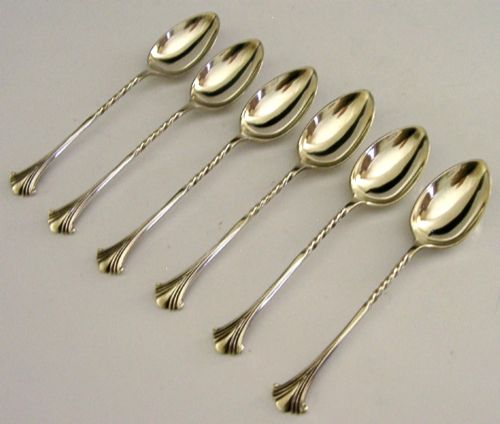
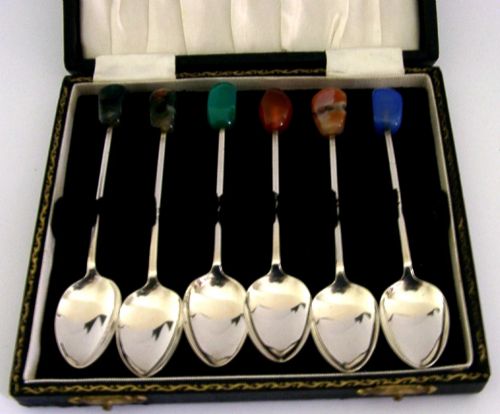
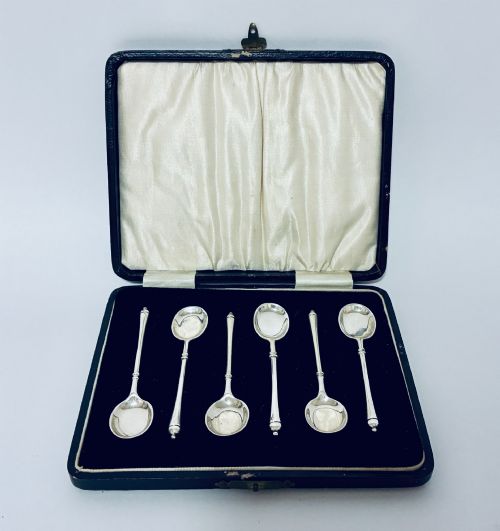
The forms span simple plain silver bowls and stems to elaborate matched sets housed in velvet or satin lined leatherette cases. You find standard teaspoons alongside specialised coffee spoons, demi-tasse spoons, and occasional sets that include matching sugar tongs.
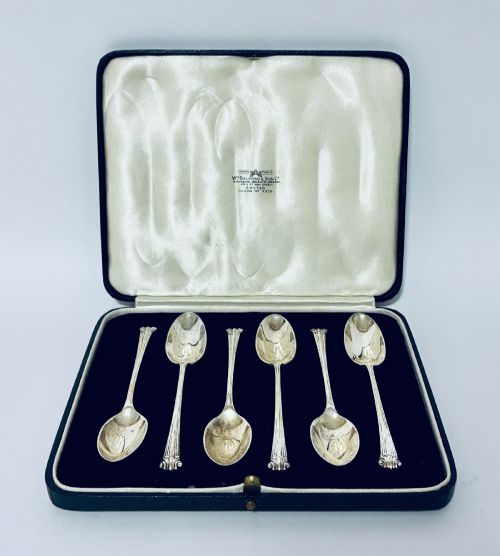
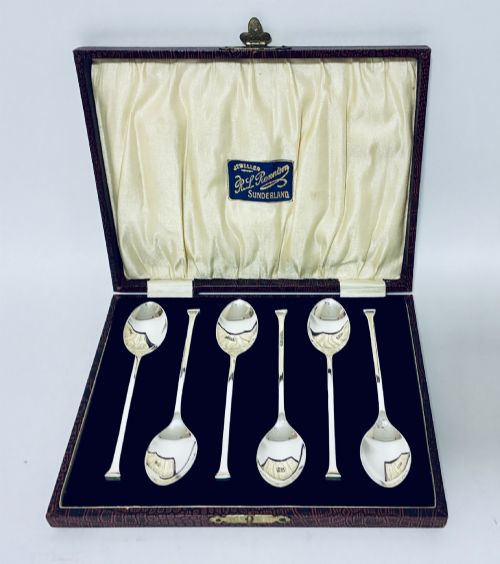
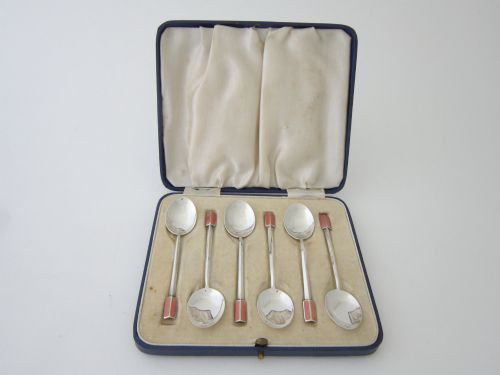
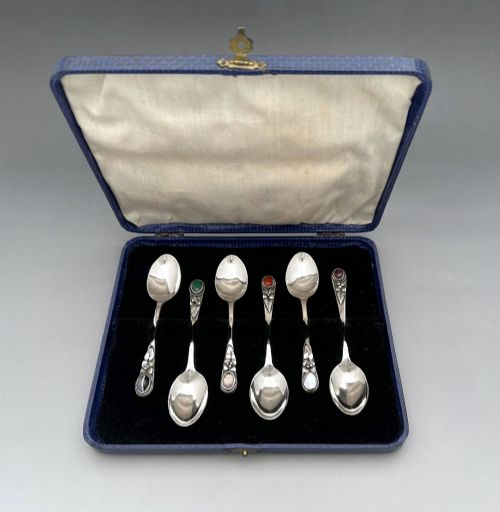
Many examples arrive in complete sets of four, six, or twelve, often retaining their original fitted presentation boxes from retailers and makers. Single spoons and pairs also appear, showing the same variety in scale and decorative finish.
Materials and construction
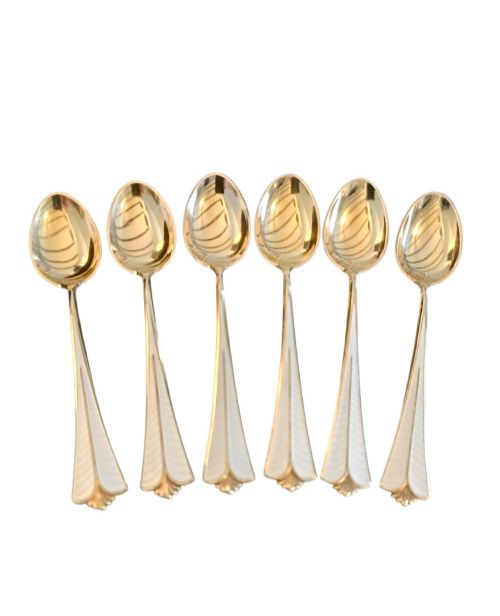
Sterling silver and standard silver form the foundation of these pieces, frequently enhanced by silver gilt finishes that impart a rich golden tone to the bowl and stem. Makers utilise traditional silversmithing techniques to shape bowls and cast handles, applying hallmarks to designate origin and standard.
Enamel work frequently decorates the handles in vibrant colours, particularly during the Art Deco and Art Nouveau periods, alongside semi-precious stones set into the metal. Presentation cases deploy materials like leatherette on the exterior with velvet, silk, or satin fitted linings inside to protect the metalwork.
Antique Coffee Teaspoons Retail Price Guide 2026
Typical asking prices for coffee teaspoons among the pieces listed under this phrase on Sellingantiques today, from the lower quarter to the upper quarter. They describe what is for sale here now, not the wider market.
Listings span several decades, featuring Victorian, Edwardian, Art Nouveau, and Art Deco styles created in sterling silver, enamel, and silver gilt.
Standards of execution
Quality rests upon the crispness of the hallmarks, the precision of the silversmith's shaping, and the condition of any applied enamel or gilding. Superior sets exhibit uniform weight across all spoons and secure seating within their original fitted cases.
The presence of distinguished makers or retail houses elevates the standing of a set, as does the integration of specialised decorative elements like guilloche enamel, semi-precious stones, or figural motifs on the terminals.
Georg Jensen·David Andersen·Evald Nielsen·Liberty and Co·Walker and Hall·Robert Stebbings·Cooper Brothers and Sons
The Antique Coffee Teaspoons Glossary
- Demi-tasse
- A small coffee cup used for serving strong black coffee. Spoons made for these cups feature significantly smaller bowls and shorter handles than standard teaspoons.
- Silver gilt
- Silver that has been coated with a thin layer of gold on its surface. This technique provides a warm golden appearance while maintaining a solid silver structure underneath.
- Guilloche
- A decorative engraving technique producing precise, intricate geometric patterns beneath translucent enamel. This method appears frequently on twentieth-century enamel coffee spoons.
- Hallmark
- An official mark stamped onto precious metals indicating the purity, the assay office, and the year of manufacture. These stamps provide definitive dating evidence for British silver.
- Leatherette
- A simulated leather material utilised for the exterior covering of fitted presentation cases. It protects the velvet and satin interiors while offering a durable outer shell.
Antique Coffee Teaspoons: Frequently Asked Questions
What is the difference between coffee spoons and teaspoons?
Coffee spoons are noticeably smaller than standard teaspoons, built specifically to fit inside small demitasse cups used for after-dinner coffee.
They feature shorter stems and more compact bowls, making them distinct from the larger flatware used for breakfast tea.
How do I identify the date of silver spoons?
British pieces rely on official hallmarks stamped directly onto the metal, which include symbols for the assay office, metal purity, and a specific date letter.
Continental and Scandinavian pieces often bear maker marks and standard marks that help place them within a specific decade.
Were these spoons always sold in fitted boxes?
Many fine sets were retailed in dedicated presentation cases lined with velvet, silk, or satin and covered in leatherette.
Retailers often housed six or twelve spoons alongside matching sugar tongs for formal dining and gifting purposes.
How should I store cased silver sets?
Keep the presentation cases in dry environments away from direct sunlight to preserve the internal silk and velvet linings.
Use appropriate silver storage cloths if displaying individual pieces outside their original boxes to minimise tarnishing from atmospheric moisture.