



Antique Cocktail Coupes
Antique cocktail coupes are shallow, wide-bowled glassware vessels that elevate a drink, spanning Victorian, Edwardian, and Art Deco periods.
Antique Cocktail Coupes
Antique cocktail coupes span several distinctive eras, appearing frequently in Victorian, Edwardian, and Art Deco designs. When you search for antique cocktail coupes, you encounter forms that began life primarily as champagne bowls or glasses before finding a second home in modern cocktail service.
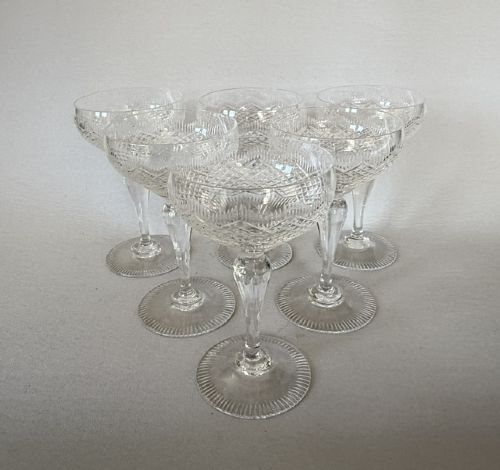
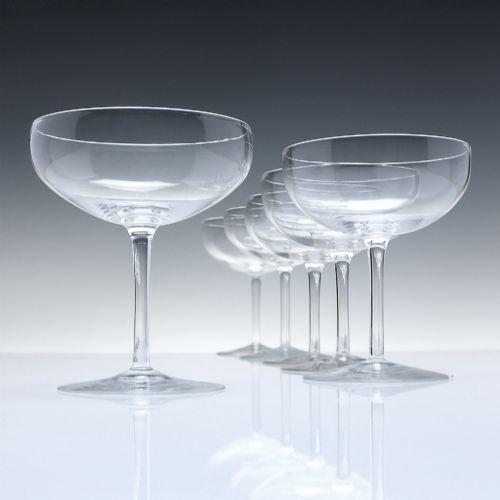
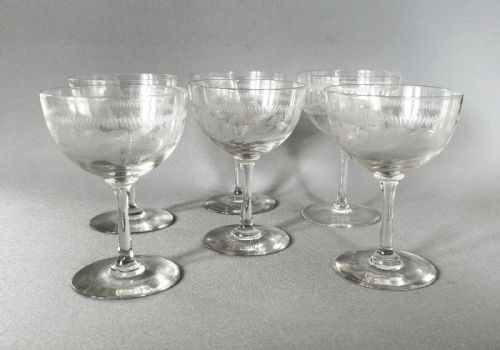
The objects on this page predominantly take the form of champagne glasses, champagne coupes, and champagne bowls. These pieces originate from periods ranging from the Regency era through to the 1920s.
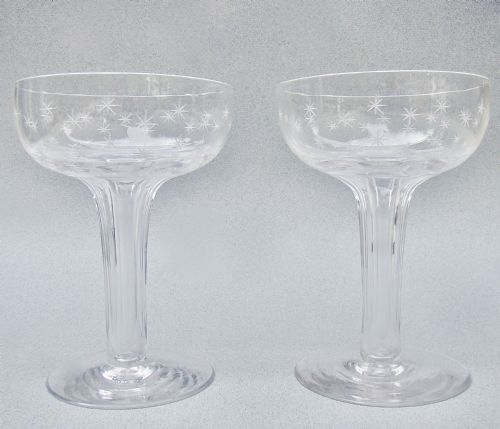
The design varies from plain clear glass bowls to heavily decorated vessels with hollow stems and coloured overlays. Sets range from individual pairs up to larger collections of sixteen glasses.
How they were made
The primary material across these pieces is glass, encompassing lead crystal, crystal glass, and clear glass. Artisans shaped these vessels through blowing and moulding before applying decorative treatments.
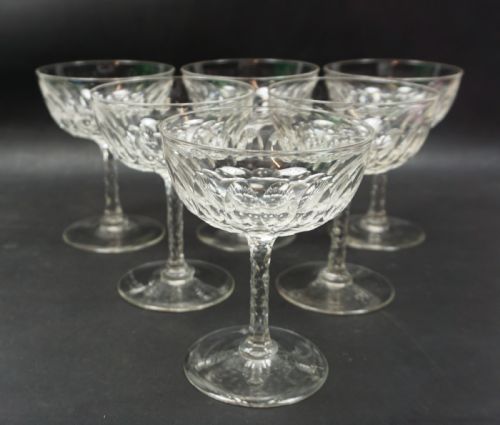
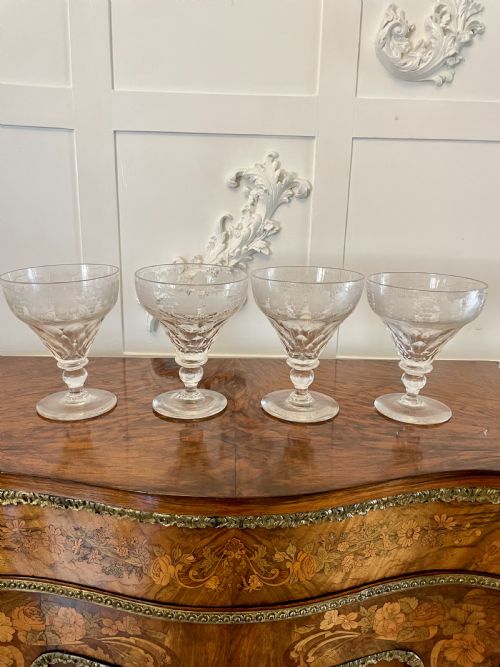
Decoration relied on skilled hand-craftsmanship, notably star-etching, facet cutting, and engraving with motifs such as fruiting vines and Greek key patterns. Certain vessels also incorporate enamel work or coloured glass overlays on a crystal base.
Listings feature glass, crystal, and lead crystal forms decorated with cutting, engraving, and enamel.
What varies in quality
The distinction between standard and superior pieces rests on the crispness and depth of the cutting and engraving. Hand-engraved motifs like fruiting vines show greater artistic commitment than simpler moulded patterns.
Weight and clarity of the crystal or lead glass also dictate the standard of a coupe. Complex multi-part forms, such as hollow stems combined with engraved bowls and feet, require advanced glassmaking skill.
Fritz Heckert
The Antique Cocktail Coupes Glossary
- Coupe
- A shallow, broad-bowled glass originally designed for sparkling wine and later used for cocktails.
- Lead crystal
- Glass containing metal oxides that increase weight, brilliance, and the clarity of cut facets.
- Facet cut
- Geometric planes ground and polished onto the stem or bowl of glassware to catch the light.
- Overlay
- A layer of coloured glass fused over a clear crystal body before being cut away to reveal the contrasting layer beneath.
Antique Cocktail Coupes: Frequently Asked Questions
What is an antique cocktail coupe?
An antique cocktail coupe is a shallow-bowled glass originating from the Victorian, Edwardian, or Art Deco periods. They were originally made to serve champagne.
Today, collectors and hosts use them for a variety of classic cocktails. Their broad bowls and short stems define their traditional silhouette.
How do I date a cocktail coupe?
Dating these glasses relies on examining the manufacturing techniques, decorative styles, and glass composition. Victorian pieces often feature heavy star-etching or engraved fruiting vines.
Later Edwardian and 1920s examples introduce crisper geometric cutting or delicate enamel work. Comparing the form to documented period styles provides further clarity.
Are these glasses safe for modern use?
Most antique crystal and glass vessels can be used carefully for drinks if handled with attention. Hand washing is essential to preserve the delicate cut and engraved surfaces.
Sudden temperature changes should be avoided to protect the historic glass. Many collectors enjoy using them for special occasions rather than daily service.
Why are some coupes coloured?
Coloured coupes often feature a coloured glass overlay fused to a clear crystal base. Artisans cut through the outer layer to expose the clear glass underneath, creating striking contrast.
Green and red over crystal examples appear in nineteenth-century production. This technique demonstrates advanced mastery in glasshouse workshops.