
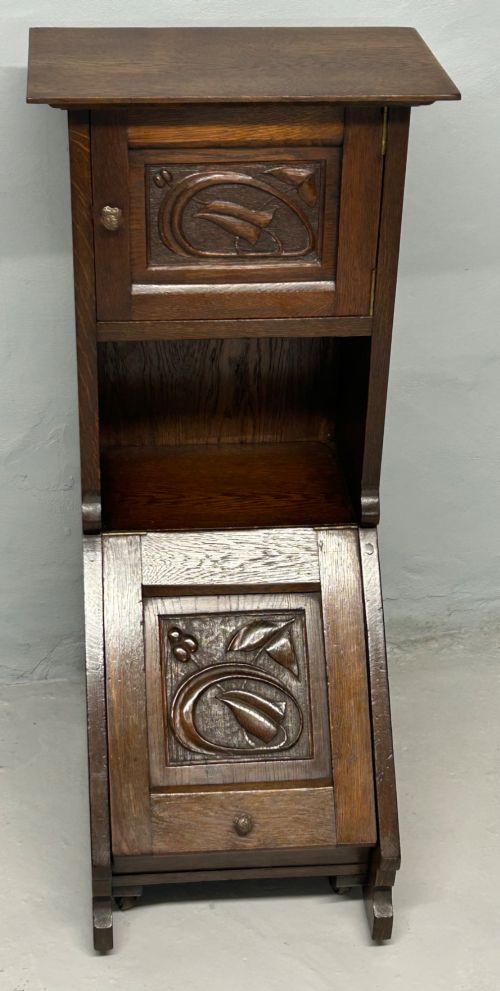


Antique Coal Cabinet
An antique coal cabinet keeps your hearth tidy, bringing polished mahogany, oak and rosewood directly beside the fire.
Antique Coal Cabinet
When searching for an antique coal cabinet, you are looking at fireside storage vessels designed to hold fuel near the hearth without leaving the messy fuel exposed. These pieces span the Victorian and Edwardian eras, appearing in forms such as coal boxes, purdoniums, and fireside cabinets.
Materials and construction
Cabinet makers utilised dense hardwoods like mahogany, oak, and walnut, often applying marquetry inlay, carvings, or ormolu mounts to the exterior. Rosewood appears frequently in finer pieces, alongside brass handles, hinges, and detailing.
Internal construction relies on fitted metal linings or removable coal scuttles designed to contain dust and debris. Drop fronts and tilted purdonium compartments allow easy access to the fuel while concealing the shovel.
One exceptional smokers cabinet takes the whimsical form of a GWR coal wagon.
Distinctions in quality
The choice of timber and secondary ornamentation dictates the tier of the piece, moving from straightforward utilitarian oak boxes to finely figured rosewood with complex marquetry inlay. Substantial brass hardware and quality internal metal liners elevate the construction.
Design ambition separates standard models from exceptional ones, particularly those displaying Art Nouveau influence, Liberty style, or elaborate carved detailing. The presence of matching shovels and well-integrated companion compartments adds to the overall integrity.
Coalport
The Antique Coal Cabinet Glossary
- Purdonium
- A specialised coal cabinet featuring a sloping front or tipping compartment designed to dispense fuel forward. This form became popular during the Victorian and Edwardian periods for fireside use.
- Marquetry inlay
- Decorative woodwork where pieces of different coloured veneers are fitted into a ground to form intricate patterns. This technique frequently graces rosewood and mahogany cabinet lids.
- Ormolu
- Gilt bronze mounts applied to furniture for decorative accent. These metal details appear on finer Victorian coal bins.
- Drop front
- A hinged panel that opens downward to grant access to the interior storage space. It provides a practical mechanism for loading and retrieving fuel.
Antique Coal Cabinet: Frequently Asked Questions
What is a coal purdonium?
A coal purdonium is a specific type of fireside cabinet with a hinged, sloping front that tilts forward to release fuel. It typically contains a removable metal liner.
These pieces were designed to keep coal neat and contained beside the Victorian or Edwardian fireplace.
How do I clean the inside?
Most cabinets feature a removable metal scuttle or liner that lifts out independently from the wooden outer case. You can empty coal dust and debris from this metal insert directly.
Keep the wooden exterior polished with appropriate wax while ensuring the metal liner remains dry.
Can I use it for logs?
Many of these cabinets accommodate small logs, kindling, or peat alongside traditional coal depending on the interior capacity. Log bins and purdoniums share similar fireside storage purposes.
Check the internal dimensions to ensure your firewood fits comfortably without damaging the metal lining.
How do I date my cabinet?
Dating relies on stylistic clues such as Victorian Gothic carvings, Edwardian marquetry inlay, or Art Nouveau brass detailing. The predominant woods used, like rosewood or oak, also point toward specific decades.
Examine the hinges, handles, and internal construction methods for period manufacturing techniques.