


Antique Coaching Scene
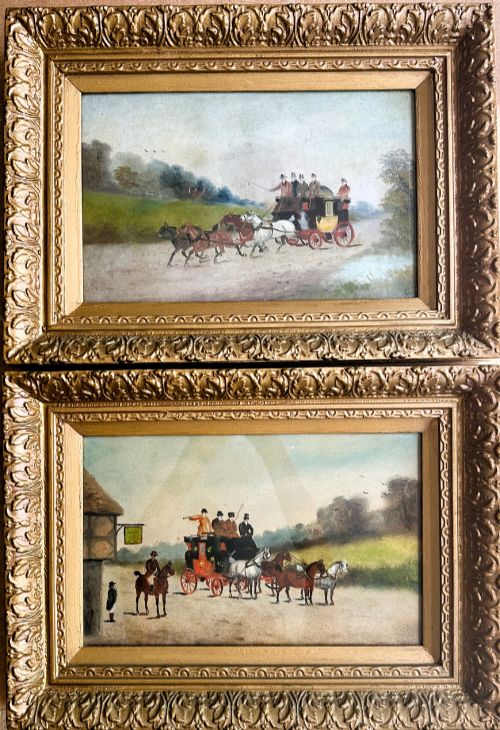
An antique coaching scene captures the movement and urgency of horse-drawn travel across nineteenth and early twentieth-century Britain.
Antique Coaching Scene
An antique coaching scene depicts stagecoaches, mail carriages, and horses on the move, reflecting the vital transport network of past centuries. When searching for an antique coaching scene, buyers encounter works that celebrate the speed, drama, and atmosphere of traditional British travel.
The selections available include detailed oil paintings on canvas, delicate watercolours, reverse glass paintings, and coloured lithographs. Many pieces focus on specific winter journeys, snowy roads, or stops outside historic coaching inns.
The majority of these works date from the nineteenth century through to the early twentieth century, spanning Victorian and Edwardian periods. Collectors also find related decorative objects, such as hand-painted tole ware tobacco boxes, carrying similar equestrian imagery.
How these pieces were made
Painters utilised oil on canvas or panel to capture the dynamic action of horses and carriages, building texture with traditional brushwork. Watercolours on paper offer a lighter touch, often recording rapid preliminary studies or finished genre scenes.
Alternative techniques include reverse painting on glass, where artists applied pigments directly to the rear of the glass pane to achieve a glossy finish. Lithographs employed printed plates enhanced with colour to reproduce popular sporting imagery for wider domestic display.
Materials recorded across the inventory include oil on canvas, paper, glass, giltwood, and painted tole ware.
What varies in quality
The standard of an antique coaching scene rests upon the artist's ability to render the anatomy of horses and the perspective of carriages with precision. Works by established painters demonstrate a superior command of movement, light, and atmospheric weather conditions such as snow storms.
Materials and framing also contribute to the distinction between pieces, with original giltwood frames or signed canvases carrying greater weight. Lesser examples rely on repetitive formulas or less refined brushwork that diminishes the sense of dynamic realism.
Philip Rideout·George Wright·Samuel Henry Alken·John Charles Maggs·John Richard Worsdale·Frank Dadd·John Atkinson·James Pollard
The Antique Coaching Scene Glossary
- Reverse glass painting
- A technique where the image is painted on the back of a glass sheet so that the front presents a smooth and luminous surface. This method requires the artist to work in reverse, laying down fine details before background colours.
- Tole ware
- Metal objects, usually tin or steel, finished with a lacquered and hand-painted surface. These decorative items often feature sporting or equestrian motifs.
- Lithograph
- A print produced from a flat stone or metal plate treated to retain ink in designated image areas. Nineteenth-century examples were frequently finished with hand-applied colour.
- Genre painting
- Artwork that depicts aspects of everyday life, often featuring human figures engaged in typical domestic or social activities. In this context, it frequently includes travellers gathering outside coaching inns.
Antique Coaching Scene: Frequently Asked Questions
What is an antique coaching scene?
An antique coaching scene is a painting, print, or decorative object depicting stagecoaches, mail carriages, and horses during the horse-drawn era of travel. These works document the bustling transport routes and winter journeys across Britain.
Most pieces date from the nineteenth and early twentieth centuries, capturing the social importance of inns, changing horses, and horse-drawn transport before the rise of the railway.
Who painted coaching scenes?
Numerous British artists specialised in sporting and equestrian subjects, recording the realities of road travel. Painters like John Charles Maggs and Philip Rideout produced extensive series documenting mail coaches and winter snow scenes.
Other notable figures included George Wright and Samuel Henry Alken, whose works focused on the movement of horses and the architectural details of historic coaching inns.
How were coaching paintings displayed?
In their original periods, these artworks hung in country houses, gentlemen's clubs, and coaching inns to celebrate equestrian culture and travel. They were typically housed within wooden or giltwood frames suited to domestic interiors.
Today, collectors display them in libraries, studies, or hallways where traditional British sporting art complements period interior schemes.
How do I identify the period?
Dating relies on stylistic clues such as the clothing of the figures, the design of the carriages, and the materials used in the support and framing. Victorian and Edwardian works often bear artist signatures, dates, or specific inscriptions naming coaching routes and inns.
Examining the canvas preparation, pigments, and framing techniques helps confirm whether a piece belongs to the nineteenth century or the early twentieth century.