


Antique City Street Painting
An antique city street painting captures urban life from past centuries through the observant eyes of artists working in oil, watercolour, and ink.
Antique City Street Painting
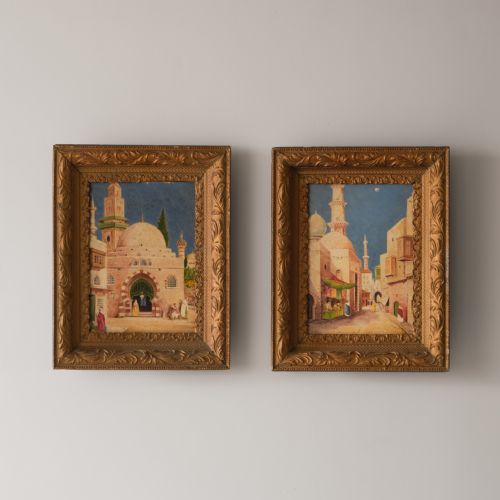
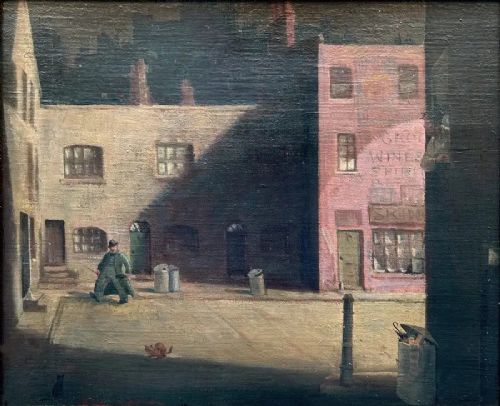
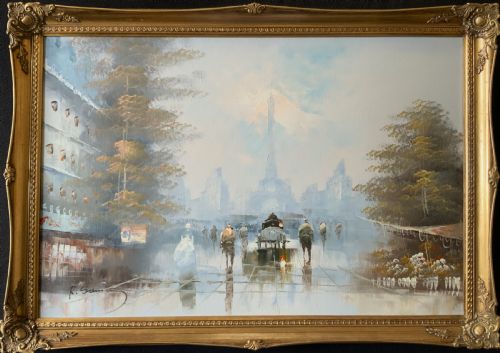
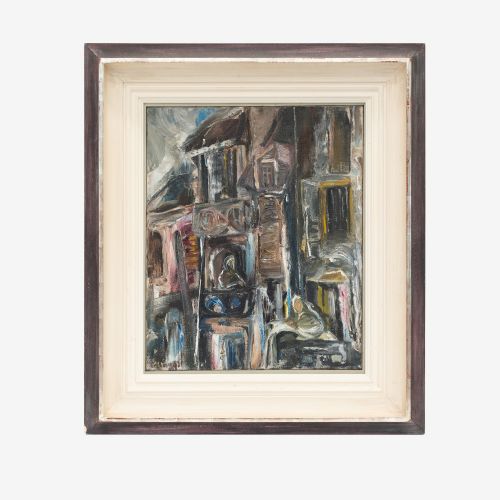
When you search for an antique city street painting, you encounter works spanning from the Victorian period through the early twentieth century, including Edwardian and Belle Epoque depictions of urban spaces. These artworks document thoroughfares, squares, and architectural landmarks in London, Paris, and further abroad.
The pieces appearing on this page range from detailed watercolour paintings and townscapes to framed oil on canvas compositions. You find naive interpretations alongside works executed within British, French, and Flemish impressionist traditions.
Subjects include bustling metropolitan scenes with figures taking cabs, moonlit church facades, and quiet urban corners. Artists recorded both famous European capitals and regional towns with distinct historical character.
Materials and technique
The physical objects rely primarily on oil paint applied to canvas or watercolour pigments laid upon paper. Ink is occasionally employed for foundational linework before the application of colour.
Supports frequently incorporate wood frames, often gilded, which house glass layers protecting works on paper. Canvas supports are stretched over wooden frames to hold the weight of heavier oil applications.
Listings feature works executed in oil paint, watercolour, and ink across paper, canvas, and wood supports.
What varies in quality
Quality rests upon the artist's ability to render light, atmosphere, and architectural perspective convincingly within the chosen medium. Works by listed painters with established reputations demonstrate superior handling of street illumination, particularly in twilight and moonlit settings.
The condition of the medium and the framing also define the standard. Well-preserved watercolours retain their original pigment vibrancy beneath undamaged glass, while oil paintings show stable canvas tension without excessive craquelure.
Francisco Sancha·L. De Gent·Albert Ludovici Jnr·Victor Gabriel Gilbert·William Manners·Charles James Lauder·Eduard Leon Cortes·Walter Meegan·Rowland Henry Hill·Fred Lawson·Matthew Hale
The Antique City Street Painting Glossary
- Watercolour painting
- A work created using water-soluble pigments on paper. This medium allows for transparent washes that capture fleeting atmospheric effects in urban settings.
- Impressionism
- A style of painting emphasising spontaneous brushwork and the depiction of light in its changing qualities. Artists working in this manner prioritized everyday urban subjects over academic history painting.
- Gilded wood
- Wood treated with a thin layer of gold leaf or gilt finish. This material is standard for period frames encasing fine art paintings.
- Genre painting
- Artwork depicting scenes from everyday life, such as figures navigating a busy city thoroughfare or waiting for transport.
Antique City Street Painting: Frequently Asked Questions
How do I date an antique street scene?
Dating relies on stylistic clues, artists' active years recorded in signatures, and the clothing styles worn by figures depicted in the composition.
Framing materials and paper types also offer secondary evidence to narrow down the decade of creation.
Where were these paintings displayed?
Original owners typically hung these works in domestic drawing rooms, libraries, and parlours to display refined taste.
Urban scenes brought the energy of the capital into private provincial homes.
How do I care for a watercolour street painting?
Keep works on paper away from direct sunlight to prevent the watercolour pigments from fading over time.
Ensure the framing remains properly sealed to protect the paper from moisture and atmospheric dust.
What is the difference between oil and watercolour city paintings?
Oil paintings on canvas offer heavier texture and deeper pigment saturation, allowing for robust handling of nocturnal or stormy weather.
Watercolours on paper rely on the white of the support showing through translucent washes for a lighter, more luminous effect.