






Antique Church Relief
Antique church relief panels bring sacred history into a room, carved in oak, walnut, stone, and giltwood to capture centuries of devotion.
Antique Church Relief
When you search for antique church relief, you encounter sacred sculptures and panels rescued from altarpieces, tabernacles, and ecclesiastical architecture. These pieces span from the sixteenth century through to the nineteenth century, reflecting deep shifts in European religious art and craftsmanship.
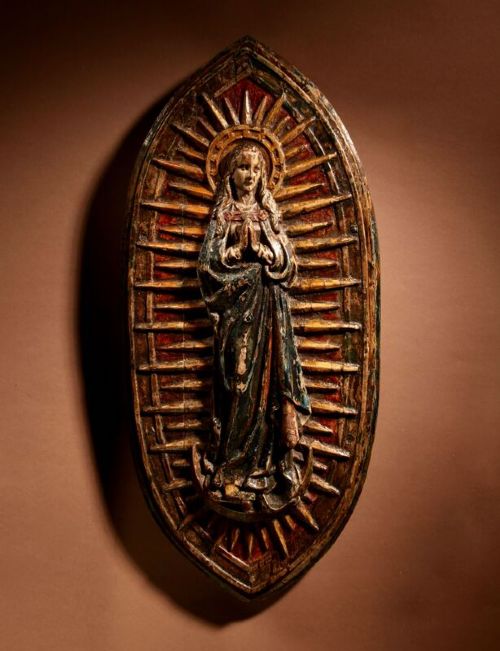
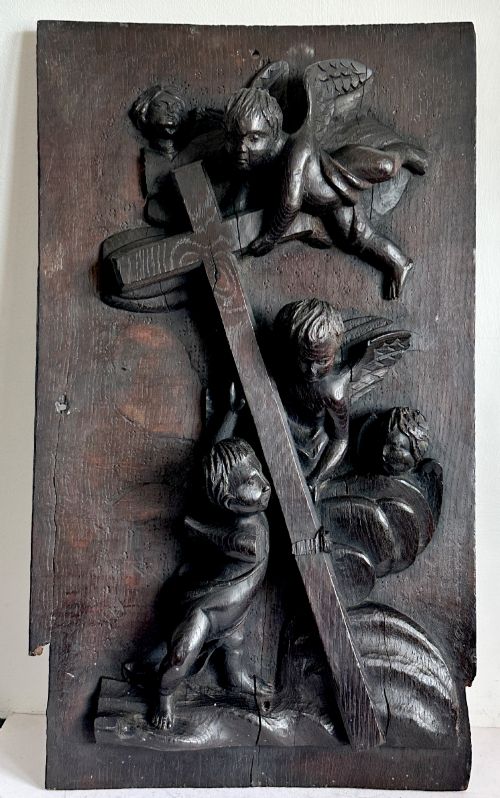
The versions you are most likely to meet on this page are carved oak panels and stone wall sculptures depicting figures such as the Virgin, angels, cherubs, and biblical scenes. Many originated as central elements from larger altarpieces or architectural church fittings.
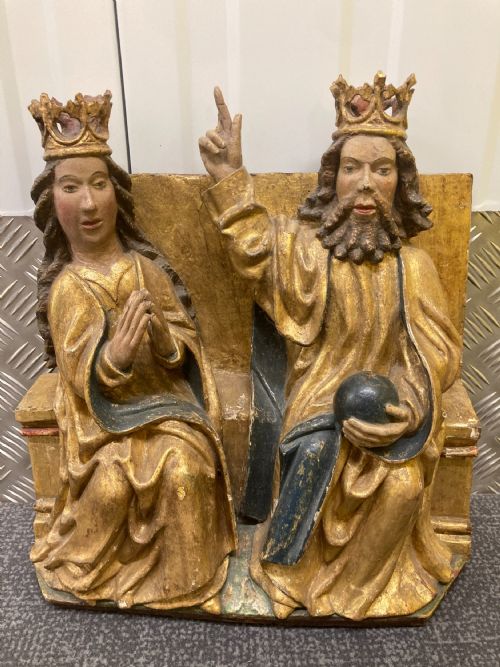
The selection includes specific forms like Italian tabernacles, architectural wall plaques, and figurative groups finished in polychrome paint or gold leaf. Their origins stretch across European workshops, demonstrating the enduring influence of Gothic, Renaissance, and Baroque styles.
Materials and techniques
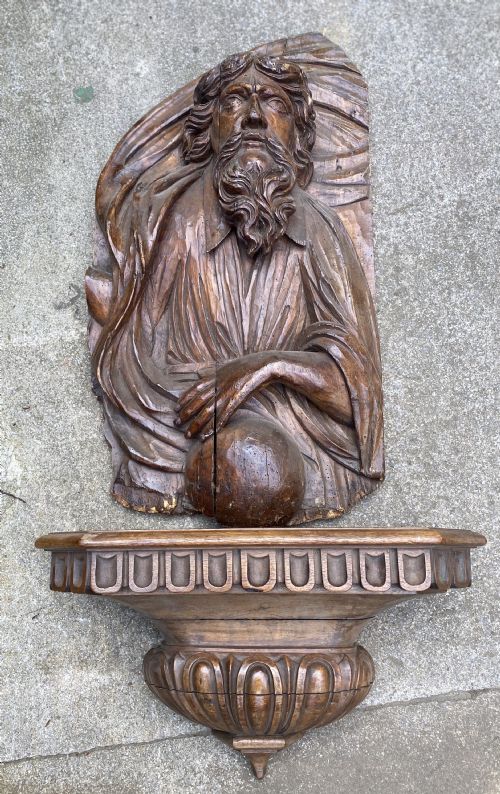
Carvers shaped these reliefs primarily from dense hardwoods like oak and walnut, alongside limestone and other stone. These materials provided the structural integrity needed for deep, intricate three-dimensional carving that endured centuries of placement within ecclesiastical settings.
Surface finish played a vital role in church relief, utilising layers of polychrome paint and gold leaf to heighten the visual drama of figures such as angels and deities. Master carvers utilised traditional hand chisels and gouges to achieve the fluid drapery and expressive faces seen in Renaissance and Baroque works.
Antique Church Relief Retail Price Guide 2026
Typical asking prices for church relief among the pieces listed under this phrase on Sellingantiques today, from the lower quarter to the upper quarter. They describe what is for sale here now, not the wider market.
Materials span from carved limestone and sterling silver to polychrome painted oak and gilded wood.
Judging quality in church carvings
Quality rests in the depth and vitality of the hand carving, where master sculptors rendered anatomical precision and expressive emotion in wood or stone. Stiff, repetitive tool marks indicate provincial workshop output, whereas fluid drapery and lifelike proportions distinguish superior ecclesiastical sculpture.
The preservation of original surface treatments, such as early polychrome paint and gold leaf, elevates a panel's historical integrity. Pieces that retain their original architectural framing or retain clear stylistic attribution to periods like the Italian Baroque command greater scholarly and aesthetic interest.
The Antique Church Relief Glossary
- Polychrome
- The practice of decorating architectural elements, sculpture, or pottery in a variety of colours. This finish was widely applied to medieval and Renaissance wood carvings to enhance realism.
- Tabernacle
- An ornate, canopied receptacle for holding the Eucharistic bread and wine. In antique form, these structures often feature elaborate architectural wood or stone carving.
- Giltwood
- Wood that has been thinly coated with gold leaf or gold dust. It appears frequently on seventeenth-century religious sculpture and altarpieces.
- Altarpiece
- A piece of art such as a painting, sculpture, or relief representing a religious subject placed behind or on an altar. Central panels often depict figures like the Virgin Mary or saints.
Antique Church Relief: Frequently Asked Questions
What is an antique church relief?
An antique church relief is a carved panel or sculpture removed from a religious interior, depicting biblical scenes, saints, or divine figures.
These pieces were originally part of larger altarpieces, choir stalls, or wall decorations within European churches and chapels.
How were church relief panels displayed?
Historically, these panels formed integral parts of sacred architecture, mounted near altars or housed within architectural tabernacles and shrines.
In modern interiors, collectors typically mount them securely on walls as standalone sculptural artworks.
How do I date a carved wooden panel?
Dating relies on stylistic markers such as the transition from Gothic rigidity to Renaissance naturalism, alongside tool marks and timber shrinkage.
Analysis of original surface finishes, like early polychrome paint or gold leaf, also helps establish the era of creation.
What woods were used in church carvings?
Carvers predominantly selected durable hardwoods such as oak and walnut for ecclesiastical reliefs due to their stability and fine grain.
These timbers accepted detailed hand chiselling and supported complex decorative finishes over centuries.