




Antique Church Altar Sticks
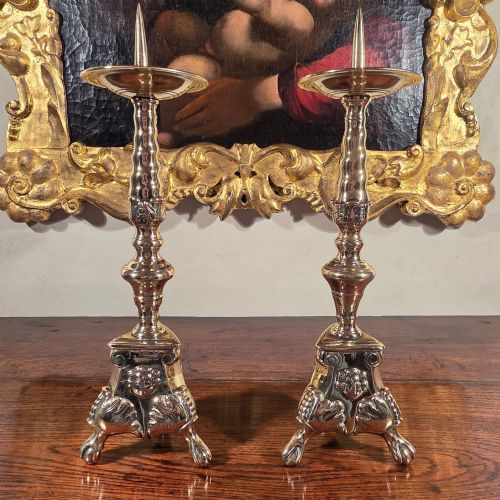
Antique church altar sticks are striking ecclesiastical lighting pieces built to hold tall candles, bringing distinct architectural presence and historic candlelight into a room.
Antique Church Altar Sticks
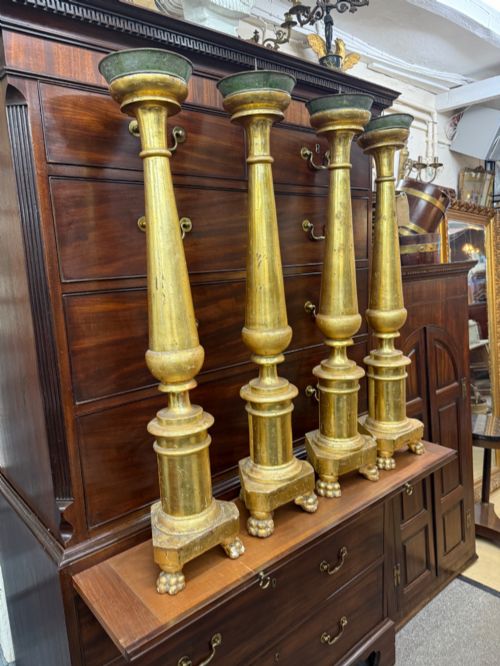
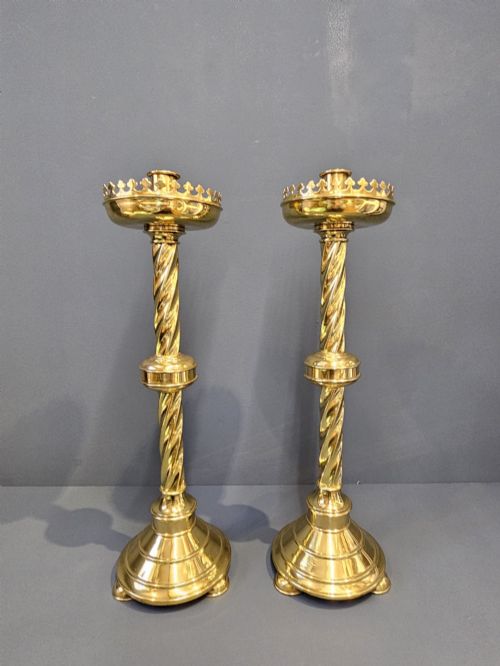
The inventory showcases distinct stylistic influences, ranging from rigorous Gothic Revival and Victorian designs to ornate Baroque forms and Italian neoclassical touches. Pairs dominate the offerings, providing symmetrical illumination that functions equally well as traditional candle holders or converted table lamps.
Materials and construction methods
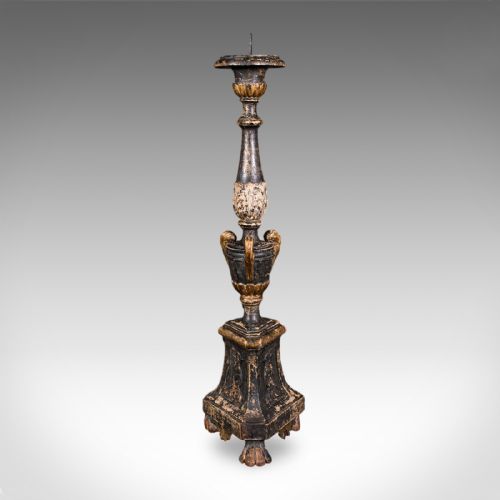
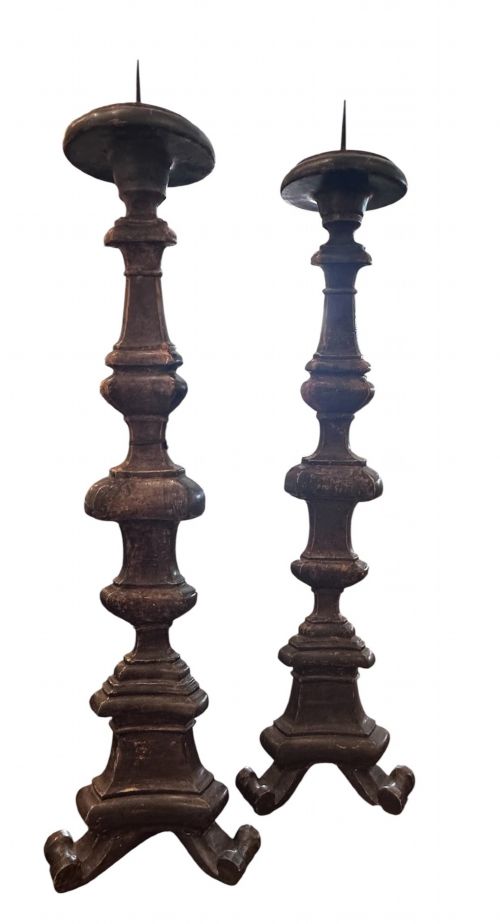
Heavy brass and cast bronze form the backbone of the metal pieces, offering structural stability for supporting substantial altar candles. Wood provides the foundation for carved examples, often enhanced with gesso and overlaid with silver or gold leaf to achieve a shimmering finish.
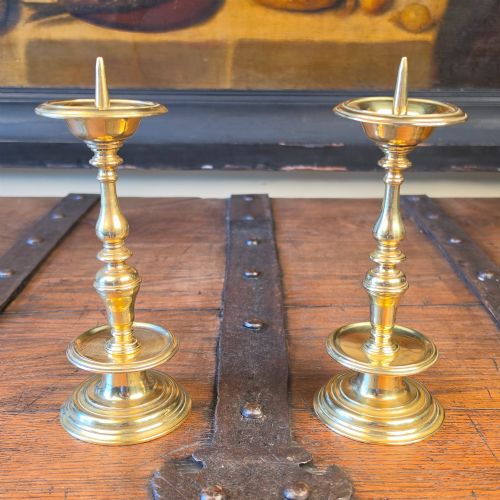
Surface treatments play a crucial role in the manufacturing process, utilising ebonisation, gilding, and silvering to emulate precious metals or rich hardwoods. Joinery and casting techniques reflect the period of origin, from seventeenth-century Flemish brasswork to nineteenth-century Victorian production methods.
Antique Church Altar Sticks Retail Price Guide 2026
Typical asking prices for church altar sticks among the pieces listed under this phrase on Sellingantiques today, from the lower quarter to the upper quarter. They describe what is for sale here now, not the wider market.
Several heavy brass altar sticks spent centuries supporting candles in dim European chapels before retiring to modern living rooms as table lamps.
Differentiating quality across the range
The distinction between standard production and superior examples lies in the crispness of the casting and the depth of the hand-carved detailing. Finer brass pieces exhibit clean, sharp moulding without surface pitting, while wooden alternatives demonstrate expert carving and well-preserved leaf application.
Proportion and scale heavily influence the overall presence of the object, with taller, heavier pairs generally commanding more visual weight. The integrity of the original surface finish, whether aged brass patina or distressed giltwood, determines the visual appeal of the piece.
T Thomason & Co
The Antique Church Altar Sticks Glossary
- Pricket stick
- A candlestick featuring a sharp metal spike at the top designed to secure the base of a large candle rather than a socket that holds the candle.
- Gesso
- A plaster-based material applied to wood surfaces to create a smooth base for subsequent gilding or painting.
- Giltwood
- Timber that has been coated with a thin layer of gold leaf or gold paint to give a luxurious metallic appearance.
- Gothic Revival
- An architectural and decorative style popular during the nineteenth century that imitates medieval Gothic forms.
- Baroque
- An ornate artistic style characterised by dramatic movement and rich detail, seen frequently in seventeenth and eighteenth-century ecclesiastical items.
Antique Church Altar Sticks: Frequently Asked Questions
How do I use altar sticks safely at home?
These pieces accommodate standard taper candles or function as decorative sculptural elements on sideboards and mantels. Many examples are also successfully wired as table lamps.
Ensure that any candle used fits securely onto the pricket spike and remains supervised while lit to prevent wax spillage onto historic surfaces.
What is the difference between a candlestick and a pricket?
Traditional candlesticks utilise a hollow socket to cradle the base of a candle, whereas pricket sticks rely on an upward-facing metal spike.
Ecclesiastical settings traditionally favoured pricket sticks because church candles were wide and heavy, requiring a spike for stability.
How do I date an antique brass altar stick?
Dating relies on examining the casting methods, weight, base construction, and surface wear patterns. Earlier seventeenth and eighteenth-century examples often feature heavier, hand-finished brass components.
Victorian and later nineteenth-century pieces display more standardised manufacturing techniques and frequently incorporate Gothic Revival ornamentation.
Can I clean the metal without damaging the finish?
Light dusting with a soft, dry cloth is usually sufficient to maintain the surface without removing the accumulated historical patina.
Harsh metal polishes should be avoided on antique brass and giltwood, as aggressive cleaning strips away the aged surfaces that define their character.