

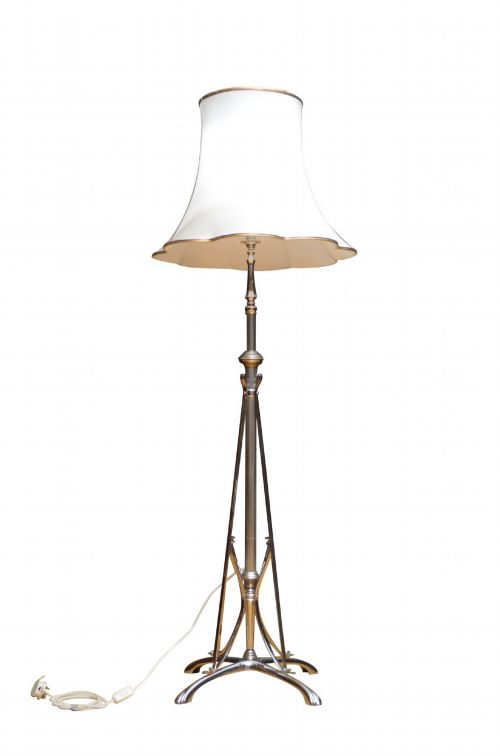


Antique Chrome Lighting
Antique chrome lighting brings geometric elegance to interiors, combining polished metal with glass to illuminate spaces with period style.
Antique Chrome Lighting
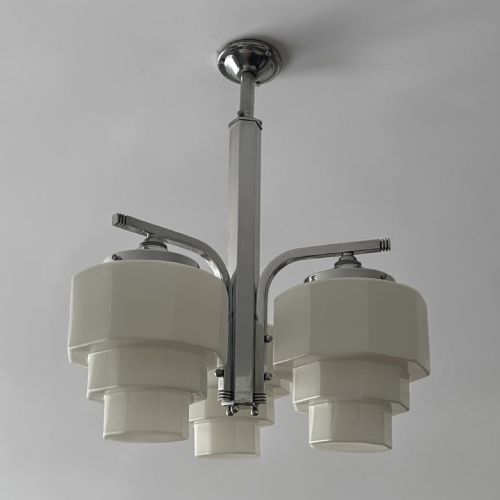
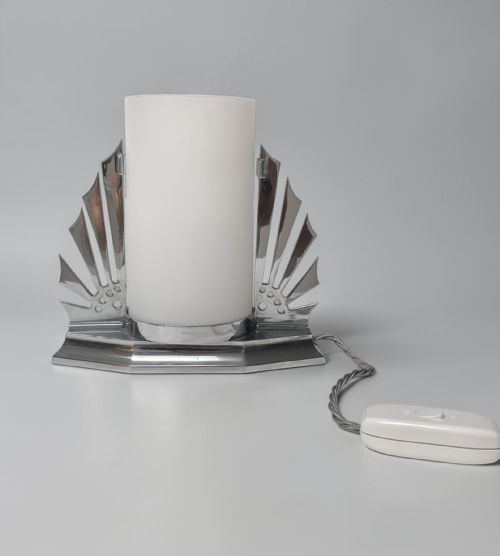
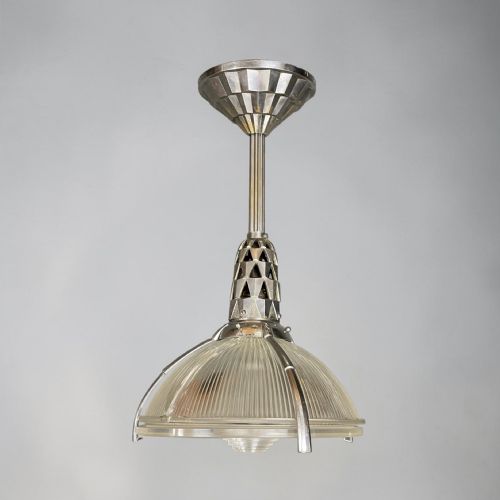
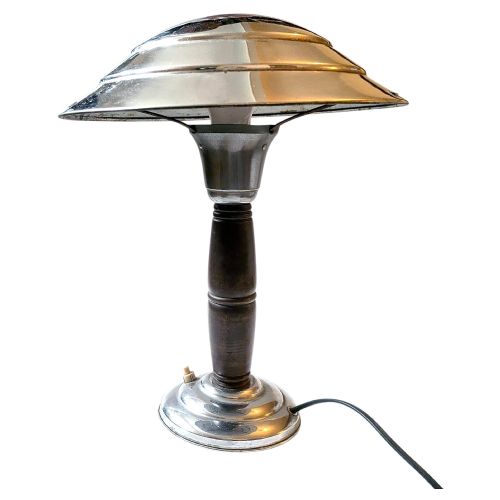
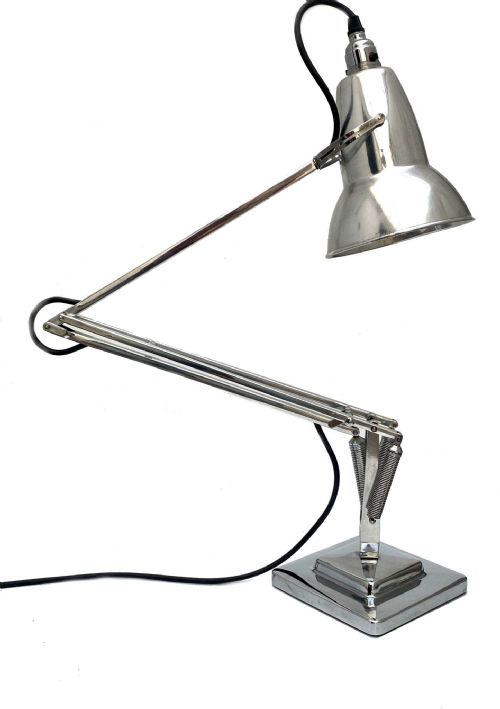
Antique chrome lighting encompasses table lamps, wall lights, ceiling lights, desk lamps, floor lamps, and pendant lights designed in the Art Deco, Edwardian, and French Chateau styles. These fixtures date primarily from the nineteen-twenties and nineteen-thirties, reflecting the industrial and modernist design shifts of those decades.
The most common forms on this page are wall lights, desk lamps, and ceiling lights, often created in pairs or matching sets. Many incorporate geometric shades or figural elements typical of the interwar period.
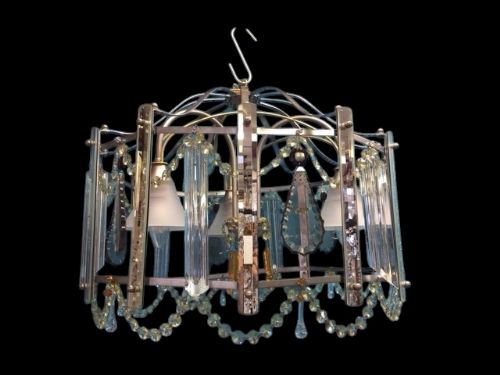
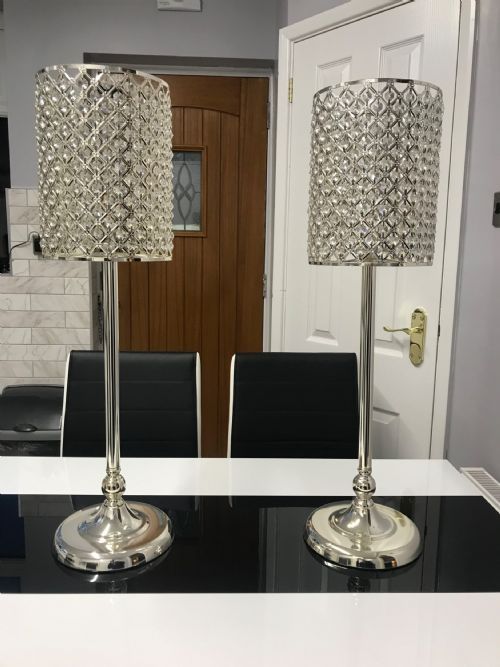
Origins stretch across Britain and France, introducing streamlined silhouettes and functional adjustments suitable for domestic and commercial spaces alike. Pieces range from simple tubular sconces to elaborate cut glass bag chandeliers.
What varies in quality in antique chrome lighting
Quality rests in the integrity of the chrome plating over the underlying steel or brass, where even wear and minimal pitting distinguish superior items. The weight and thickness of the glass shades, particularly pressed or coloured glass, dictate the sturdiness and visual depth of the fixture.
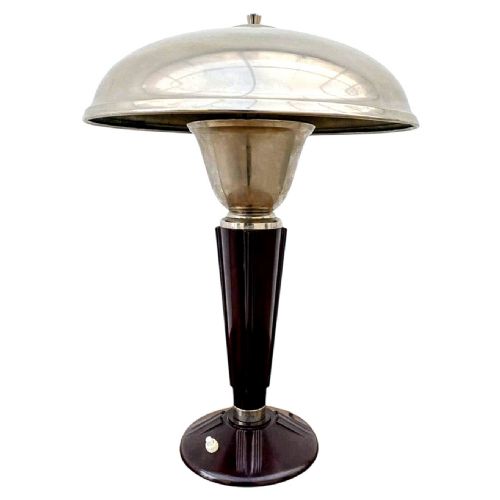
Construction details such as original Bakelite fittings, robust adjustable joints, and matching sets elevate the standard of a piece. Finer examples maintain crisp casting lines on figural bases and precise alignment in tubular or multi-light sconces.
Sail yacht lamps adapted maritime engineering into domestic lighting, letting landlubbers navigate the living room by the glow of polished chrome.
Eileen Grey·Émile-Jacques Ruhlmann·Pirouette
The Antique Chrome Lighting Glossary
- Chrome
- An electroplated metallic coating applied over steel or brass to provide a bright, corrosion-resistant finish. This plating defines the sleek industrial aesthetic seen across the interwar period.
- Bakelite
- An early thermosetting phenol formaldehyde resin used for electrical insulation, switches, and decorative details. It appears frequently in plugs, lamp bases, and rotary keys.
- Satin glass
- Glass treated with hydrofluoric acid or sandblasting to create a velvety, non-glossy surface texture. It diffuses light evenly across ceiling lights and wall sconces.
- Uplighter
- A lighting fixture designed to cast illumination upward toward the ceiling rather than down into the room. These often stand on the floor or mount to walls as torcheres.
- Catalin
- A cast phenolic resin developed in the nineteen-thirties that allowed for vibrant, translucent colours in lamp bodies and handles. Unlike opaque early plastics, it retains a deep, jewel-like clarity.
Antique Chrome Lighting: Frequently Asked Questions
How do I clean antique chrome lighting?
Dust the chrome gently with a soft microfibre cloth to remove surface particles without scratching the metallic plating. Avoid abrasive cleaners or harsh chemicals that can strip the finish and expose the underlying base metal.
For glass shades, remove them carefully and wash them in lukewarm soapy water before drying thoroughly. Ensure the fixture remains disconnected from the mains supply throughout any maintenance.
Can these vintage lamps use modern bulbs?
Most antique lamps accommodate modern LED bulbs provided the wattage does not exceed the capacity of the original wiring and lamp holder. Standard screw or bayonet fittings generally match contemporary sizing standards.
Have a qualified electrician inspect older wiring before regular use to ensure safety compliance. Preserving original Bakelite sockets is often possible while updating internal cables.
What rooms suit antique chrome wall lights?
Wall lights and sconces fit bathrooms, hallways, and living rooms where directional or ambient illumination enhances the decor. Paired installations work effectively flanking mirrors, doorways, or fireplaces.
Their streamlined interwar profiles complement both period properties and contemporary industrial interiors. The reflective metal surface helps bounce natural and artificial light around smaller spaces.
How do I date an Art Deco chrome lamp?
Dating relies on stylistic markers such as geometric motifs, stepped bases, and the presence of specific materials like Bakelite or pressed glass. Pieces from the nineteen-twenties often lean toward nautical or modernist themes like yacht lamps.
Nineteen-thirties examples frequently introduce more streamlined curves and coloured glass shades. Maker marks, patent stamps on adjustable joints, and construction methods further narrow down the decade of production.