

Antique Chinoiserie Desk
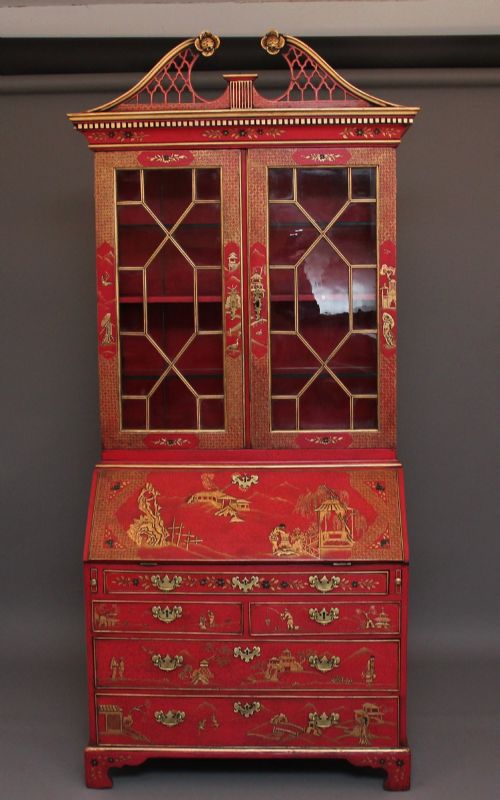
These antique chinoiserie desk pieces bring hand-painted lacquer and striking decorative motifs into a room, offering a functional workspace with distinct character.
What an antique chinoiserie desk is
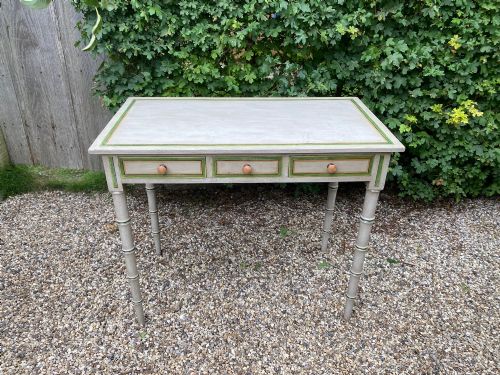
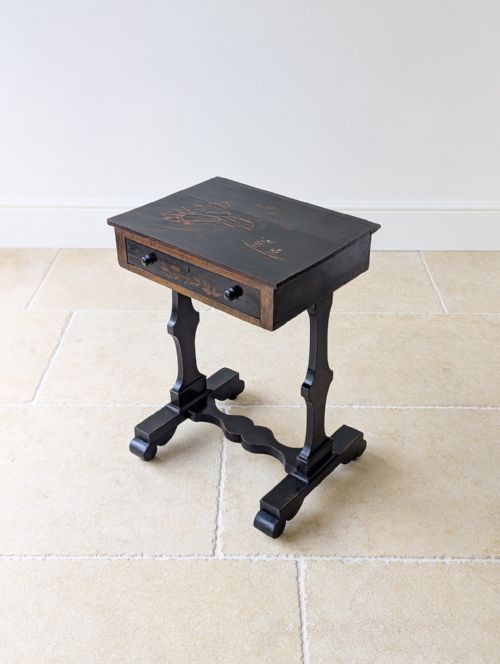
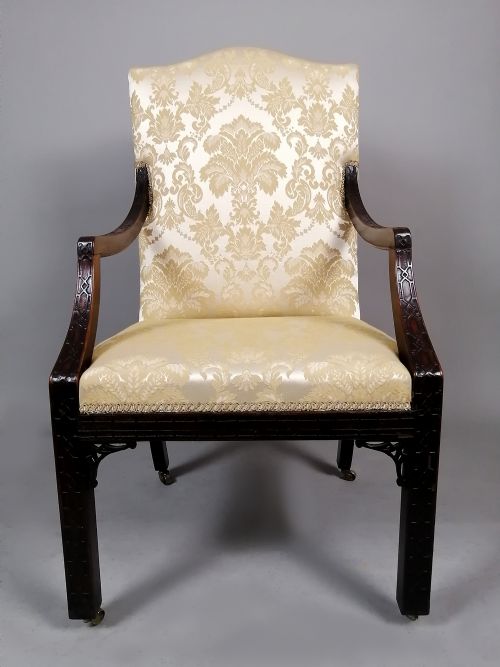
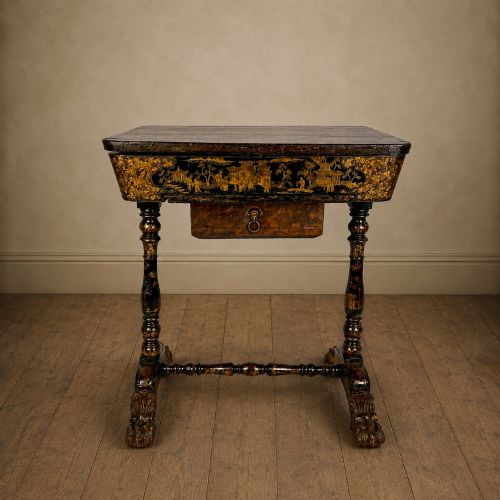
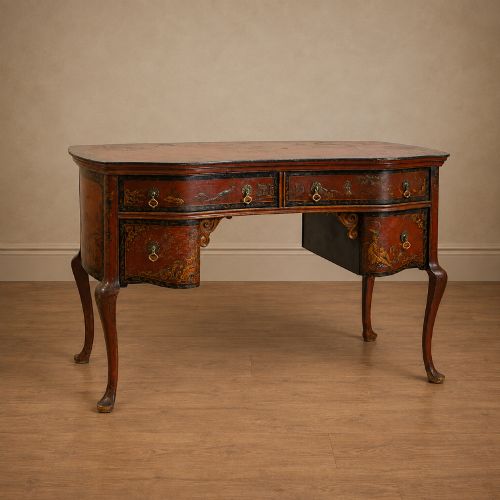
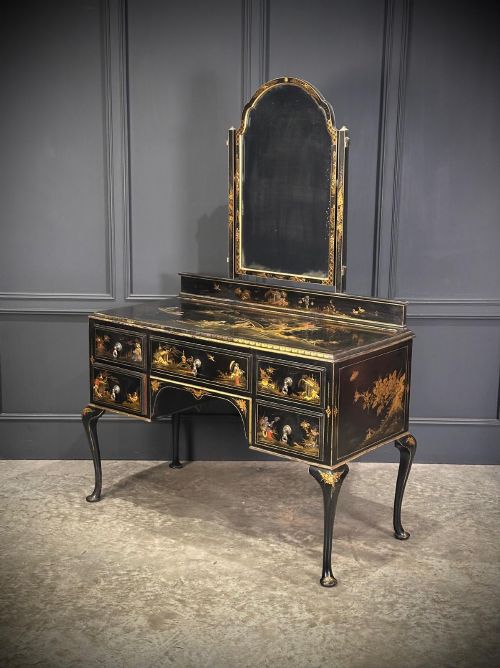
An antique chinoiserie desk combines traditional writing furniture forms with decorative schemes inspired by East Asian art. When exploring this selection, buyers encounter formats ranging from pedestals and side tables to kidney-shaped dressing tables and work tables.
The evidence shows these pieces span the Regency, Victorian, and Edwardian eras, with examples appearing from the nineteenth century up to around nineteen-ten. Forms include pedestal desks, side tables, and writing tables created in styles such as Regency, Chinese Chippendale, and Queen Anne style.
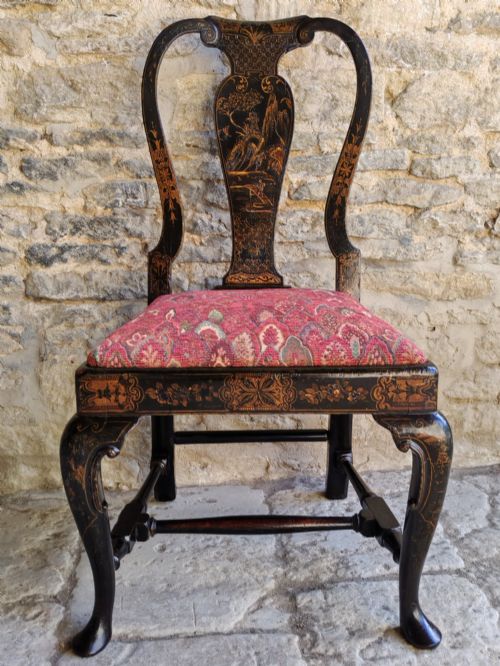
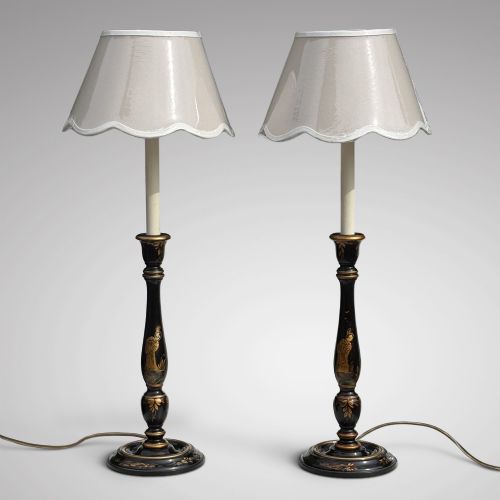
Most items rely on lacquered surfaces, often enhanced with gilt decoration, hand-painted details, or red and black finishes. Makers and workshops of the period adapted familiar British furniture shapes to showcase elaborate figural scenes, landscapes, and floral motifs.
Materials and construction
Makers built these pieces using woods such as mahogany, satinwood, pine, and ebonised wood as a foundation for intricate surface work. Many incorporate leather writing surfaces, brass mounts, and occasional mother-of-pearl details to accent the drawers and hardware.
The defining characteristic is the application of lacquer, japanning, and hand-painted artistry to create glossy, durable finishes adorned with gilt or coloured motifs. Craftsmen built pedestals, writing tables, and dressing furniture using standard cabinet-making techniques of the nineteenth and early twentieth centuries before applying the decorative surface schemes.
Retail Price Guide 2026
Typical UK retail prices for chinoiserie desk, calculated from the Sellingantiques database of over a million retail prices indexed since 2003. This retail price guide relies exclusively on Sellingantiques data; no external sources or auction records are used, so the figures do not describe the wider market.
Some nineteenth-century writers clearly had a fondness for dramatic red lacquer, proving that British desks could be delightfully bold.
Judging quality in these desks
Quality reveals itself in the depth and clarity of the lacquer work, the crispness of the gilt decoration, and the precision of the hand-painted scenes. Superior examples display layered finishes that have aged with a stable, fine crackle, whereas lesser pieces show flat paintwork with little variation in tone or detail.
The choice of underlying timber and the integration of hardware, such as brass mounts and leather inserts, separate standard production from finer cabinet-making. Pieces attributed to notable workshops or makers often demonstrate superior joinery in the drawers and carcass construction compared to unmarked alternatives.
Viardot·Gillows
The Antique Chinoiserie Desk Glossary
- Chinoiserie
- European decorative style reflecting Chinese and East Asian artistic traditions. It appears across furniture, lacquerwork, and textiles during the eighteenth and nineteenth centuries.
- Japanning
- European imitation of East Asian lacquerwork involving layers of varnish heated and polished to a hard finish. This technique created the dark, glossy surfaces seen on many nineteenth-century pieces.
- Pedestal desk
- A freestanding desk with two supporting columns of drawers beneath the work surface. This form provides substantial storage capacity while maintaining a finished appearance on all sides.
- Gilt decoration
- Application of gold leaf or gold paint to highlight specific design elements on a lacquered surface. It creates contrast against the black, red, or ebonised background.
Frequently Asked Questions
How do I care for antique lacquer?
Keep these pieces away from direct sunlight and excessive heat to prevent the lacquer finish from drying out or cracking over time. Dust gently with a soft, dry cloth and avoid harsh chemical polishes that can damage the painted decoration.
Maintaining a stable room temperature helps preserve the wood and the delicate surface layers. Professional conservation is advisable if the lacquer shows signs of lifting.
Were these desks used for writing?
These surfaces served multiple domestic purposes, from formal correspondence to personal grooming when paired with mirrors and dressing accessories. Many feature fitted drawers for stationery, inkwells, and writing implements.
While some function primarily as writing tables, others double as dressing or work tables depending on their specific form and layout.
How do I distinguish nineteenth-century styles?
Regency pieces often feature ebonised wood and classical lines, while later Victorian and Edwardian examples lean towards elaborate japanning and varied wood species like mahogany and satinwood. Chinese Chippendale elements introduce fretwork and distinct structural detailing.
Examining the secondary woods inside the drawers helps confirm the period of construction alongside the exterior decorative style.
What is the difference between japanning and lacquer?
Traditional Asian lacquer uses sap from specific trees native to East Asia, applied in numerous thin layers. Japanning was the European interpretation, using spirit varnishes and shellac over a prepared ground to mimic the glossy oriental finish.
Both techniques produced hard, lustrous surfaces capable of holding intricate gilt and painted decoration.