
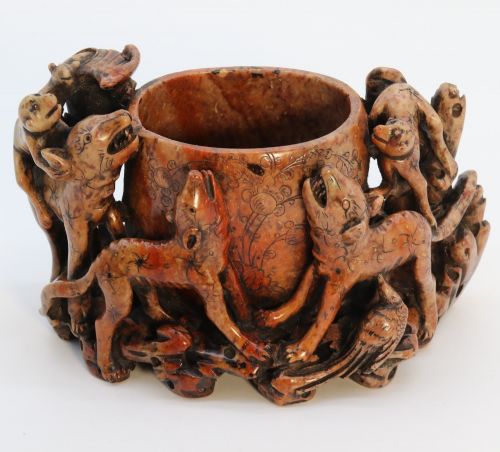


Antique Chinese Brush Holder
An antique chinese brush holder brings the discipline of the scholar's studio straight to your desk, offering both carved texture and centuries of history.
Antique Chinese Brush Holder
When you search for an antique chinese brush holder, you are looking at cylindrical vessels known as bitong or desk accessories designed to hold writing brushes within the scholar's studio. The pieces you are most likely to meet on this page date from the seventeenth century through to the nineteenth century, spanning various reigns of the Qing Dynasty.
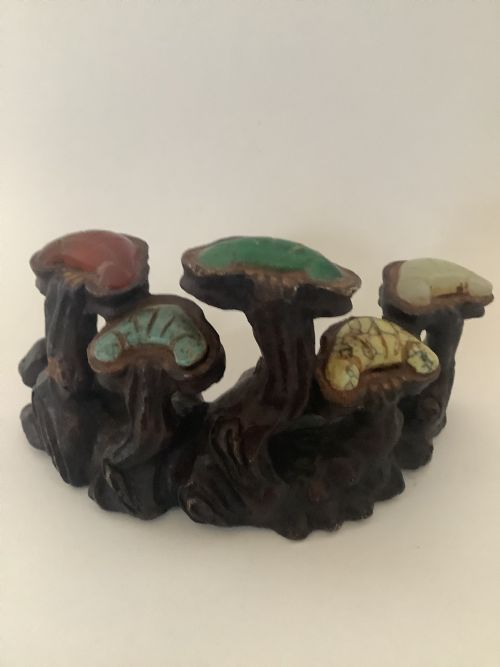
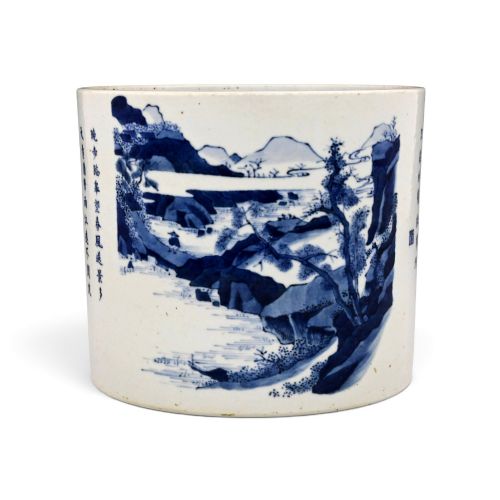
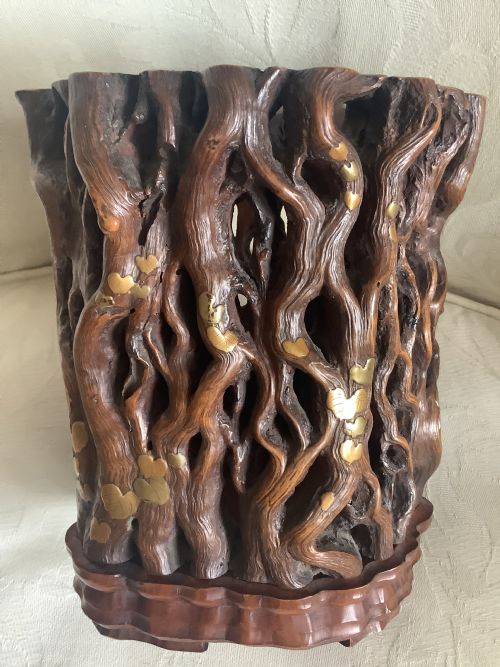
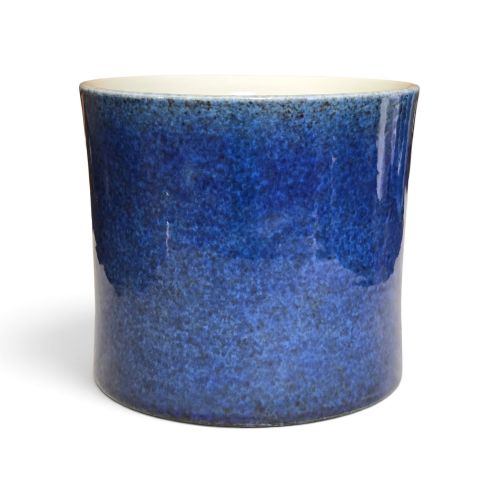
The forms range from large porcelain cylinders decorated in cobalt underglaze, famille verte, and powder-blue glazes to heavily carved organic materials. Makers shaped these objects to serve as functional desk furniture for literati who valued both utility and quiet contemplation in their workspace.
Assessing the execution
The distinction between ordinary and superior examples lies in the depth and sharpness of the carving. In bamboo and hardwood, finer pieces display undercut foliage and expressive faces that do not lose definition across the curve of the cylinder.
For porcelain, quality rests upon the control of the cobalt underglaze, the vibrancy of the enamel palette, and the evenness of glazes like powder-blue. Well-executed pieces maintain strict symmetry in the walls and crispness in the painted scenes attributed to periods like the Kangxi reign.
Among the scholars and immortals carved into these cylinders, an eight-immortals motif brings a touch of Daoist mythology straight to your desktop.
The Antique Chinese Brush Holder Glossary
- Bitong
- A traditional Chinese cylindrical brush pot used on a scholar's desk to hold writing brushes. These vessels form the primary object type found in this category.
- Famille Verte
- A Qing Dynasty porcelain enamel palette dominated by green hues, often paired with underglaze blue and iron red. This style appears on large seventeenth and eighteenth-century examples.
- Kangxi Period
- The era from 1662 to 1722 within the Qing Dynasty, noted for fine blue and white and famille verte porcelain production. Pieces attributed to this time represent the earlier end of the timeline here.
- Famille Rose
- A palette of opaque enamels introduced in the Qing Dynasty, characterised by pink and rose tones mixed with other soft colours. It frequently decorates nineteenth-century official and scholar scene vessels.
Antique Chinese Brush Holder: Frequently Asked Questions
What is a bitong?
A bitong is the traditional Chinese term for a cylindrical brush pot used by scholars and officials. These vessels sat upon desks to organise writing brushes.
They function as both practical desk accessories and decorative works of art carved from porcelain, bamboo, or hardwood.
How do I date a brush pot?
Dating relies on identifying the material, glaze type, and carving style associated with specific periods like the Kangxi era or the later nineteenth-century Qing Dynasty. Evidence often points to stylistic shifts in enamel palettes and carving depths.
Comparing the baseline motifs, such as scholar scenes or the Eight Immortals, helps place a piece within its historical context.
Where were these objects used?
These holders were used primarily within the Chinese scholar's studio, a private space dedicated to writing, painting, and contemplation. Literati surrounded themselves with desk accessories that reflected refined taste.
Today, they can be placed in modern studies or living areas to hold pens, brushes, or simply to display as standalone sculptures.
Are all brush pots made of porcelain?
No, porcelain is only one of several materials used by makers in this category. You will also find vessels carved from bamboo, dense hardwood, soapstone, and cast bronze.
Each material requires different techniques, from wood carving and metal casting to ceramic throwing and glazing.