

Antique China Set
An antique china set brings the painted floral panels and gilded borders of Georgian, Regency, and Victorian dining tables straight into daily use.
Antique China Set
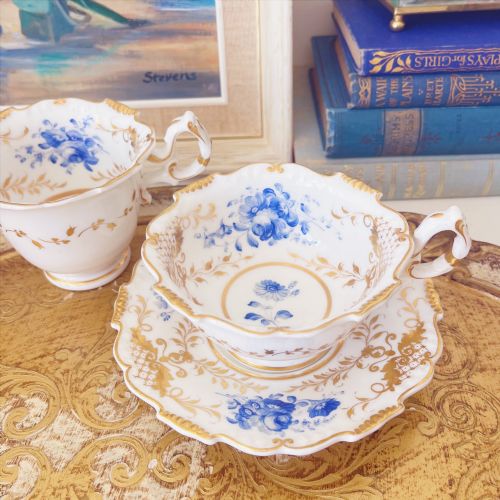
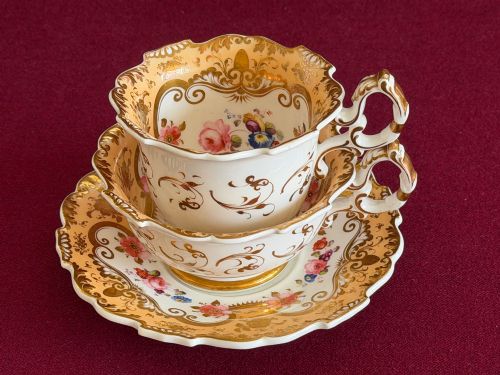
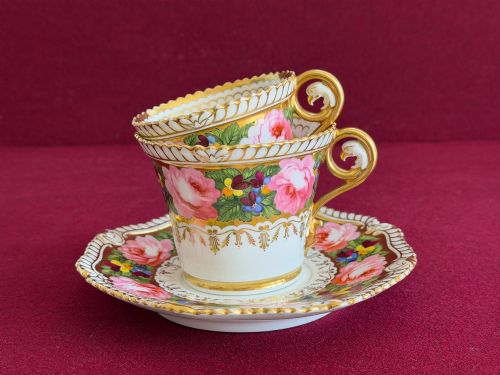
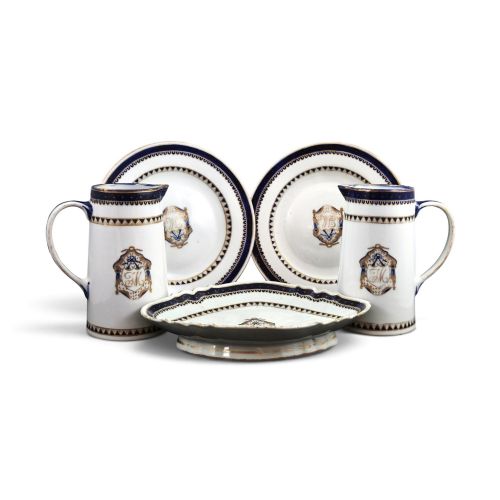
When you search for an antique china set, you encounter service configurations ranging from compact tea trios and breakfast sets to extensive seventy-piece dinner services and dessert plates. These groupings span the eighteenth, nineteenth, and early twentieth centuries, encompassing English porcelain, bone china, ironstone, and earthenware alongside Chinese and Japanese export wares.
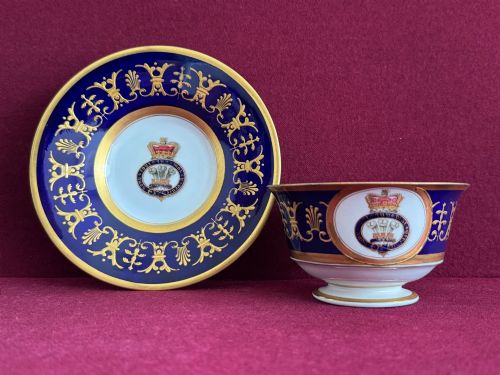
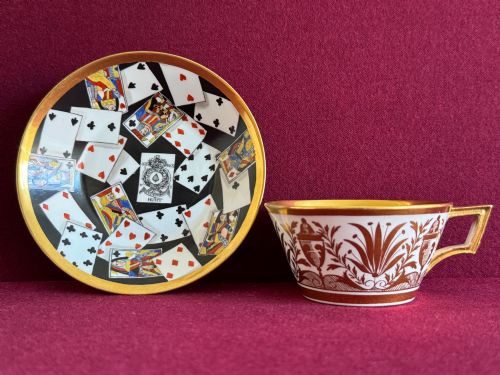
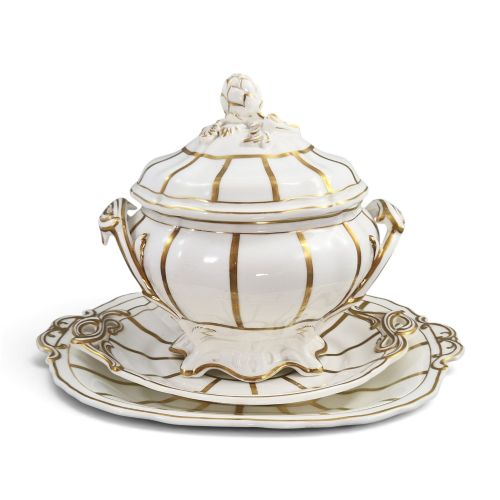
The services appear in distinct forms such as teacups and saucers, dessert services comprising comports and plates, sauce tureen sets, and multi-piece dinnerware. Productions from Worcester, Spode, Minton, and Mason's dominate the offerings alongside regional Staffordshire potteries.
Buyers find matching groups made for functional hospitality, whether intended for afternoon tea, formal dining, or cabinet display. The forms reflect the social dining habits of the Georgian and Victorian eras, preserved in part services or complete settings.
Materials and production techniques
Potters built these services using body compositions of soft-paste porcelain, bone china, ironstone, and refined earthenware. The bodies were shaped on the potter's wheel or pressed in moulds, then biscuit-fired before receiving hand-mixed glazes.
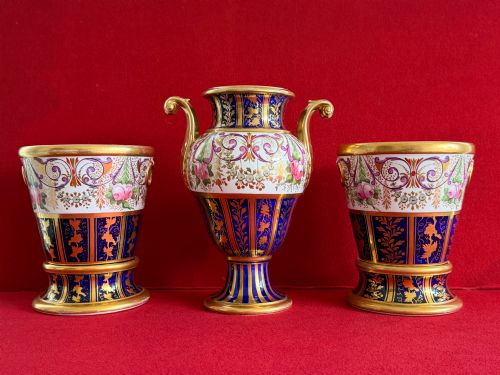
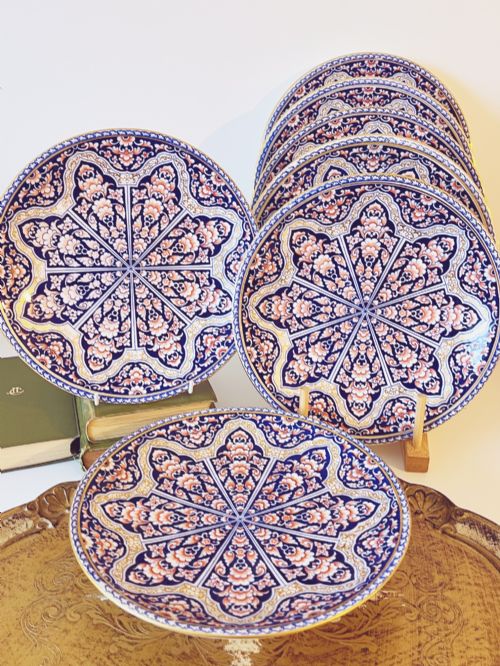
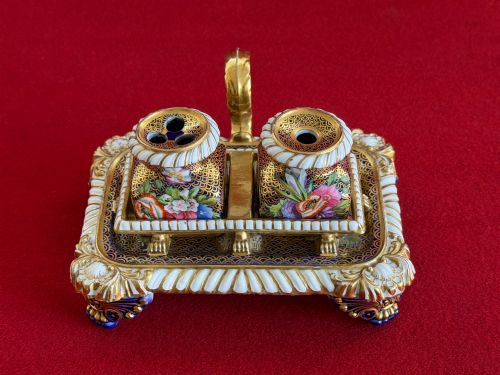
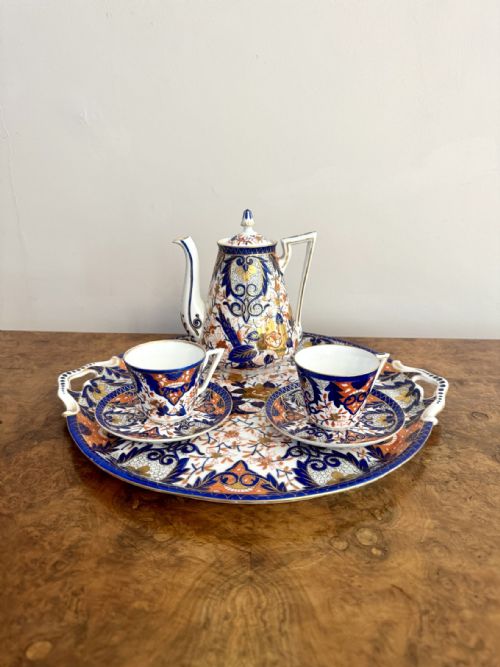
Decoration relied on hand-painted botanical or figurative motifs, blue and white transfer printing, and Japanese-inspired Imari palettes. Many pieces incorporate raised gold leaf and enamel highlights applied over the glaze and fixed in a muffle kiln.
Putti figures and child-sized services remind us that Georgian and Victorian tea tables catered to very small guests indeed.
Variations in quality
Quality rests on the crispness of the porcelain body, the precision of the hand-painted brushwork, and the preservation of the original gilding and enamel colours. Superior sets display translucent bodies and finely detailed hand-painted floral or scenic panels rather than standard transfer prints.
The distinction between standard commercial wares and premier factory productions appears in the complexity of the moulded shapes, the weight of the ironstone or bone china, and the presence of documented pattern numbers and factory marks.
Spode·Barr and Barr Worcester·Derby Porcelain·Grainger Lee and Co·H and R Daniel·Chamberlain Worcester·Royal Crown Derby·Newhall·Coalport·Mason's Ironstone·Davenport·Wedgwood·Minton·Bow Porcelain·Meissen·Doulton Burslem·Royal Doulton·Rockingham Pottery·Booths
The Antique China Set Glossary
- Trio
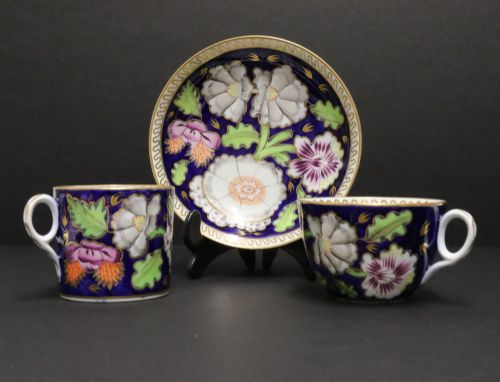
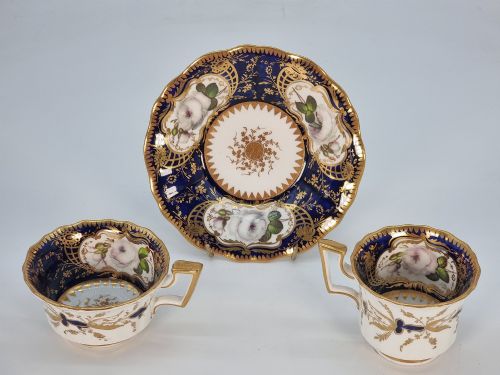
- A matched set consisting of a teacup, coffee cup, and saucer. These groupings were popular in Regency and Victorian breakfast and tea services.
- Imari palette
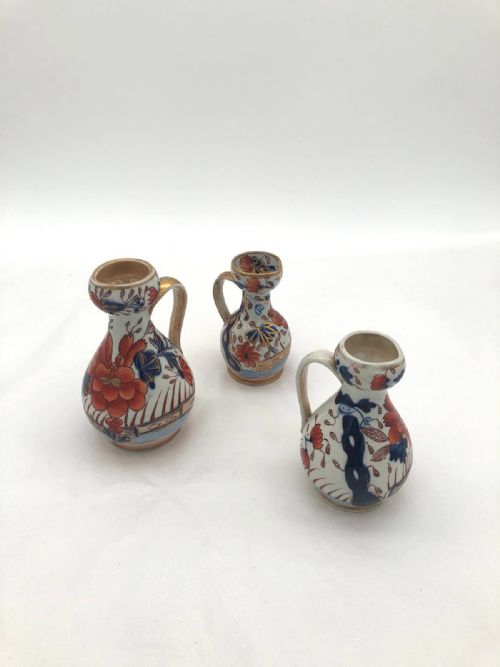
- A decorative scheme employing underglaze blue, iron red, and gilt, inspired by Japanese export porcelain. English factories frequently adopted this style during the Georgian period.
- Ironstone
- A heavy, durable type of earthenware patented in the nineteenth century. It resists chipping and served as a sturdy material for large dinner and jug services.
- Comport
- A raised dish or pedestal bowl placed centrally in a dessert service to hold fruit or sweetmeats. They accompany matching plates in nineteenth-century dining arrangements.
- Transfer printing
- A mechanical method of applying complex designs to ceramic ware from an engraved copper plate using tissue paper. This technique allowed uniform patterns to be produced across large dinner services.
Antique China Set: Frequently Asked Questions
What is the difference between porcelain and bone china?
Porcelain is a fine, vitrified ceramic made from kaolin and petuntse, fired at high temperatures to achieve a dense and often translucent body. It forms the basis of many eighteenth and early nineteenth-century cabinet pieces and tea services.
Bone china incorporates animal ash into the paste, producing a warmer white tone and greater strength. English factories utilised this formula widely throughout the nineteenth century for durable yet refined dinner and tea wares.
How do I identify a Georgian tea service?
Georgian tea wares typically feature hand-painted floral motifs, delicate gilding, and shapes influenced by late eighteenth and early nineteenth-century neoclassical and Regency designs. The porcelain bodies are often lighter and thinner than later Victorian equivalents.
Look for identifiable factory characteristics such as the handwritten pattern numbers of Spode, Chamberlain Worcester, or Newhall. These sets emphasise individual artistic execution over mass production.
Can I use an antique china set for daily dining?
Using antique ceramics requires care because over-glaze enamels and gold leaf can wear down with modern dishwasher detergents and abrasive scrubbing. Hand washing in lukewarm water with mild soap preserves the decorated surfaces.
Earthenware and ironstone bodies are sturdier than early soft-paste porcelain, but thermal shock from boiling liquids can still crack older pieces. Gentle handling ensures these services survive for future tables.
What does a dessert service include?
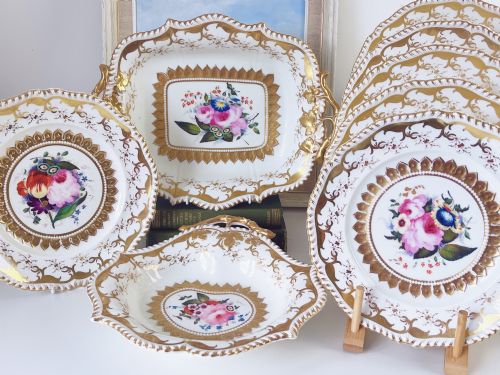
An antique dessert service generally comprises a central comport or pedestal dish accompanied by a matching set of smaller plates. These pieces were designed specifically for serving fruit, sweetmeats, and confections at the conclusion of a formal meal.
The decoration on dessert plates is frequently more elaborate than that found on everyday dinnerware, featuring hand-painted botanical studies or landscapes framed by gilded borders.