



Antique China Dogs
These antique china dogs bring character to a mantelpiece, offering the timeless charm of Victorian spaniels and seated figures.
Antique China Dogs
When you search for antique china dogs, you are looking at ceramic animal figures that populated British interiors from the Georgian era through to the Art Deco period. These spaniels and pugs served as standard household ornaments on mantelpieces and side tables across the country.
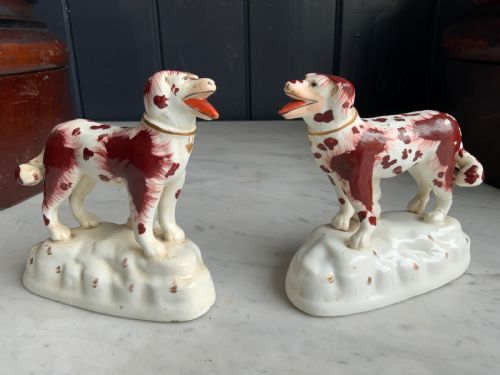
You are most likely to meet Staffordshire pottery comforter spaniels on this page, modelled as seated pairs facing one another. These figures dominate the selections, alongside occasional nursery mugs and decorative figurines from the nineteenth and twentieth centuries.
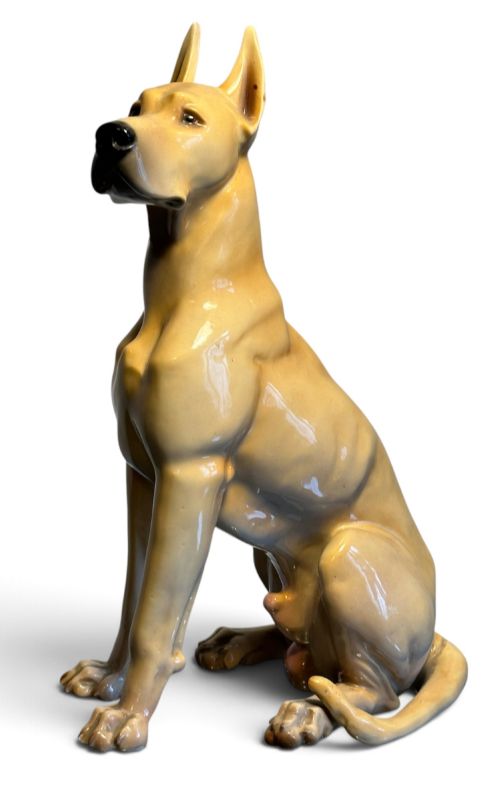
The objects stretch across multiple eras, including Regency pairs and later Edwardian interpretations, reflecting changing domestic tastes in mantelpiece display. Alongside spaniels, you encounter pugs, great danes, and specific canine scenes recorded by makers such as Wedgwood and Beswick.
Materials and construction methods
These figures rely primarily on earthenware, ironstone, and porcelain bodies shaped through moulding techniques. Glazed porcelain and earthenware surfaces provide the smooth base required for detailed painting and finishing.
Kiln firing set the ceramic forms before decorators added coloured enamels and metallic lustres. The combination of slip casting or moulding with hand-painted details created the consistent yet varied appearance of these mantelpiece ornaments.
Antique China Dogs Retail Price Guide 2026
Typical asking prices for china dogs among the pieces listed under this phrase on Sellingantiques today, from the lower quarter to the upper quarter. They describe what is for sale here now, not the wider market.
Victorian mantelpiece spaniels were frequently referred to as comforters because owners imagined they warded off loneliness in the parlour.
Assessing quality in ceramic canines
Quality rests in the crispness of the moulding and the control of the underglaze painting. Superior figures retain sharp facial expressions and clean separation of markings without blurring into the surrounding glaze.
The application of enamel and gilt accents dictates visual success, where finer examples display carefully brushed details rather than rushed or heavy-handed strokes. The balance and symmetry of paired figures further distinguish the superior modelling from mass production.
Nymphenburg Porcelain·Wedgwood and Co Ltd·Mason's Ironstone·Beswick Staffordshire
The Antique China Dogs Glossary
- Comforter spaniels
- Staffordshire earthenware figures made in matched pairs to sit on either side of a fireplace. These spaniels typically feature gold chains and lockets painted on their chests.
- Ironstone
- A dense, durable type of earthenware patented in the nineteenth century. It resists chipping better than standard pottery and forms the body of many Victorian tureens and vases.
- Enamel
- Opaque glass-like paint applied over a fired ceramic glaze. Decorators used these bright colours to render the spots, collars, and eyes of animal figures.
- Gilt
- A thin layer of gold applied to ceramic surfaces for decoration. It highlights collars, lockets, and trim on nineteenth-century pottery.
Antique China Dogs: Frequently Asked Questions
What are antique china dogs?
Antique china dogs are ceramic figures and mantelpiece ornaments modelled predominantly as spaniels, pugs, and other breeds. They were produced by British potteries from the Georgian era through the twentieth century.
Most examples take the form of seated pairs intended to flank a fireplace or adorn a sideboard. They combine moulded earthenware or porcelain bodies with hand-painted enamel markings.
How were Staffordshire dogs displayed?
Staffordshire dogs were traditionally placed on mantelpieces in matching pairs, facing inward toward the centre of the hearth. This symmetric arrangement became a staple of Victorian domestic interior decoration.
Beyond the mantel, owners positioned them on window sills, chests of drawers, and an array of living room surfaces. Their primary role was decorative companionship within the Victorian home.
How do I tell periods apart?
Distinguishing periods involves examining the ceramic body, painting style, and modelling characteristics. Georgian and Regency pieces often show simpler forms, while Victorian Staffordshire spaniels display characteristic gilt lockets and distinct facial spotting.
Later twentieth-century examples, such as those from the Art Deco period, introduce sleeker profiles and different glazing techniques. Comparing the weight of the earthenware or porcelain helps identify the era of production.
Are all Staffordshire dogs made of pottery?
While the majority of Staffordshire dogs consist of earthenware or pottery, some manufacturers utilised porcelain and ironstone. The material choice depended on the factory and the specific decade of manufacture.
Earthenware provided a porous, easy-to-mould body suited to high-volume figures, whereas porcelain allowed for finer detail and translucency. Ironstone offered a heavier, more durable alternative for larger decorative items.