






Antique China Centerpiece
An antique china centerpiece brings presence to a dining table, uniting porcelain, ironstone and ceramic in forms designed to anchor a room.
Antique China Centerpiece
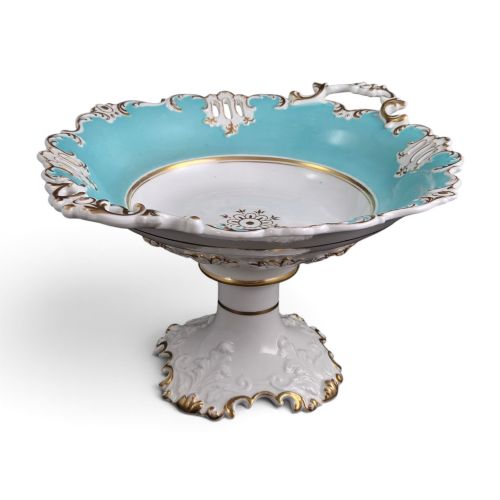
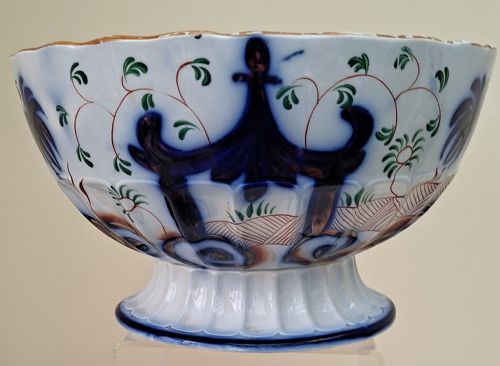
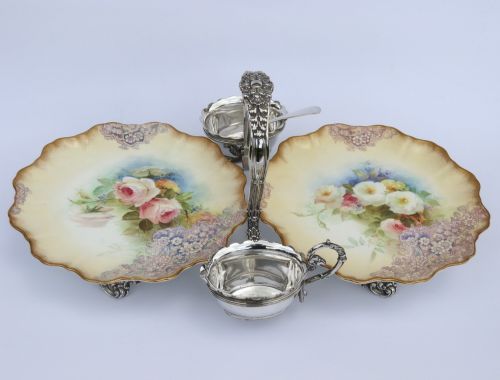
An antique china centerpiece takes the form of decorative bowls, comports, baskets and tureens designed to hold fruit or flowers at the centre of a table. These pieces emerge from Georgian, Regency, Victorian and Edwardian periods, carrying the weight of formal dining traditions.
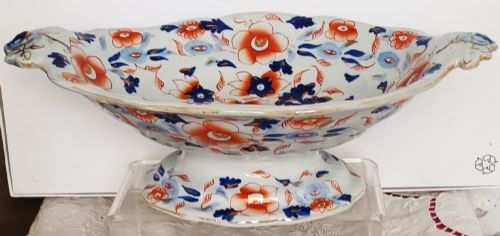
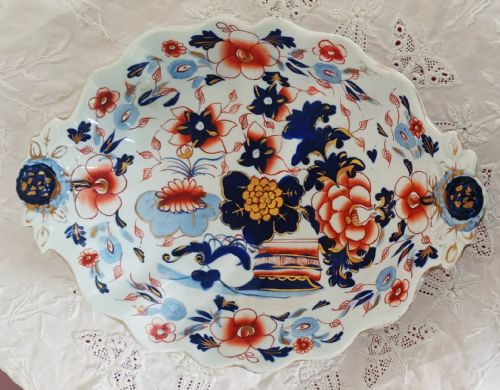
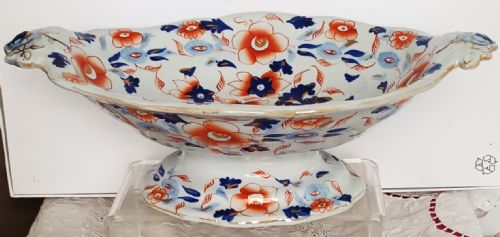
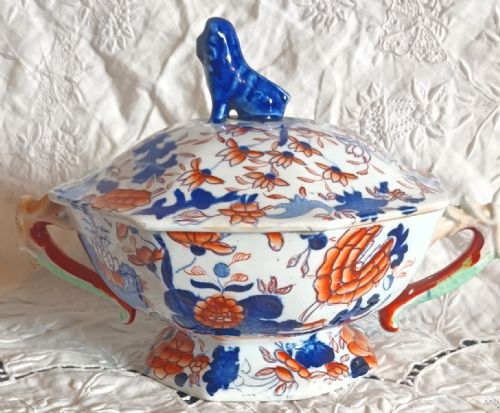
The most frequent examples on this page are ironstone comports and porcelain bowls, alongside pedestals, tazzas and tureens. Makers span English factories like Mason's, Worcester and Doulton Burslem, as well as Chinese export wares in Japanese Imari and Cantonese styles.
Buyers select an antique china centerpiece to serve a decorative function or complete a table setting. The variety covers everything from heavy ironstone footed dishes to delicate bone china baskets with lattice borders.
Materials and construction
Production relies primarily on ceramic, porcelain and heavy ironstone bodies shaped into bowls, baskets and tureens. Factories applied enamel colours, hand-painted motifs and printed patterns directly onto the fired clay.
Decoration often incorporates gilding, gold leaf and intricate glaze work, particularly on Regency and Victorian pieces. Footed comports, tazzas and twin-handled serving dishes received specialised moulding to create scalloped edges and pierced lattice walls.
Antique China Centerpiece Retail Price Guide 2026
Typical asking prices for china centerpiece among the pieces listed under this phrase on Sellingantiques today, from the lower quarter to the upper quarter. They describe what is for sale here now, not the wider market.
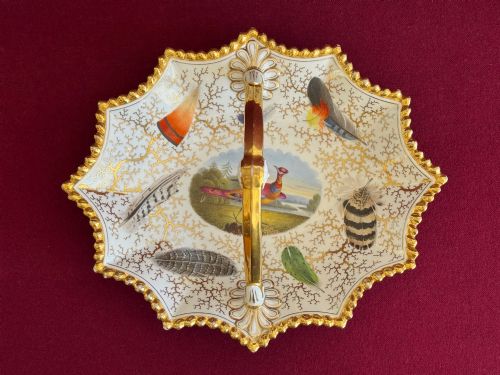
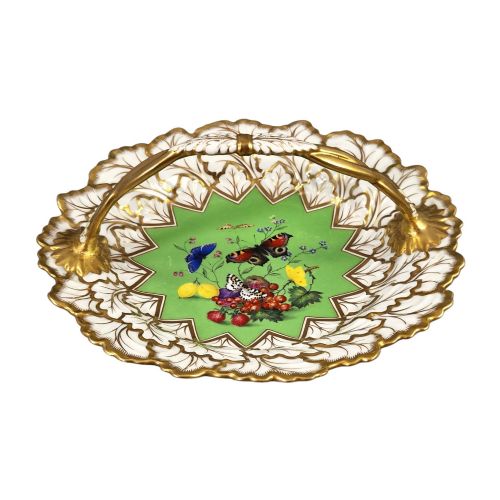
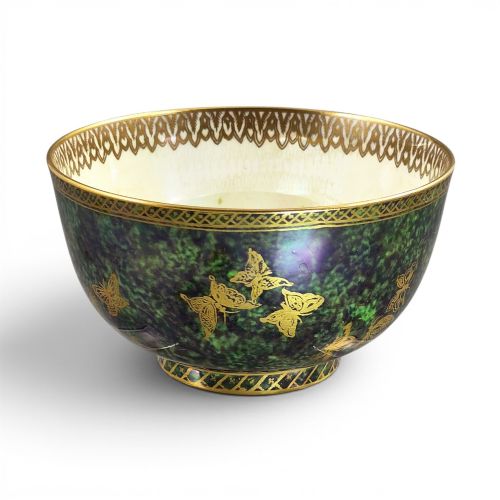
Several pieces feature hand-painted butterflies and pheasants, bringing avian life directly onto the dining table.
Assessing quality
Quality rests in the crispness of the moulding and the execution of the hand-painted or transfer-printed decoration. Pieces with hand-painted fruit scenes or complex Chinoiserie and Japan patterns demonstrate superior craftsmanship compared to simpler production wares.
The integrity of the glaze and the application of gold leaf or gilding distinguish finer examples. Substantial ironstone bodies show durability, while refined bone china and porcelain require precision in the kiln to avoid warping during high-temperature firing.
Flight Barr and Barr·Coalport·Wedgwood·Walker and Hall·Doulton Burslem·Royal Worcester
The Antique China Centerpiece Glossary
- Comport
- A raised dish or bowl used for serving fruit or sweets at the table. These pieces typically stand on a central foot or pedestal.
- Ironstone
- A heavy, durable ceramic perfected in the 19th century as a robust alternative to porcelain. It takes enamels and transfer prints exceptionally well.
- Tazza
- A shallow ornamental cup or bowl mounted on a stem and foot. This Italian-derived form serves as a display piece for desserts.
- Tureen
- A deep covered vessel used for serving soups, vegetables or sauces. In ceramic and ironstone, they often feature matching stands and elaborate handles.
- Imari
- A style of Japanese porcelain decorated in underglaze blue and iron red, heavily supplemented with gold. English factories frequently copied these vibrant patterns.
Antique China Centerpiece: Frequently Asked Questions
What is an antique china centerpiece used for?
These vessels served as the focal point of a formal dining table, holding displays of fresh fruit, sweets or cut flowers.
Today, they function as decorative objects on sideboards, side tables or dining surfaces, continuing their role as visual anchors in a room.
How do I identify a Georgian centerpiece?
Georgian pieces, dating roughly up to the 1830s, often take the form of heavy ironstone tureens or robust footed comports.
They frequently feature Chinoiserie, Japan patterns or armorial designs, reflecting the aesthetic preferences of the late 18th and early 19th centuries.
What distinguishes ironstone from porcelain?
Ironstone is a dense, opaque, heavy ceramic developed to withstand heavy daily use while mimicking the appearance of fine porcelain.
Porcelain is lighter, more refined, and sometimes translucent, often reserved for decorative bone china comports and baskets.
How should I display a comport?
Comports sit naturally on dining tables, large consoles or mantel shelves where their elevated profile can be fully appreciated.
They require a stable surface away from heavy foot traffic, as their raised feet and pedestal bases place the weight above the supporting surface.