



Antique Chicken Artwork
Antique chicken artwork brings rural life directly into the room through oil paintings and watercolours spanning the eighteenth century to the nineteen-thirties.
Antique Chicken Artwork
Antique chicken artwork captures farmyard scenes, poultry, and rural daily life through oil paintings and watercolours. These works span from the eighteenth century through the Victorian and Edwardian periods.
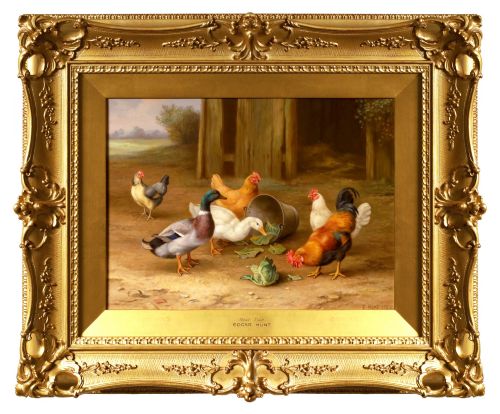
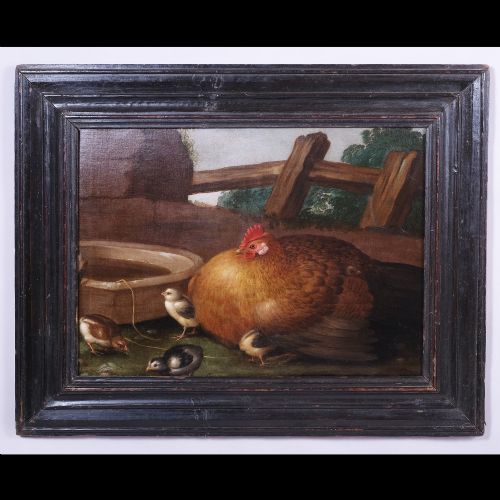
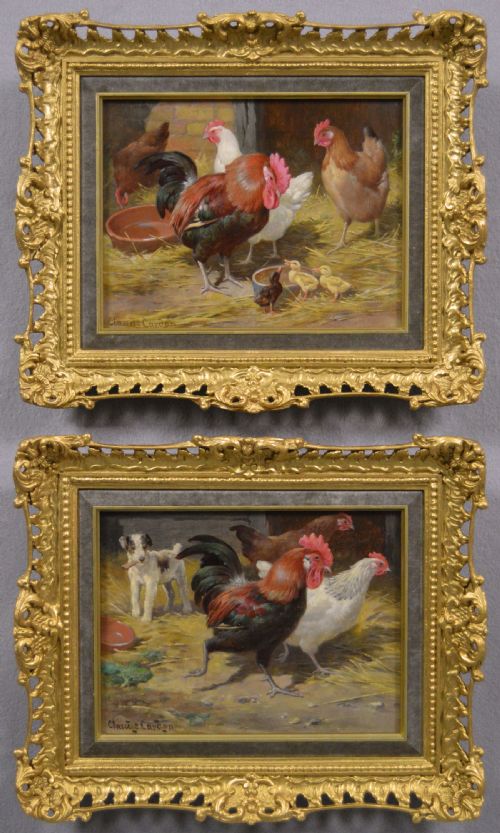
You will most frequently encounter nineteenth-century and early twentieth-century oil on canvas pieces depicting hens, cockerels, and chicks alongside other farm animals. Watercolour paintings on paper also appear regularly, often showing cottage farmyard settings.
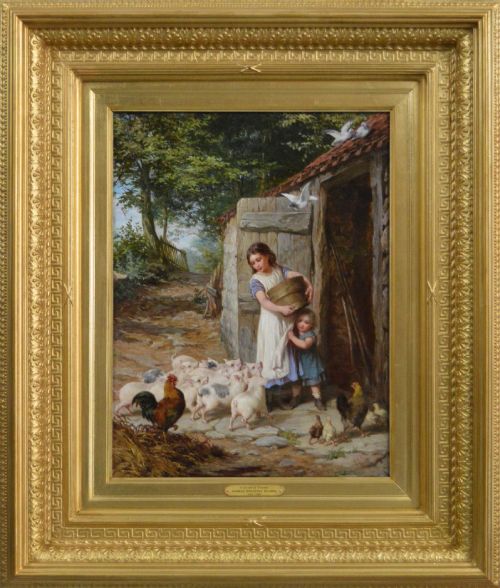
The subjects range from solitary cockerels to detailed genre scenes involving women and children feeding livestock. Artists focused heavily on British animalier traditions and pastoral realism during these periods.
How they were made
Painters used oil paint on canvas stretched over wood frames to create durable, rich farmyard scenes. Watercolour on paper was also utilised extensively for lighter, detailed rural compositions.
Many works incorporate period frames constructed from wood and finished with giltwood and gold leaf. These original surrounds complement the traditional painting techniques of the nineteenth and early twentieth centuries.
Listings span from the 18th century through the Victorian, Edwardian, and 1930s periods, executed in oil on canvas, watercolour, and paper.
What varies in quality
The nuance of feather texture, light falling across a farmyard, and the anatomical accuracy of the chickens separate accomplished animalier works from standard decorative pieces. Master painters captured specific postures and interactions within the flock with precise brushwork.
The integrity of the original canvas, the preservation of the paint surface, and the retention of period wood and giltwood frames significantly influence the standing of any given piece.
George Augustus Holmes·Edgar Hunt·Claude Cardon·John Frederick Herring Jnr·Percival Glenfern·Robert Russell MacNee·B. Kaufmann·J L VAN Leemputten·JOHN ABERNETHY LYNAS-GRAY·BENJAMIN D. SIGMUND
The Antique Chicken Artwork Glossary
- Animalier
- Art depicting animals, particularly popular in the nineteenth century among British and European painters. It requires precise knowledge of animal anatomy and behaviour.
- Oil on Canvas
- A painting medium where pigments are suspended in drying oils and applied to a woven fabric support. This combination allows for deep colour saturation and blending.
- Watercolour
- A painting method where water-soluble pigments are applied to paper. It creates luminous, translucent effects well suited to pastoral scenes.
- Giltwood
- Wood carved and coated with gold leaf or a gold-coloured substance. It provides traditional ornate framing for period paintings.
Antique Chicken Artwork: Frequently Asked Questions
What periods do these paintings come from?
The available works originate primarily from the nineteenth century, including Victorian and Edwardian eras, alongside select pieces from the eighteenth century and the early nineteen-thirties.
This broad timeline encompasses the height of British animalier painting and rural realism.
Are these works painted on canvas or paper?
Both mediums appear across the selection, with oil on canvas being the most common format for detailed farmyard scenes. Watercolours on paper also feature frequently, often capturing lighter cottage exterior compositions.
Each medium employs traditional techniques appropriate to its period of creation.
How do I care for an antique oil painting?
Keep the artwork away from direct sunlight and steady temperature fluctuations to protect the canvas and paint layers. Dust the surface and frame gently with a dry, soft cloth.
Avoid using moisture or chemical cleaners on the paint or giltwood frame.
What subjects are included besides chickens?
The artworks frequently feature broader farmyard environments containing cockerels, chicks, ducks, pigs, calves, and horses. Human figures such as children or women feeding the livestock also appear in many genre scenes.
These elements place the poultry within an active rural narrative.