

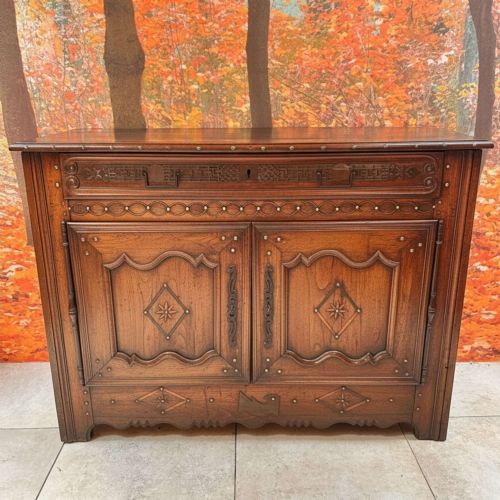


Antique Chestnut Cabinet
An antique chestnut cabinet brings robust warmth and practical timber grain into a room, offering enduring storage built from rich provincial wood.
Antique Chestnut Cabinet
When you search for an antique chestnut cabinet, you encounter sturdy storage forms originating from European and Japanese workshops across the eighteenth and nineteenth centuries. These items range from French provincial food cupboards and dresser bases to Japanese step chests and enclosed bed front cupboards.
The most common examples you meet on this page are French provincial cupboards and dressers shaped from solid chestnut, alongside distinct regional pieces such as Breton lit-clos cupboards. Japanese tansu and kaidan tansu also appear, utilising alternate timbers like zelkova alongside traditional forms.
Regional vernacular dictates the construction, whether it is the carved panels of French country furniture or the clever step configuration of a Japanese storage chest. Each object serves a domestic purpose, storing provisions, tableware, or personal belongings with straightforward utility.
How they were made
Makers built these pieces primarily from solid chestnut, often pairing the timber with oak, pine, or cedar linings, and incorporating iron or brass for hinges, handles, and escutcheons. In certain provincial French examples, metal components extend to original pewter cisterns and basins fitted directly into washstand or lavabo cabinetry.
Carpenters relied on traditional panelled construction and dovetail joints to accommodate the natural movement of the wood over centuries of use. Carved decoration appears on doors and friezes, reflecting local folk art traditions rather than standardised factory output.
Antique Chestnut Cabinet Retail Price Guide 2026
Typical asking prices for chestnut cabinet among the pieces listed under this phrase on Sellingantiques today, from the lower quarter to the upper quarter. They describe what is for sale here now, not the wider market.
Listings feature eighteenth-century and nineteenth-century pieces spanning French provincial styles, Breton folk art, and Japanese Meiji period tansu chests.
What varies in quality
Quality rests upon the integrity of the timber and the retention of original structural elements, such as unaltered paneling and period ironwork. Pieces that maintain their untouched surface patination and original regional hardware stand apart from those altered or stripped down the line.
The depth and execution of hand-carved details also define the tier of a piece, with crisper provincial carving and harmonious proportions marking out the better examples of domestic furniture.
The Antique Chestnut Cabinet Glossary
- Chestnut
- A durable hardwood native to temperate regions, prized by provincial cabinetmakers for its rich grain, warm colour, and resistance to decay. It forms the primary structural material for much of the regional European furniture found here.
- Lit-clos
- A traditional enclosed box bed from Brittany, the front of which makers frequently adapted into freestanding cupboards and cabinets. This vernacular form preserves sliding or panelled doors typical of regional French sleeping quarters.
- Tansu
- A traditional Japanese mobile storage chest built for domestic utility, featuring drawers and compartments. Makers utilised various woods to construct these cabinets for organising household goods.
- Kaidan Tansu
- A Japanese step chest designed to double as a staircase while providing concealed storage within each riser. These architectural cabinets combine climbing access with practical compartment space.
- Vaisseleiere
- A traditional French provincial rack or cabinet designed for displaying and storing plates and tableware. This form usually combines lower enclosed cupboards with upper open shelving for kitchen pottery.
Antique Chestnut Cabinet: Frequently Asked Questions
What is an antique chestnut cabinet used for?
These cabinets served various domestic roles in past centuries, ranging from storing kitchen provisions and foodstuffs to housing tableware and linens in provincial homes. Their robust construction made them central pieces of functional furniture in rural European households.
Today, they adapt easily to modern interiors as living room storage, hallway cupboards, or kitchen dressers. Their deep shelves and drawers provide practical capacity while adding historical character to a room.
How do I identify French provincial furniture?
French provincial furniture displays regional woodworking traits, utilising locally available timber like chestnut and oak rather than expensive imported exotic woods. The construction relies on solid panels, pegged joints, and hand-carved motifs that reflect local folk art traditions.
These pieces often lack the formal symmetry of court furniture, prioritizing utility and durability instead. Look for regional signatures such as the enclosed bed fronts of Brittany or the specific carving styles of mountain workshops.
What is a Japanese tansu cabinet?
A tansu is a traditional Japanese storage chest built in various forms for domestic organisation, including clothing, documents, and valuables. Makers constructed them from woods like zelkova and pine, reinforcing them with sturdy iron or brass hardware for portability.
Step chests, or kaidan tansu, represent a specialised form built as functional staircases containing hidden drawers within the steps. They reflect ingenious space-saving design from the Meiji period and earlier.
How should I care for antique wood furniture?
Maintain antique chestnut and mixed-wood furniture by keeping them away from direct heat sources and strong sunlight, which can dry out the timber and crack the panels. Consistent indoor humidity prevents the wood from warping over time.
Apply natural beeswax periodically to nourish the surface and preserve the historic patination. Avoid harsh chemical cleaners or silicone polishes that damage the aged finish.