
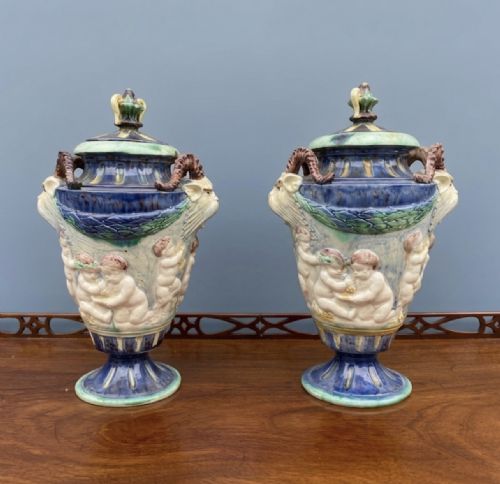
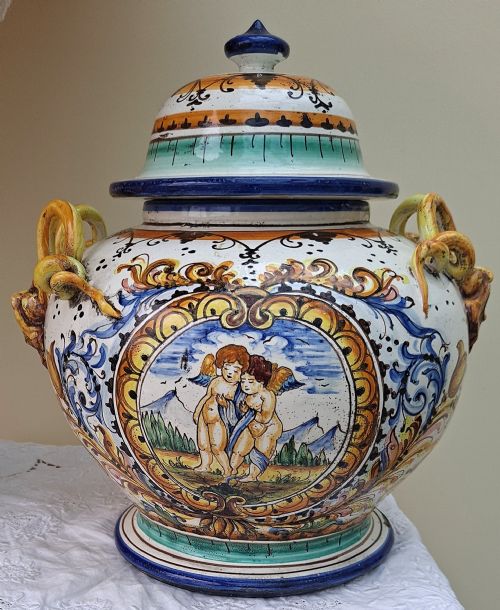
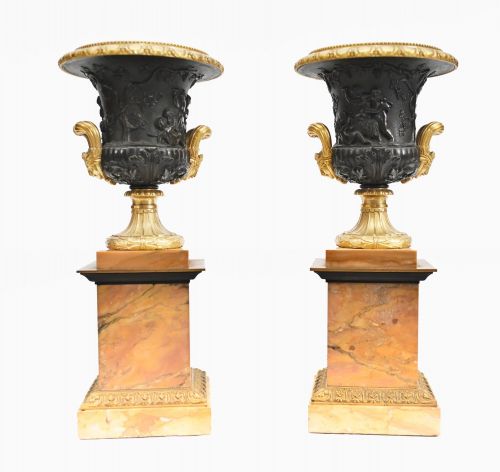
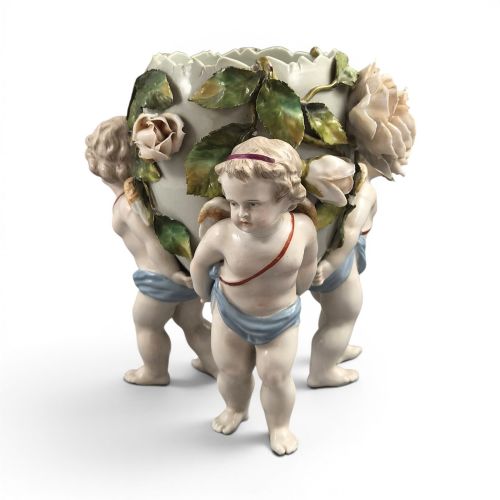


Antique Cherub Vase
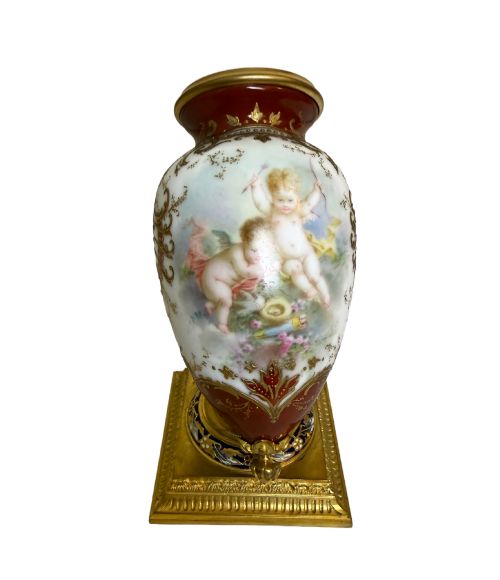
An antique cherub vase combines classical figural charm with decorative metalwork or hand-painted porcelain, bringing 19th-century European craftsmanship straight to a mantelpiece.
Antique Cherub Vase
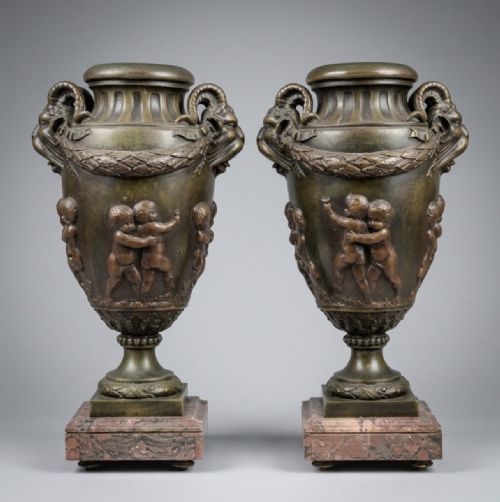
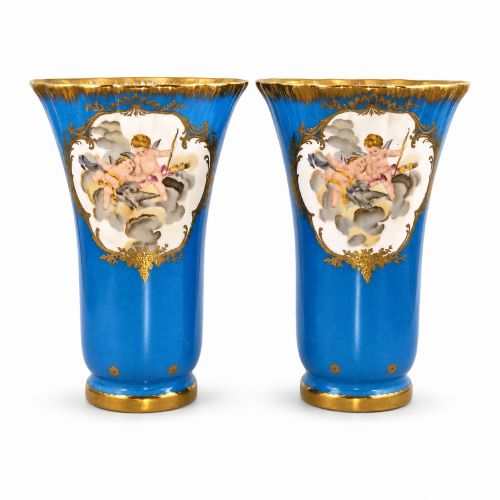
When you search for an antique cherub vase, you are looking at ornamental vessels populated by winged putti, most frequently produced during the 19th century in Britain and across continental Europe. These pieces appear as lidded urns, potpourri jars, and figural table lamps, often modelled with figures clambering over the sides or supporting the central bowl.
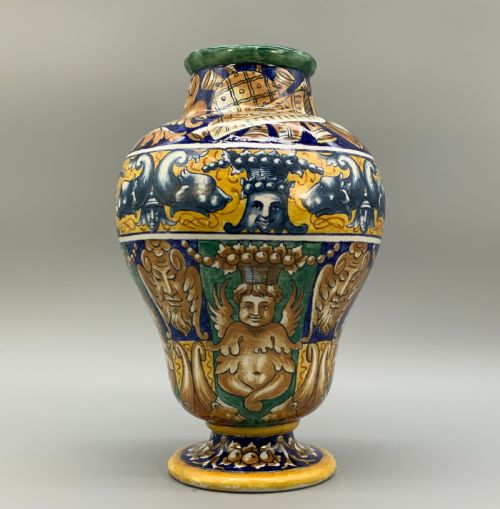
The objects on this page lean heavily towards Victorian, Rococo Revival, and French Neoclassical aesthetics. You will encounter glazed porcelain bodies paired with chased metal mounts, alongside earthenware majolica and cast bronze iterations from Grand Tour travels.
Continental factories and domestic potteries alike embraced the cherub motif, translating mythological sculpture into domestic decorative art. These vessels served primarily as formal parlour ornaments rather than utilitarian flower holders.
How they were made
Manufacturers combined hand-thrown or slip-cast ceramic bodies with intricate metalwork, utilising hard-paste porcelain, earthenware, and majolica as the primary substrates. These ceramic sections frequently received detailed polychrome painting, enamel decoration, or pate-sur-pate detailing before undergoing high-temperature firing.
The metal elements rely on cast bronze, spelter, or ormolu mounts finished with mercury gilding or gold leaf. Foundational bases often incorporate contrasting materials like carved white marble or slate to anchor the weight of the metal and ceramic assembly.
Listings feature 19th-century porcelain, earthenware, and cast bronze from French, German, Italian, and British workshops.
What varies in quality
The distinction between standard commercial output and exceptional work lies in the sharpness of the modelling and the hand-painting on the cherub figures themselves. Superior examples show delicate facial expressions, carefully defined fingers and wings, and cleanly applied gilt bronze mounts that fit the ceramic body without excessive solder or gaps.
Heavier casting in the bronze or ormolu components, combined with rich, multi-layered enamel work and genuine fire gilding rather than modern lacquer, separates museum-grade mantel ornaments from mass-market Victorian decorative wares.
Sevres·Sitzendorf·Dresden·Minton·Royal Worcester·Bernhard Bloch·Georges Van De Voorde·WMF·Richard Eckert·Schierholtz
The Antique Cherub Vase Glossary
- Ormolu
- Gilded bronze, typically achieved through an amalgam of mercury and gold applied to cast brass or bronze during the 18th and 19th centuries. This technique produces a deep, warm metallic lustre that resists tarnishing over generations.
- Majolica
- Opaque tin-glazed earthenware decorated with brightly coloured metal oxides, widely revived across Victorian England and Italy. The glaze fires to a glossy, vibrant finish that holds deep blues, greens, and yellows.
- Pate-sur-pate
- A ceramic decorating technique where liquid white porcelain slip is painted in successive layers onto a contrasting coloured clay body. This builds a delicate, low-relief cameo effect before the piece is glazed and fired.
- Campana
- A classical bell-shaped urn form derived from ancient Roman pottery discoveries. These vessels feature a distinct flared lip and a footed base, frequently adapted during the Grand Tour period.
- Putto
- A plump, winged toddler figure derived from classical art, often mistaken for a cherub or cupid in 19th-century decorative pieces. They appear wrestling with grapes, supporting baskets, or clambering up the sides of vases.
Antique Cherub Vase: Frequently Asked Questions
How were these vases used originally?
They functioned primarily as ornamental centrepieces, mantel garnitures, or potpourri containers rather than practical vessels for cut flowers.
Their intricate painted surfaces and delicate protruding figures made them purely decorative status symbols.
How do I date a porcelain cherub vase?
Dating relies on identifying factory backstamps, glaze characteristics, and stylistic clues like the heavy ornamentation typical of the 1880s and 1890s.
Comparing the mounting techniques of the bronze or ormolu also helps narrow down the production decade.
Are these vases fragile?
Yes, the protruding limbs of the porcelain cherubs and the applied floral elements make them particularly susceptible to chipping if handled carelessly.
Displaying them away from busy traffic areas protects the delicate modelled details from accidental knocks.
What styles do these vases come in?
They appear most frequently in Rococo Revival, French Neoclassical, and Renaissance Revival styles popular during the Victorian era.
Many draw direct inspiration from earlier 18th-century Sèvres and Meissen factory designs.