




Antique Cherub Compote
An antique cherub compote brings theatrical table centrepiece drama to a room, pairing sculptural bronze or delicate porcelain putti with generous display bowls.
Antique Cherub Compote
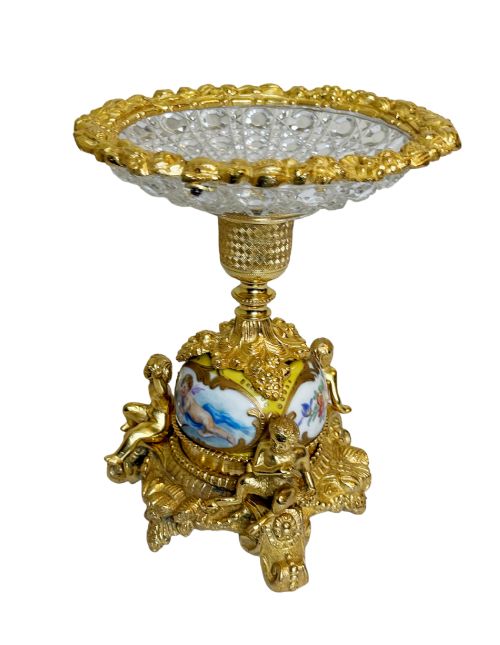
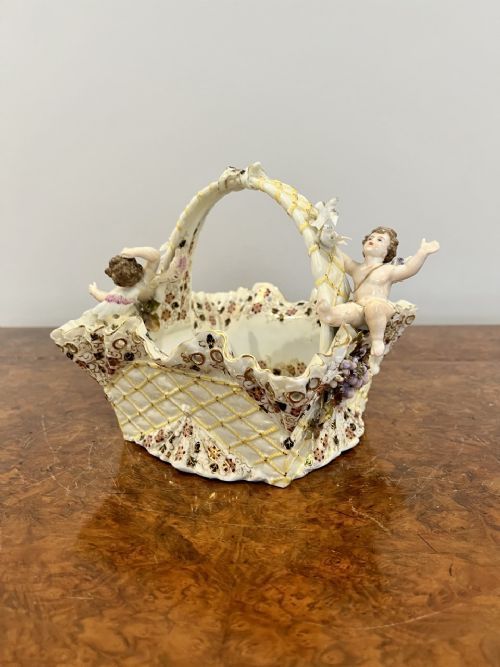
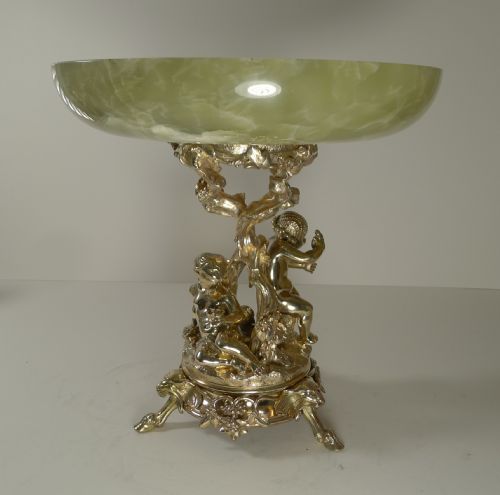
When you search for an antique cherub compote, you enter a domain of elevated table decoration spanning the nineteenth century up to the Edwardian period, often incorporating related forms like tazzas, centrepiece bowls, and decorative baskets. These grand decorative objects serve as commanding focal points, featuring winged figures, putti, or cupids supporting or surrounding elevated vessels.
The pieces you meet on this page lean heavily towards European craftsmanship, uniting porcelain examples from German manufactories such as Schierholz, Plaue, and Dresden with prestigious English ceramic houses like Minton. Alongside ceramics, French and English workshops produced robust metalwork alternatives utilising gilt bronze, patinated bronze, and silver plate.
Forms vary from circular fruit bowls and shell-shaped dishes to elaborate musical putti groups and mineral basins of malachite and Blue John. These compositions balance utility with sheer ornamental theatre, designed originally to anchor formal dining tables or sideboards.
Materials and construction methods
Makers shaped these centrepieces using diverse manufacturing traditions, combining moulded ceramics, hand-modelled porcelain flowers, and cast metals. Porcelain pieces involve intricate kiln-firing of soft or hard paste bodies, often enhanced with applied roses and hand-painted polychrome decoration.
Metal components rely on bronze casting, utilising both gilt and patinated finishes to define the cherubic figures, while some pieces integrate cut crystal basins, mother-of-pearl dishes, and polished marble or black marble plinths. Ormolu mounts and gold leaf applications provide rich metallic contrast against the white ceramic and stone elements.
Several cherubs double as musicians, caught mid-tune amongst applied porcelain roses.
Distinctions in craftsmanship and design
Quality reveals itself in the sculptural definition of the cherubs and the crispness of the casting or moulding. Superior examples display finely rendered facial expressions, distinct feather detailing on wings, and meticulous hand-applied elements like foliage and flowers rather than heavy, indistinct blobs of porcelain paste.
The choice and combination of materials also elevate certain works, such as those pairing gilt bronze with precious hardstones like malachite and Blue John, or incorporating signed French metalwork from prominent Paris firms.
Minton·Christofle Paris·Schierholz Plaue·German Dresden
The Antique Cherub Compote Glossary
- Compote
- An elevated bowl or dish used for serving fruit or sweets, standing on a central stem or foot. This form sits at the heart of the category alongside comports and tazzas.
- Putto
- A plump, naked child figure, frequently winged, appearing often in Renaissance and revival decorative arts. In these pieces, they support or frolic around the central vessel.
- Ormolu
- Gilded bronze, where finely ground gold is applied to a bronze base using a mercury amalgam or electroplating technique. It yields a rich, warm metallic lustre.
- Majolica
- A type of earthenware glazed with tin enamel and painted with colourful metallic oxide pigments. Minton utilised this technique for expressive figural centrepieces.
Antique Cherub Compote: Frequently Asked Questions
What were cherub compotes used for?
These elevated vessels functioned primarily as table centrepieces for formal dining, holding fresh fruit, sweetmeats, or floral displays during elaborate meals.
Beyond dining tables, they served as grand decorative ornaments on sideboards and consoles, intended to display wealth and artistic taste.
How do I distinguish German porcelain from English pieces?
German examples, particularly from factories like Schierholz and Dresden, often feature heavily modelled putti surrounded by intricate applied porcelain flowers and openwork baskets.
English pieces, such as those by Minton, frequently employ majolica glazes or neoclassical earthenware forms with distinct sculptural character.
Are bronze and porcelain compotes from the same period?
Both materials span the nineteenth century, overlapping during the height of the Victorian and Rococo Revival movements between eighteen-sixty and nineteen-ten.
Metal compotes often reflect French Empire or Regency influences with marble bases, while porcelain versions lean towards elaborate Victorian and Edwardian decorative styles.
How should I display a compote at home?
Place the piece in a secure location where its height and sculptural details can be viewed from multiple angles, such as the centre of a dining table or a sturdy sideboard.
Avoid placing delicate applied porcelain flowers in direct, intense sunlight to protect the hand-painted polychrome pigments over time.