




Antique Ceramic Whippet
These antique ceramic whippet figures capture the slender grace of hound and hare in earthenware and porcelain.
Antique Ceramic Whippet
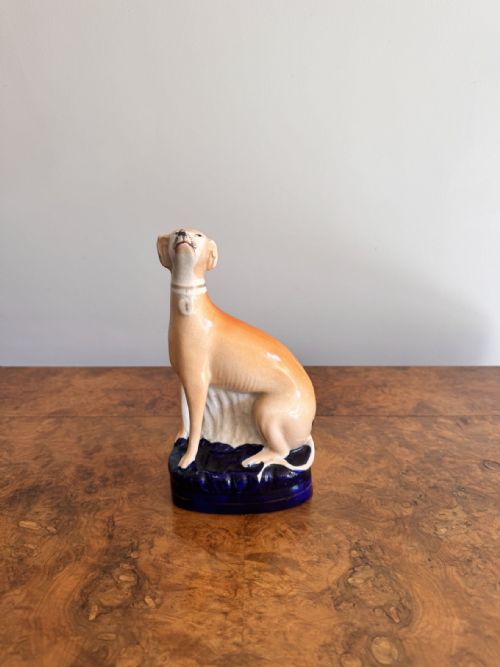
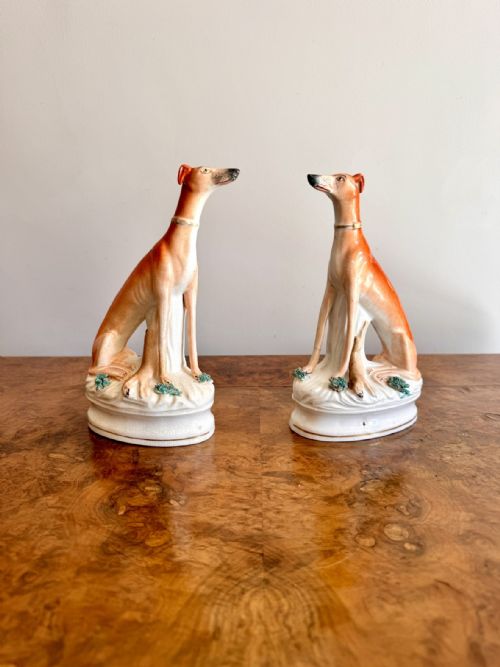
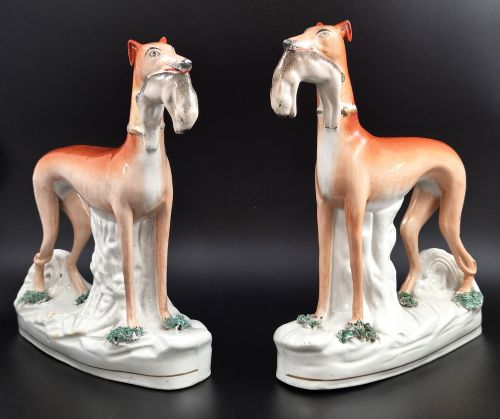
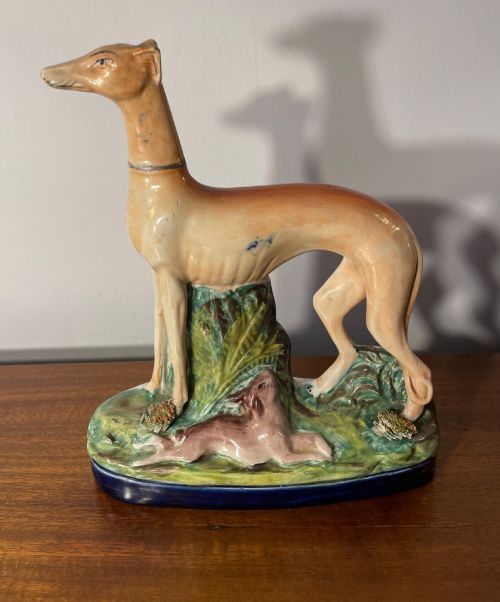
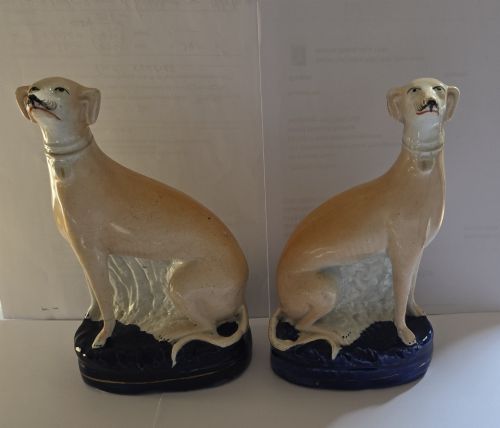
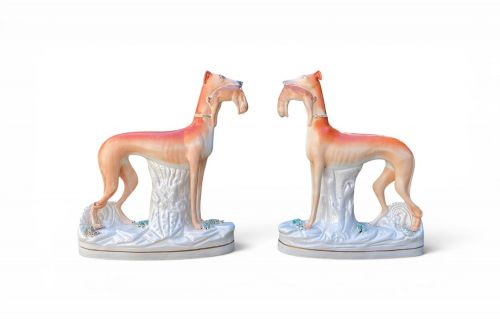
An antique ceramic whippet brings the refined silhouette of the nineteenth-century hunting hound directly onto the mantelpiece or desk. Collectors encounter pairs and single figures most frequently in Victorian Staffordshire pottery, spanning the middle and later decades of the nineteenth century. These ornamental sculptures often depict the dogs seated or reclining, sometimes accompanied by hares or integrated into utilitarian forms.
The practical side of these domestic ornaments reveals itself in desk accessories and functional pieces. Makers modelled several examples as inkwells or quill holders, combining sculptural canine studies with desk furniture. Dating ranges from the early nineteenth century through to mid-century Staffordshire works, with occasional early twentieth-century porcelain representations from continental factories like Rosenthal appearing alongside British pottery.
Factors influencing quality and refinement
Surface preservation significantly shapes the character of a piece over time. Original gilding intact on collars, minimal rubbing to the enamel paint, and stable glaze surfaces without extensive crazing separate well-preserved examples from heavily worn or restored ornaments.
Antique Ceramic Whippet Retail Price Guide 2026
Typical asking prices for ceramic whippet among the pieces listed under this phrase on Sellingantiques today, from the lower quarter to the upper quarter. They describe what is for sale here now, not the wider market.
Victorian potters occasionally gave slender greyhounds surprisingly gentle expressions while posing them beside oversized hares.
Thomas Parr·Rosenthal
The Antique Ceramic Whippet Glossary
- Staffordshire pottery
- Earthenware figures and domestic ornaments produced in the potteries of Staffordshire during the nineteenth century. These pieces formed the backbone of Victorian mantelpiece decor.
- Lead glaze
- A glossy coating containing lead oxide applied to ceramic bodies before firing. It produces a smooth, reflective surface that protects the underlying body and painted decoration.
- Enamel paint
- Vitreous pigments applied over the fired glaze and subjected to a lower temperature kiln firing. This technique allows for detailed polychrome decoration on finished pottery.
- Quill holder
- A desk accessory featuring moulded slots or wells designed to hold writing feathers. In ceramic figures, the hound's body often incorporates these practical receptacles.
- Inkwell
- A small container for writing ink, frequently integrated into the base of sculptural desk ornaments. Ceramic examples often feature hinged lids or matched pottery wells.
Antique Ceramic Whippet: Frequently Asked Questions
What periods do these figures date from?
The pieces span the nineteenth century, with strong representation from the Victorian era between eighteen fifty and eighteen eighty. Earlier examples date to the early decades of the century, while twentieth-century porcelain interpretations appear later.
Most items originate from British Staffordshire potteries, though continental European porcelain manufacturers also contributed to the tradition.
Were these dogs meant to be functional?
Many figures served purely as decorative ornaments for the mantelpiece or sideboard, modelled as seated hounds or pairs with hares. Other pieces combined decoration with utility.
Several examples function directly as desk accessories, incorporating inkwells or quill holders into their glazed ceramic bases for everyday use.
How do I identify a matched pair?
Matched pairs typically depict the hounds facing opposite directions to create a balanced composition on either side of a clock or fireplace. Potters used corresponding moulds and similar enamel colour palettes to unify the two figures.
Slight variations in size and painting often occur due to shrinkage during the kiln firing process.
What materials were used to make them?
Makers relied primarily on earthenware bodies finished with lead glazes and hand-applied enamel paint. Gold leaf frequently appears on collars and decorative highlights.
Finer porcelain bodies are also found in select twentieth-century continental pieces, offering a smoother and harder surface.
Why do hares often appear with the hounds?
The inclusion of hares reflects the traditional sporting association of greyhounds and whippets in nineteenth-century culture. Hounds and hare motifs were popular subjects for Staffordshire potters seeking to evoke rural pursuits.
These combined groups often formed the larger, more ambitious mantelpiece ornaments produced during the period.