


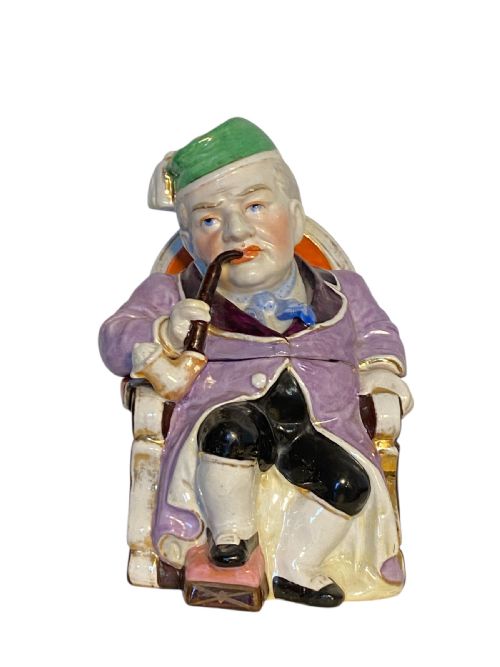


Antique Ceramic Tobacco Pot
An antique ceramic tobacco pot holds the dried leaf of centuries past, offering tactile utility and shelf presence in equal measure.
Antique Ceramic Tobacco Pot
When you search for an antique ceramic tobacco pot, you encounter lidded storage jars and canisters made to keep leaf moist and fragrant. These domestic vessels span the eighteenth, nineteenth, and early twentieth centuries.
The pieces on this page appear in earthenware, porcelain, and tin-glazed earthenware. Forms range from Staffordshire figural pottery to Dutch delft vessels and Royal Worcester blush ivory lidded jars.
Victorian Staffordshire examples and German porcelain tobacco jars dominate the selection. Collectors also find Dutch Baroque styles and Kashmiri craftsmanship among the available storage jars.
How they were made
Potters shaped these vessels from earthenware and porcelain, frequently applying tin glaze and cobalt pigment to the surface. Staffordshire pieces rely on moulded earthenware decorated with coloured pigments.
Delft jars utilise tin-glazed earthenware finished with hand-painted cobalt pigment under a protective glaze. Porcelain pieces incorporate fitted brass or metal covers alongside glazed ceramic bodies.
Listings span from the eighteenth century through the Edwardian era, featuring earthenware, porcelain, brass, and enamel materials.
What varies in quality
Quality rests in the crispness of the moulding and the control of the cobalt pigment or enamel decoration. Finer examples display precise brushwork and well-fitted covers that seal the interior.
The distinction between standard storage jars and superior pieces lies in the artistic execution of the painted or modelled surface. Details such as figural expression in Staffordshire pottery or delicate gilding on blush ivory porcelain set apart the best examples.
Royal Doulton·Royal Worcester
The Antique Ceramic Tobacco Pot Glossary
- Tin-Glazed Earthenware
- Pottery coated with an opaque white tin glaze that accepts painted decoration, commonly seen in eighteenth-century Dutch pieces. This technique creates a smooth white ground for cobalt pigment.
- Staffordshire
- Pottery manufactured in the English county of Staffordshire, known for figural tobacco jars and Victorian lidded pots. These colourful vessels often depict characters like Pierrot.
- Blush Ivory
- A soft cream-coloured porcelain finish popularised by Royal Worcester in the late nineteenth and early twentieth centuries. It provides a muted background for floral decoration and gilding.
- Cobalt Pigment
- A blue metallic oxide used under the glaze to paint intricate designs on ceramics. It withstands high firing temperatures without losing its deep colour.
- Delft
- Tin-glazed earthenware originating from the Netherlands, characterised by blue and white designs inspired by imported Chinese porcelain. Eighteenth-century examples often feature traditional Dutch forms.
Antique Ceramic Tobacco Pot: Frequently Asked Questions
What is an antique ceramic tobacco pot?
An antique ceramic tobacco pot is a lidded jar designed to store and preserve pipe tobacco in domestic spaces. These vessels kept the leaf moist before the advent of modern packaging.
They appear in materials such as earthenware, porcelain, and tin-glazed earthenware, often featuring decorative covers and painted surfaces.
How do I date a ceramic tobacco jar?
Dating relies on stylistic markers, materials, and manufacturing techniques associated with specific eras like the eighteenth century or the Victorian period. For example, tin-glazed Dutch delft jars generally point to the 1700s.
Victorian Staffordshire pieces and early twentieth-century blush ivory porcelain each exhibit distinct decorative vocabularies that help identify their period of origin.
How were these pots used?
These vessels sat on tables, desks, or mantelpieces within smoking rooms and studies. The tight-fitting lids prevented the tobacco from drying out.
Many pots included internal weights or secondary lids to press the leaf down, though survival of these inner components varies.
How do I clean an antique tobacco jar?
Cleaning should be minimal and restricted to dry dusting or gentle wiping with a soft, dry cloth. Moisture can damage old earthenware bodies and vulnerable glaze surfaces.
Avoid submerging porous ceramics or using harsh chemical cleaners that might strip away original pigments or gilding.
Are these pots still functional?
While these vessels can still store dry goods or small items, most collectors treat them as decorative display pieces. The porous nature of older earthenware means they are no longer ideal for keeping modern tobacco fresh.
Displaying them on shelves or tables allows you to appreciate the craftsmanship without risking wear to the antique ceramic body.