



Antique Ceramic Sheep
These antique ceramic sheep bring pastoral charm to a room, ranging from English spill vases to fine porcelain figures.
Antique Ceramic Sheep
When you search for antique ceramic sheep, you encounter a distinct gathering of pastoral figures, spill vases, and decorative animals that reflect centuries of ceramic artistry. The pieces on this page span from eighteenth-century porcelain models to nineteenth-century Staffordshire earthenware pottery.
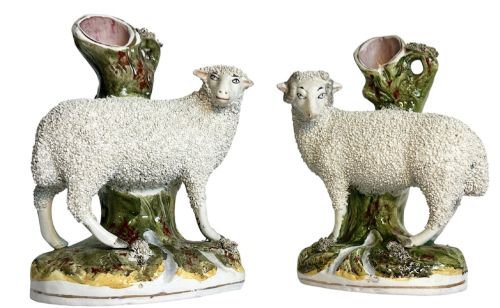
You are most likely to meet Staffordshire earthenware pottery sheep and lambs, often modelled as spillholders or pairs. These pieces capture the Victorian and Georgian fascination with rustic domestic scenes, frequently finished with lead glazes or pearlware glazes.
Beyond English earthenware, the selection includes soft-paste porcelain figures from factories like Derby and Samson, alongside Chinese turquoise glazed porcelain pieces. Spill vases and decorative figurines dominate the forms, serving both ornamental and practical purposes on mantelpieces.
How they were made
Potters shaped these figures using earthenware and soft-paste porcelain, employing traditional moulding techniques to achieve the characteristic forms of sheep, lambs, and pastoral attendants. Lead glazes and pearlware glazes provided a smooth, glossy surface finish that protected the underlying ceramic body.
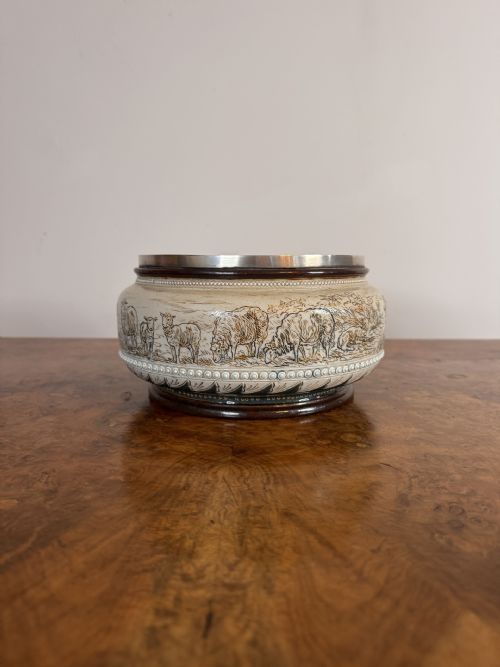
Decoration often involved hand-painting, sometimes enhanced with gold leaf and gilding to highlight details on clothing or bases. Artisans also utilised fine enamels to bring colour to the pastoral scenes, while artists like Harry Davis applied detailed painted decoration to later porcelain pieces.
Antique Ceramic Sheep Retail Price Guide 2026
Typical asking prices for ceramic sheep among the pieces listed under this phrase on Sellingantiques today, from the lower quarter to the upper quarter. They describe what is for sale here now, not the wider market.
Listings feature pieces spanning the 18th century, 19th century, Victorian, Edwardian, and 1920 periods.
What varies in quality
The sophistication of the modelling separates simpler utilitarian earthenware from finer porcelain works. Early figures from factories such as Derby exhibit delicate detail in the rendering of the fleece and naturalistic poses.
The application of glaze and enamel painting dictates visual depth. Pieces featuring careful hand-painting and intact gilding represent a higher tier of craftsmanship compared to standard production runs.
Early Derby Porcelain·Samson·Walton·Royal Worcester
The Antique Ceramic Sheep Glossary
- Spill vase
- A small container designed to hold wooden spills used for lighting fires or pipes. These often incorporate ceramic sheep figures at the base.
- Pearlware glaze
- A type of fine earthenware glaze developed in the late eighteenth century, possessing a slight bluish tint in the pools. It provides a smooth surface for painted decoration.
- Soft-paste porcelain
- A ceramic material composed of clay and glass frit, fired at lower temperatures than hard-paste porcelain. It was widely used by eighteenth-century English factories.
- Lead glaze
- A glossy coating containing lead oxide applied to earthenware bodies before firing. This technique waterproofs the ceramic and enhances surface colours.
- Lead-glazed earthenware
- Pottery fired at moderate temperatures and coated with a vitreous glaze containing lead. It forms the basis of many nineteenth-century Staffordshire figures.
Antique Ceramic Sheep: Frequently Asked Questions
What are ceramic sheep spill vases?
Spill vases combine a hollow cylindrical tube for holding wooden tapers with a decorative figural base. In these pieces, sheep or lambs form the sculptural support.
They were designed for placement on mantelpieces to provide a convenient flame for candles and pipes.
How do I identify Staffordshire sheep figures?
Staffordshire sheep typically feature earthenware bodies coated in lead glazes or pearlware glazes. They often appear as pairs or alongside lambs and shepherds.
Potteries such as Walton produced these sturdy figures during the nineteenth century for domestic display.
What is the difference between porcelain and earthenware sheep?
Porcelain figures, such as those from eighteenth-century Derby, utilise fine-grained ceramic materials fired at higher temperatures. They offer a more refined and translucent finish.
Earthenware pieces from Staffordshire are heavier, opaque, and finished with thick lead or pearlware glazes.
How should I display antique ceramic sheep?
These figures suit placement on mantelpieces, bookshelves, or enclosed cabinets where they remain safe from accidental knocks. Keeping them away from direct sunlight preserves the hand-painted enamels and gilding.
Pairing matching Staffordshire sheep enhances their symmetry and visual impact in a room.