



Antique Ceramic Flatback Group
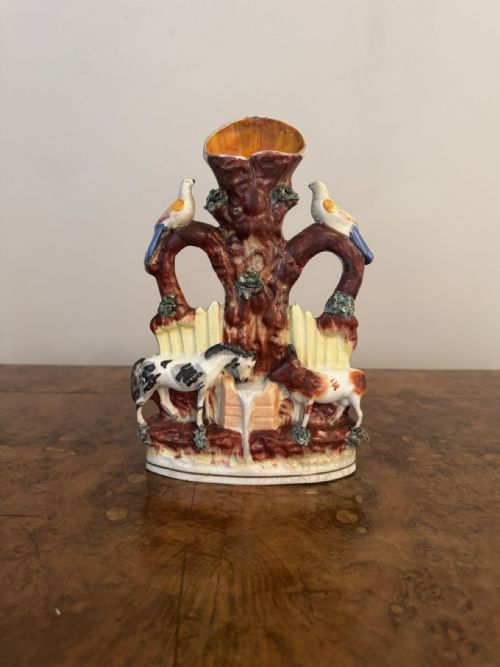
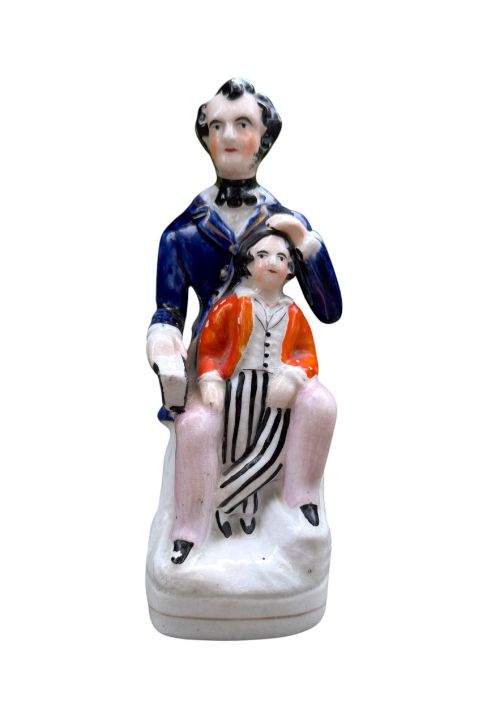
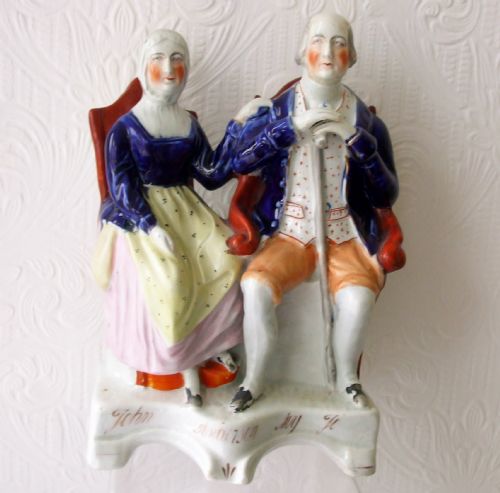
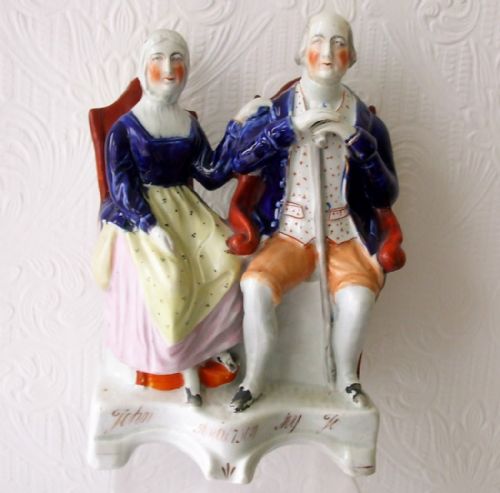
An antique ceramic flatback group brings Victorian hearthsides to life through colourful earthenware figures modelled to be seen from the front alone.
Antique Ceramic Flatback Group
When you search for an antique ceramic flatback group, you are looking at nineteenth-century Staffordshire figures designed to stand against a mantelpiece wall rather than in the round. These pieces celebrate royal subjects, literary characters, and contemporary historical events from the Victorian era.
The most common examples on this page depict named personalities such as Lord Shaftesbury, Napoleon III and Eugenie, or literary pairs like Tam O'Shanter and Souter Johnny. Many take the form of spill vases or clock groups, combining domestic utility with narrative display.
Originating primarily from nineteenth-century Staffordshire potteries, these figures capture the popular culture and moral sentiments of the 1860s, 1870s, and 1880s. Collectors find them grouped as pairs or triads, portraying subjects like Peace and Plenty or the Band of Hope.
Materials and production methods
Potters shaped these figures from earthenware clay using press moulds, leaving the backs unadorned and flat to save material and weight. This construction method produced sturdy vessels suited for everyday mantelpiece display.
Listings span the nineteenth century, focusing on Victorian Staffordshire earthenware pieces decorated with lead glaze and enamel paint.
Factors that separate the range
Quality in an antique ceramic flatback group rests on the crispness of the moulding and the precision of the hand-painted enamel work. Finer examples retain bright, clean pigment application and sharp facial expressions that clearly identify historical or literary figures.
Larger scale and complex multi-figure compositions, such as royal portrait groups or clock arrangements, demand greater skill from the potter. Pieces with clear titling along the base and well-preserved glaze represent the stronger end of the selection.
The Antique Ceramic Flatback Group Glossary
- Flatback
- A Staffordshire figure modelled with a finished front and a plain, unglazed or partially glazed flat rear designed to face a wall. This technique reduced production costs and allowed the pieces to sit flush on narrow shelves.
- Spill vase
- A hollow ceramic cylinder incorporated into the figure group, intended to hold wooden spills for lighting pipes or candles. These combine practical domestic use with figural storytelling.
- Earthenware
- A porous pottery body fired at a lower temperature than stoneware or porcelain. It forms the standard ceramic base for nineteenth-century Staffordshire figures.
- Lead glaze
- A shiny coating applied to pottery before firing to waterproof the earthenware and enhance the colours underneath. It provides the characteristic gloss seen on Victorian figures.
- Enamel paint
- Coloured decoration applied over the fired glaze and fixed with a secondary low-temperature firing. This technique delivers the bright reds, blues, and golds found on portrait groups.
Antique Ceramic Flatback Group: Frequently Asked Questions
What is an antique ceramic flatback group?
An antique ceramic flatback group is a nineteenth-century Staffordshire pottery figure designed with a flat unadorned back to stand against a wall. These pieces typically depict historical events, royal families, or literary characters.
Potters moulded these earthenware figures to decorate Victorian mantelpieces and domestic interiors. They range from single portrait subjects to complex multi-figure arrangements.
How were these figures displayed originally?
Victorian households placed these ceramic groups on mantelpieces, chiffoniers, and side tables where viewers could see only the painted front. Their flat backs allowed them to sit snugly against the wall.
Many incorporated spill vases or clock surrounds, serving functional roles in the nineteenth-century parlour while displaying popular moral or political themes.
How can I tell the period of a Staffordshire group?
Dating relies on the historical events, royal figures, and literary themes depicted in the titles and subjects. Subjects like the Crimean War or Napoleon III point directly to the mid-nineteenth century.
Stylistic markers such as earthenware bodies, hand-applied enamel paint, and lead glazes align these pieces with Victorian production methods from the 1860s to the 1880s.
What subjects do these figures usually portray?
The subjects span British royalty, political alliances, literary pairs, and temperance movements. Common themes include royal portrait groups, historical events, and characters from Burns or traditional folklore.
Groupings often reflect contemporary public interest, featuring figures like Lord Shaftesbury or scenes dedicated to peace and temperance organisations.