


Antique Cased Fish
Antique cased fish brings together domestic silver servers and preserved taxidermy specimens displayed within fitted boxes.
Antique Cased Fish
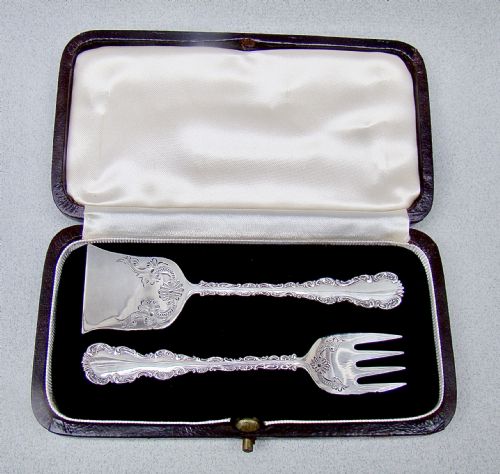
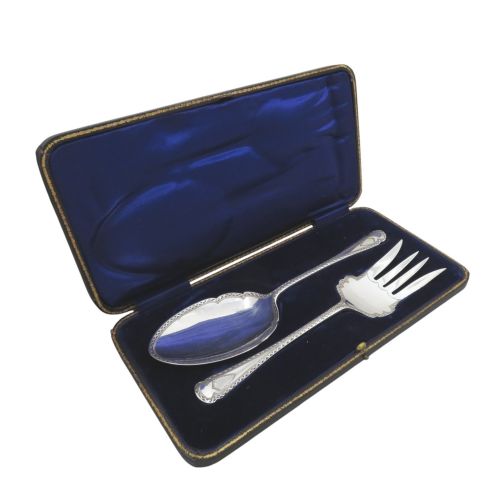
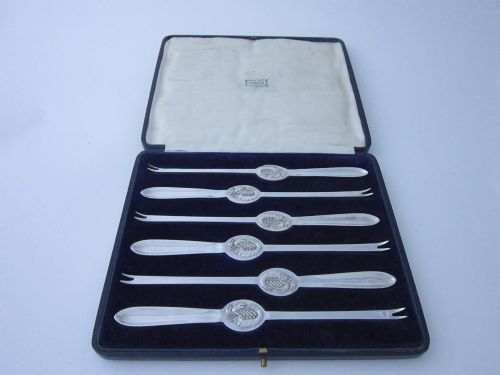
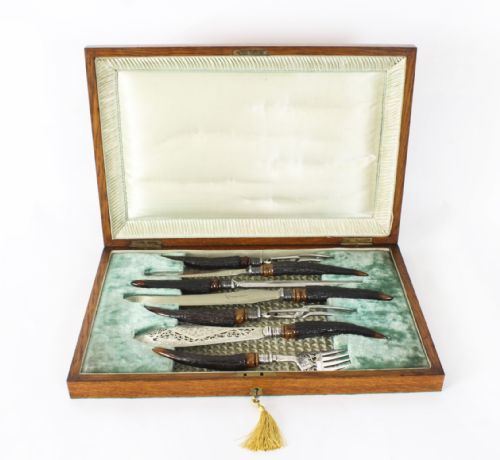
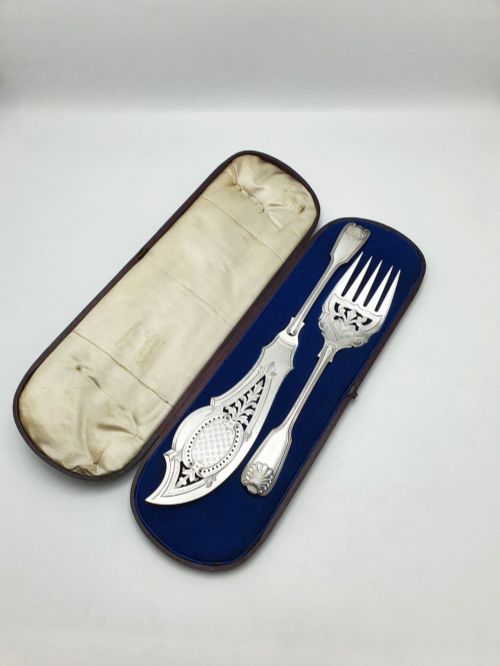
When searching for antique cased fish, buyers encounter two distinct categories: fitted cutlery sets intended for dining and preserved taxidermy specimens mounted in glass display cases. The dining pieces comprise specialised flatware such as fish servers, lobster picks, and sardine tongs housed in velvet or silk-lined wooden boxes. These items span periods from the Victorian era through the Edwardian years and into the 1920s and 1930s.
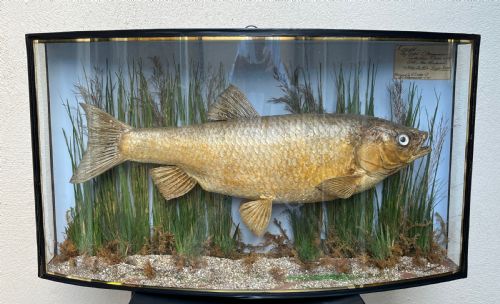
The taxidermy examples on this page typically feature freshwater species such as roach, tench, pike, rudd, and golden carp. Preserved within glazed wooden cases, these specimens often incorporate painted backdrops with dried reeds to recreate a natural aquatic habitat. Such pieces reflect the Victorian and Edwardian enthusiasm for natural history collecting and sporting trophies.
Cutlery sets frequently utilise sterling silver or silver plate for the blades and prongs, paired with handles made from horn or mother of pearl. Makers and retailers housed these implements in oak or mahogany canteens lined with fitted materials to protect the metalwork. Both the taxidermy displays and the dining services represent skilled craftsmanship from the nineteenth and early twentieth centuries.
Materials and Construction
Taxidermy specimens required the careful preservation of fish skins mounted over carved or artificial bodies, set against hand-painted backgrounds. Artisans arranged dried reeds and grasses within glass-fronted wooden cases to give a realistic underwater impression.
Cutlery sets utilised sterling silver and silver plate for serving knives, forks, and seafood picks, often featuring engraved or chased decoration. Handles were fashioned from natural materials such as antler horn and mother of pearl, secured to metal shafts within fitted wooden presentation boxes lined with silk or velvet.
Early anglers clearly took immense pride in their catches, preserving everything from humble roach to golden carp inside elaborate glass boxes.
Factors of Quality
The standard of taxidermy cases depends upon the naturalism of the preserved specimen and the artistry of the internal diorama. Skilled practitioners created convincing aquatic scenes with detailed painted backgrounds, whereas simpler mountings lack depth and atmospheric detail.
In cutlery sets, quality is determined by the weight of the silver or silver plate and the crispness of the engraved designs on the blades. Complete sets with matching components and undamaged lining materials within the original wooden cases command greater attention from collectors.
Little & Co·Henry Wilkinson·Suckling Ltd·James Jones·J Cooper & Sons·Waring & Gillows
The Antique Cased Fish Glossary
- Taxidermy
- The art of preserving, stuffing, and mounting animal skins for display. In this category, it refers specifically to preserved fish housed in glass-fronted cases.
- Sterling silver
- A silver alloy containing ninety-two point five percent pure silver by mass. It appears frequently in the construction of Edwardian and Victorian fish servers and cutlery.
- Silver plate
- A layer of silver applied to a base metal such as copper or nickel brass. Many nineteenth-century serving sets and lobster picks utilise this technique.
Antique Cased Fish: Frequently Asked Questions
What is included in a fish cutlery set?
These sets typically contain specialised knives and forks designed specifically for consuming fish courses at the dining table. The knives feature broad, flat blades shaped to separate flesh from bone.
Larger services may also incorporate dedicated fish servers, consisting of a large serving knife and fork decorated with engraved motifs.
How were taxidermy fish cases displayed?
Victorian and Edwardian households placed these glazed wooden boxes on mantelpieces or hung them on walls within studies and smoking rooms. The displays served as sporting trophies commemorating successful fishing expeditions.
Makers painted the interior backboards to simulate riverbeds, creating a three-dimensional habitat for the preserved specimen.
What materials form the handles of these utensils?
Makers utilised a variety of natural substances for cutlery handles during the nineteenth and early twentieth centuries. Antler horn and mother of pearl appear frequently alongside solid silver.
These materials provided a tactile grip and added decorative contrast to the engraved metal blades.
How do I care for antique cased taxidermy?
Keep glass-fronted cases out of direct sunlight to prevent the painted backdrops and preserved fish specimens from fading. Maintain a stable room temperature to protect the wooden joinery and internal mountings.
Avoid opening the sealed cases, as the enclosed environment helps protect the fragile historical taxidermy from dust and humidity.