


Antique Cased Barometer
An antique cased barometer records atmospheric pressure housed in wood and glass, offering a tangible link to domestic meteorology.
Antique Cased Barometer
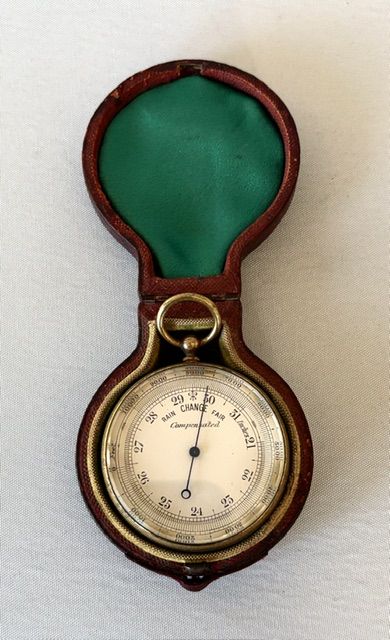
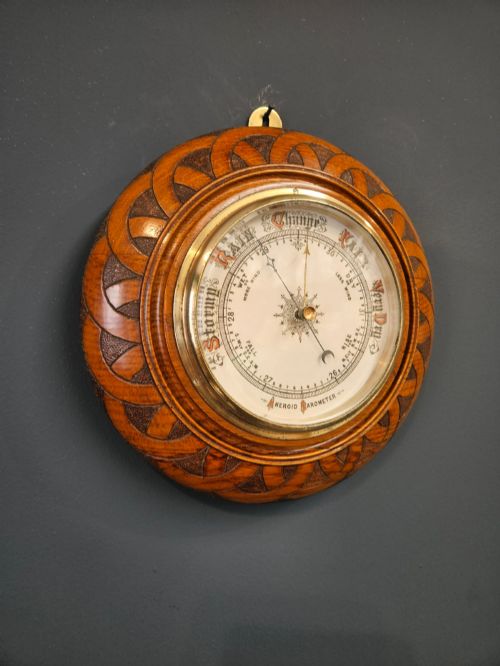
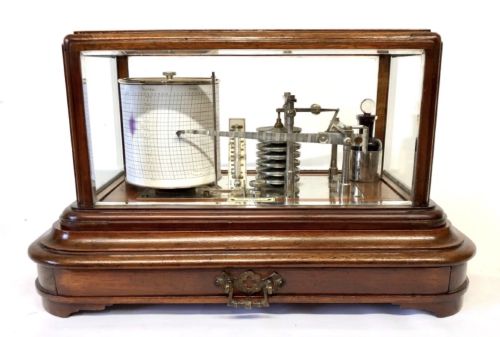
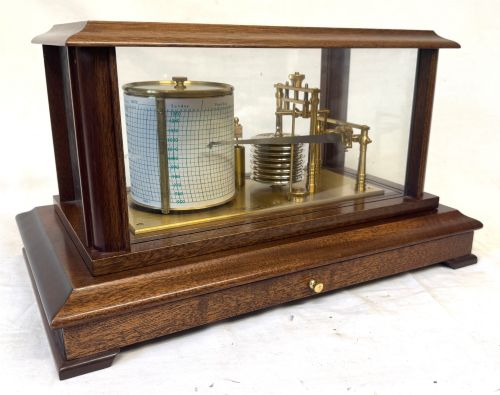
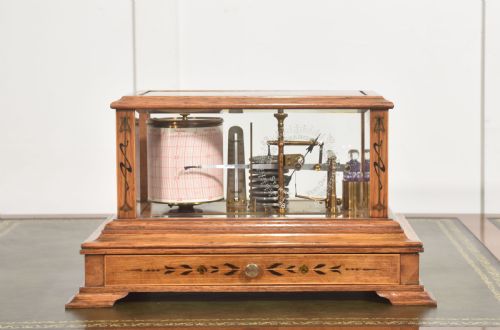
An antique cased barometer encompasses weather-recording instruments housed in timber enclosures, frequently encountered as tabletop barographs, stick barometers, and wheel barometers on this page. These pieces derive primarily from Victorian, Edwardian, and early twentieth-century periods, reflecting a domestic reliance on physical weather observation before digital forecasting.
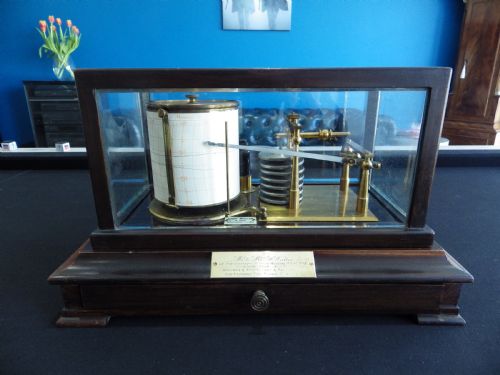
The primary forms take the shape of brass-mounted weather stations, oak chart-drawer barographs, and mahogany wheel barometers fitted with bevelled glass. Makers combined barometer dials with thermometers and recording drums to create functional household fixtures.
Materials and construction
Cabinet makers utilised solid oak, mahogany, and walnut to construct five-glass cases and dial surrounds, frequently incorporating turned elements, geometric designs, and Art Nouveau inlay. These timbers were selected for stability and finish, protecting the internal brass movements while displaying grain.
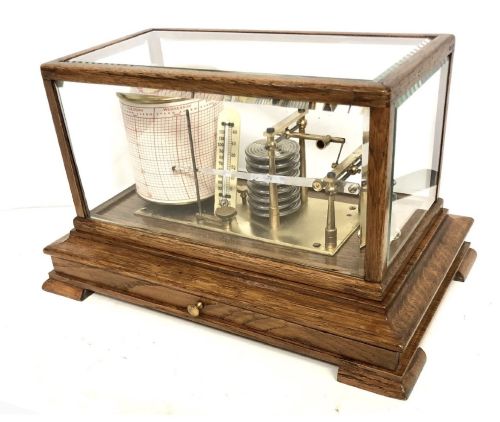
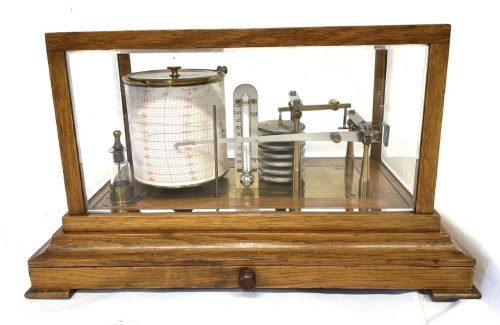
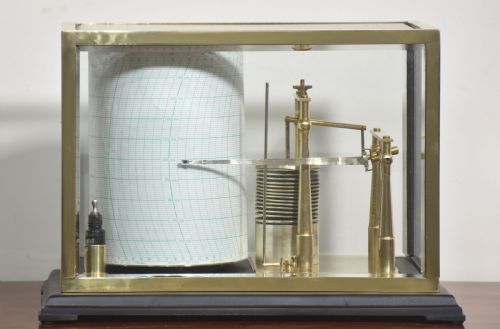
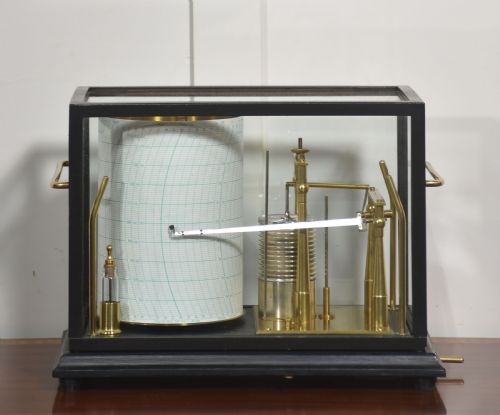
Internal mechanisms rely on silvered metal scales, steel components, and paper charts paired with glass barograph cylinders. Makers integrated glass viewing panels, notably bevelled glass panes, allowing continuous observation of the barometer needles and inked recording arms.
Listings feature oak, mahogany, and walnut cases equipped with paper charts, thermometers, and bevelled glass viewing panels.
Distinctions in craftsmanship
Quality rests in the precision of the case joinery and the pedigree of the instrument maker, separating standard utility pieces from signed scientific works. Heavy oak and mahogany framing with tight mitres and integrated chart drawers demonstrates superior cabinet making compared to plain or unbranded boxes.
The complexity of the fitted hardware dictates the upper tier of instruments. Units bearing maker signatures from established opticians and instrument makers, complete with auxiliary thermometers and original paperwork, represent the more developed examples of the form.
Russell Norwich·Gaupp and Co·Hezzanith·Short and Mason·Negretti and Zambra·Alexander Wright·Casella London·Baines Harrogate·R Fuess·Harrods of London·J Hughes London·Robson of Newcastle·Jules Richard·Aitchison·WE Pain of Cambridge·Depree and Young Ltd
The Antique Cased Barometer Glossary
- Barograph
- A self-recording aneroid barometer that charts atmospheric pressure onto a rotating paper drum over the course of a week. This instrument uses stacked metal vacuum chambers to drive an inked arm.
- Aneroid barometer
- A device that measures air pressure without liquid, using an expanding and contracting metal capsule. It translates mechanical deflection into dial readings.
- Stick barometer
- A tall, narrow instrument containing a vertical column of mercury to register barometric pressure changes. These forms often feature exposed scales protected by glazed wooden hoods.
- Chart drawer
- A built-in compartment located beneath the base of a barograph case. This drawer stores fresh weekly recording papers and spare ink supplies.
- Bevelled glass
- Window panes with angled, polished edges fitted into the wooden frame. This technique adds depth and catches light across the viewing panels.
Antique Cased Barometer: Frequently Asked Questions
What is an antique cased barometer?
An antique cased barometer is a meteorological instrument housed within a wooden enclosure, designed to measure atmospheric pressure changes over time. These instruments often sit on tabletops or mount to walls, functioning as both scientific tools and decorative household objects.
Most examples date from the nineteenth and early twentieth centuries, incorporating materials like mahogany, oak, and brass. They range from simple dial indicators to complex recording barographs with paper charts.
How do barographs work?
Barographs operate through sealed metal vacuum chambers that expand and contract as air pressure fluctuates. This movement transfers through a series of levers to an arm holding an ink nib.
The nib rests against a rotating paper chart secured to a clockwork drum, tracing a continuous line of weather patterns over seven days. The resulting graph allows observers to track pressure trends visually.
Where should I place a barometer?
Barometers perform best in interior spaces protected from direct sunlight, sudden temperature extremes, and excessive moisture. Placing them in studies, hallways, or living rooms ensures stable ambient conditions for the mechanical parts.
Wall-mounted stick barometers require secure fixing to solid surfaces to maintain a true vertical alignment. Tabletop cased models need a level shelf or desk to prevent internal binding.
How do I date a cased barometer?
Dating relies on stylistic clues in the wooden case, such as Victorian geometric carvings, Edwardian inlay, or Art Nouveau motifs. Wood choices like dark mahogany or light oak also point toward specific design eras.
Maker signatures, engraved dial text, and accompanying paper records provide the most direct chronological evidence. Comparing the movement style and glass configuration helps confirm the period of manufacture.