

Antique Carver Dining Chairs
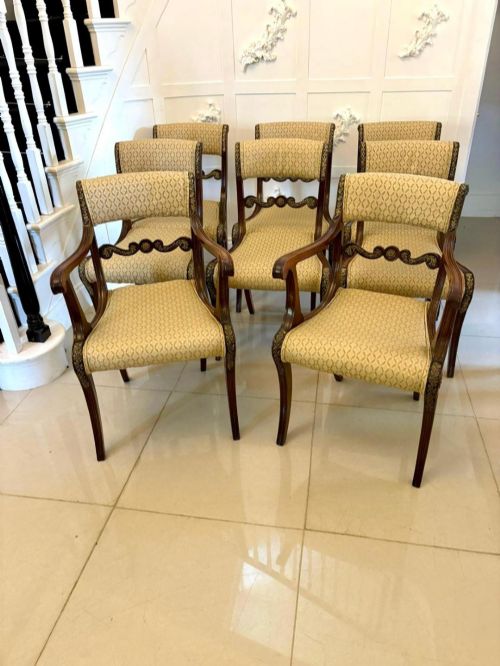
These antique carver dining chairs combine practical seating with scrolling armrests, offering robust construction and period character for daily dining.
Antique Carver Dining Chairs
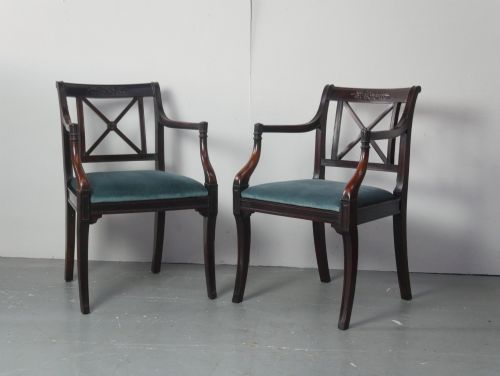
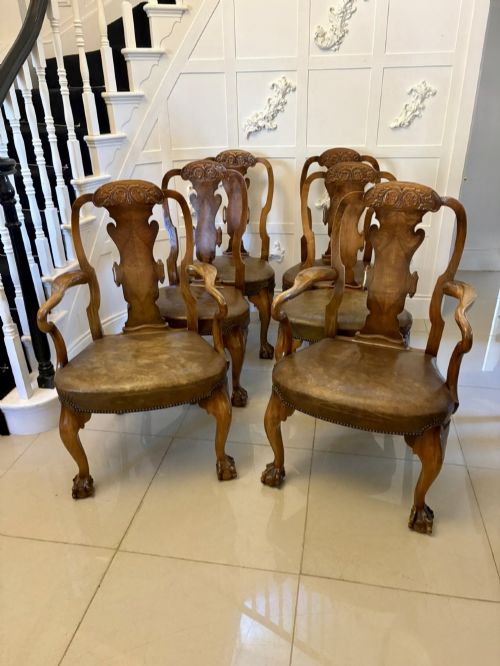
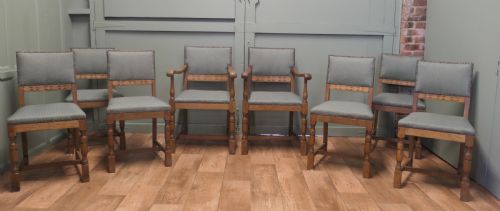
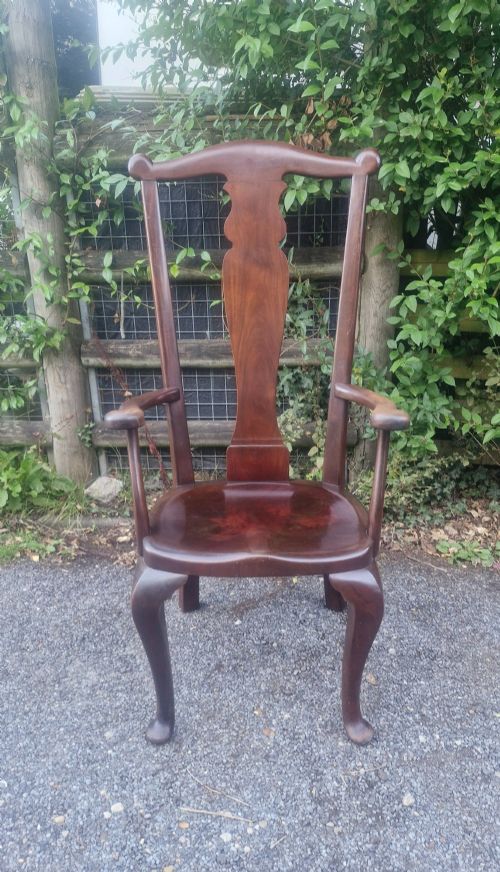
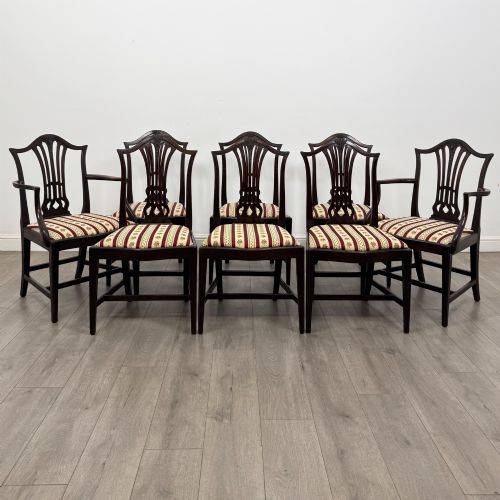
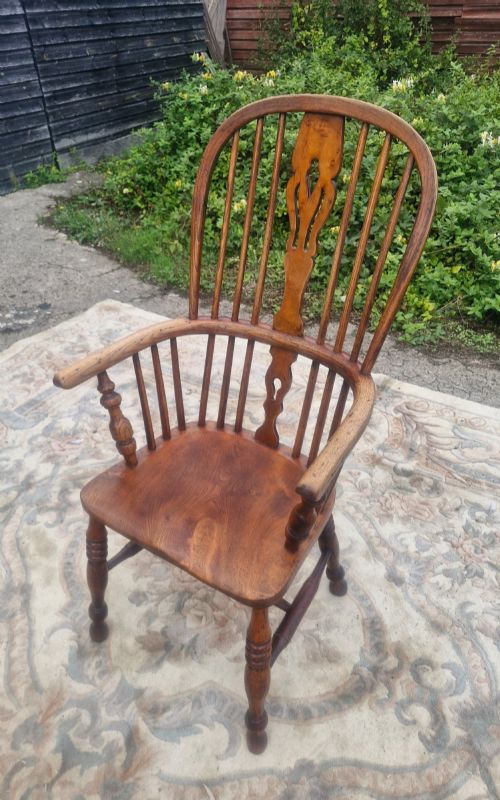
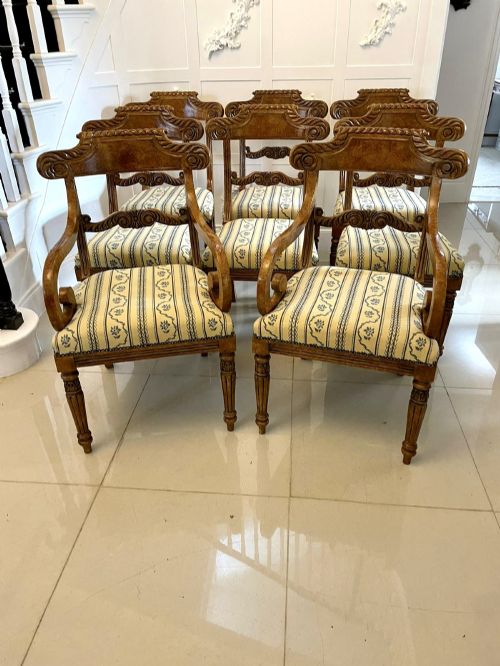
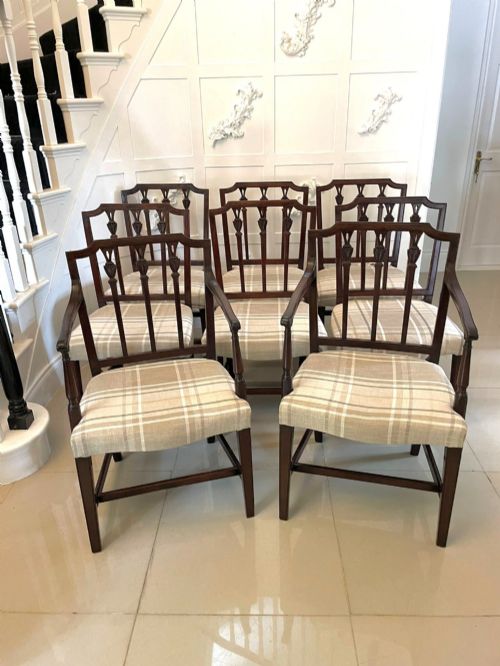
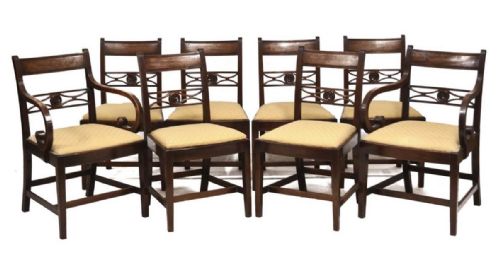
When searching for antique carver dining chairs, buyers encounter sturdy seating pieces designed with integrated armrests for the heads of a dining table. These items appear primarily in mahogany, oak, and elm, spanning periods from the eighteenth century through the Edwardian era and revival movements.
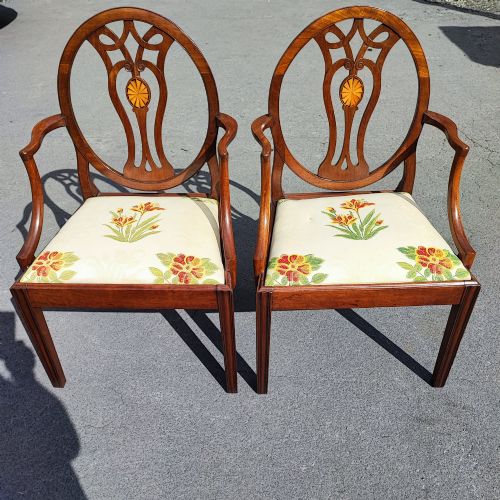
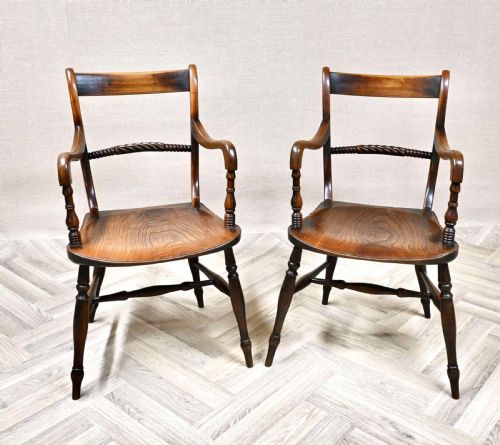
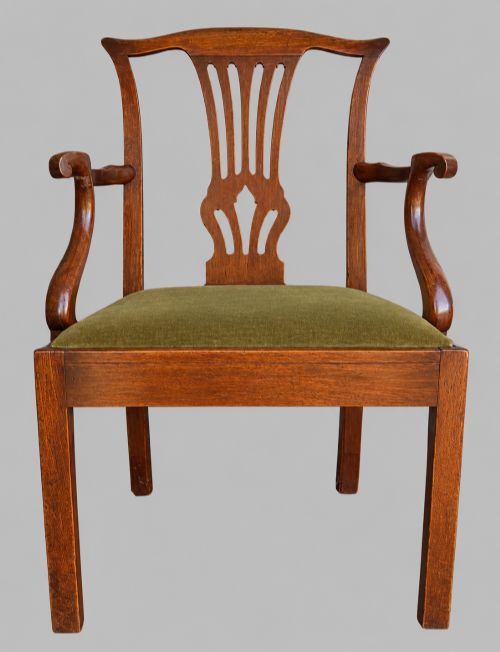
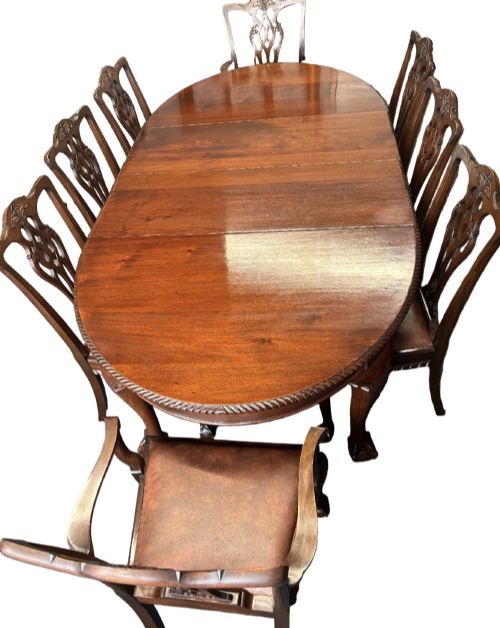
The inventory on this page ranges from single pairs of Regency and Georgian elbow chairs to large matched sets containing multiple side chairs accompanied by a pair of carvers. Forms include Windsor stick backs, shield backs, and Chippendale style ladder backs.
Originating largely from English workshops, these chairs reflect domestic dining traditions where armchairs denoted status or simply provided greater comfort at the table extremities.
Materials and Construction
Makers relied heavily on dense tropical hardwoods like mahogany alongside native timbers such as oak, ash, and elm to ensure structural integrity under daily use. Joinery techniques involved mortise and tenon frames, frequently augmented by corner blocks for added stability in the seat rails.
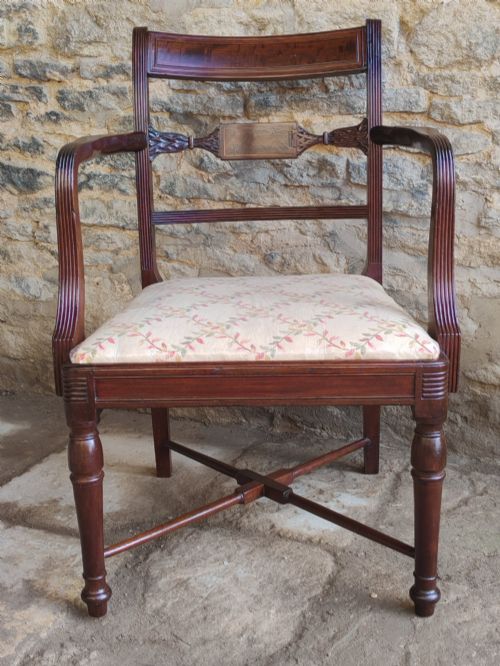
Upholstered variations incorporate drop-in seats covered in leather, velvet, or woven fabrics, while others utilise cane panels or solid wooden splats. Carved details such as scroll arms, rope-twist rails, and inlaid veneers display the hand-tool proficiency of period cabinetmakers.
Antique Carver Dining Chairs Retail Price Guide 2026
Typical asking prices for carver dining chairs among the pieces listed under this phrase on Sellingantiques today, from the lower quarter to the upper quarter. They describe what is for sale here now, not the wider market.
Listings feature oak, mahogany, and elm across Georgian, Victorian, and Edwardian periods.
Distinguishing Quality
The distinction between standard utility seating and superior examples rests upon the crispness of the timber carving and the architectural proportions of the frame. Heavier gauge timbers and finely figured mahogany veneers indicate higher workshop standards during manufacture.
Original surface patination and minimal structural replacement separate untouched survival pieces from heavily restored items. Workshop attribution, such as labeled pieces by known London makers, elevates the standing of an armchair within the broader market.
Howard and Sons·Thomas Clarkson And Sons·Heals of London·Warings
The Antique Carver Dining Chairs Glossary
- Carver
- An armchair designed specifically for use at a dining table, typically matching a set of smaller side chairs. These pieces feature lower armrests to clear the table apron.
- Elbow chair
- An alternative term for an armchair, often describing eighteenth and nineteenth-century seating with short arms inset behind the front uprights.
- Splat
- The vertical wooden strip down the centre of a chair back, frequently pierced or carved in styles associated with Chippendale or Hepplewhite designs.
- Caning
- Woven rattan material utilised for lightweight seat panels or back inserts, particularly common on Regency and Edwardian formal chairs.
- Harlequin set
- A collection of dining chairs that match in general style and period but were not originally manufactured as a single unified batch.
Antique Carver Dining Chairs: Frequently Asked Questions
How do I match carvers with side chairs?
Buyers typically look for matching timber species, similar leg profiles, and comparable backrest designs such as shield or ladder backs. Mixing chairs requires a careful balance of height and proportion.
Harlequin sets deliberately combine slightly differing examples from the same era to create an assembled dining arrangement.
Can I use antique carvers daily?
These robust hardwood frames handle regular seating when joints remain tight and stable. Periodic wax maintenance preserves the timber finish against everyday wear.
Upholstered drop-in pads can be recovered easily to suit modern interior colour schemes without altering the historic wooden structure.
What defines a George III carver?
George III pieces date from the late eighteenth century and generally feature straight or moulded legs, pierced splats, and substantial mahogany frames. Proportions tend to be generous to accommodate historical clothing fashions.
Later revival versions from the Victorian and Edwardian periods often replicate these Georgian architectural lines.
Why buy a pair of carvers?
Pairs of armchairs provide symmetry at both ends of a rectangular dining table. They also function independently as occasional seating in bedrooms or morning rooms.
Finding matched pairs becomes simpler when sourcing Edwardian or Regency revival stock alongside eighteenth-century originals.