


Antique Carved Treen
Antique carved treen brings together small, handmade wooden domestic objects shaped by centuries of daily use and vernacular skill.
Antique Carved Treen
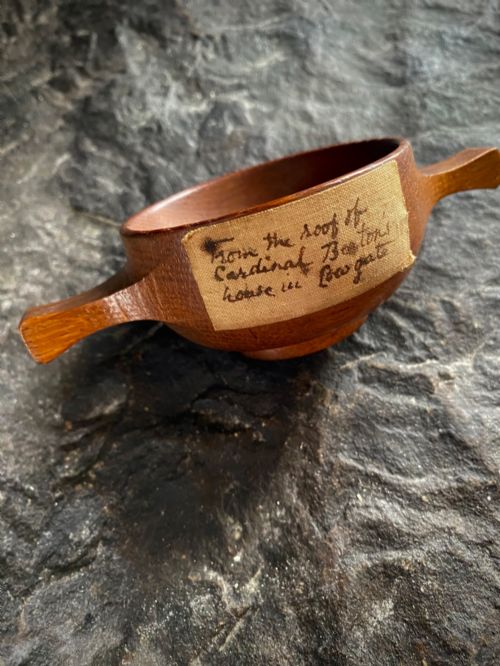
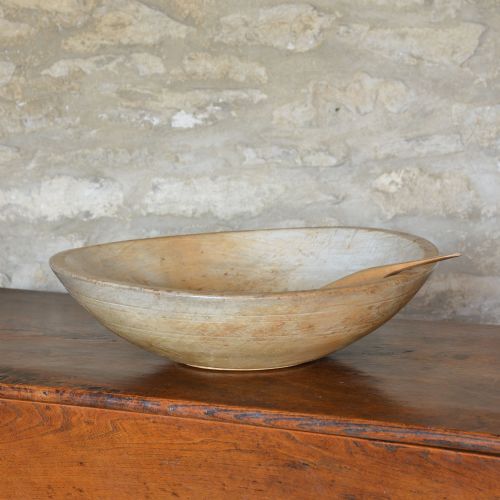
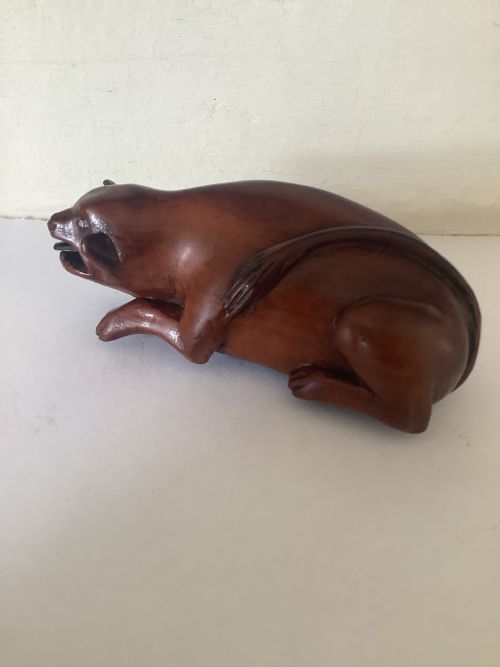
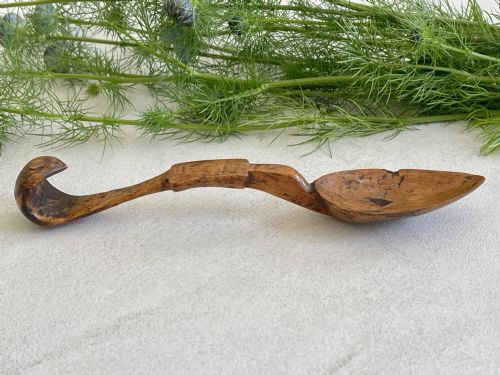
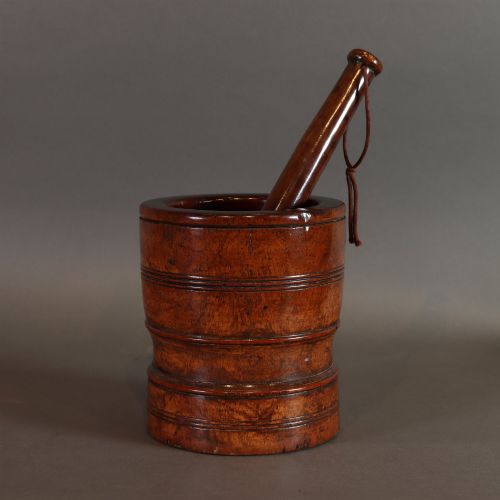
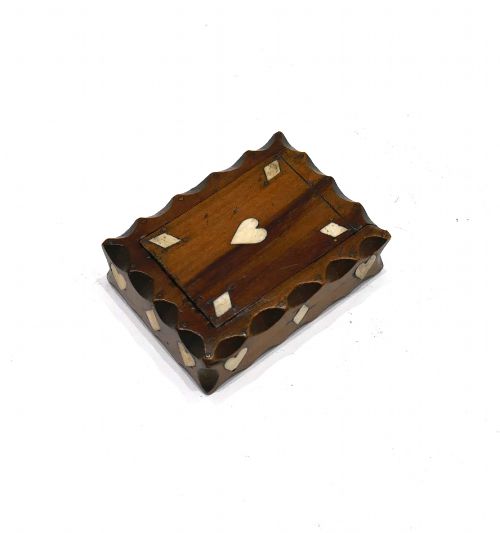
When searching for antique carved treen, buyers encounter small wooden utensils, personal containers, and domestic implements produced across the seventeenth, eighteenth, and nineteenth centuries. The selection spans utilitarian kitchenware such as dairy bowls and spice grinders alongside personal items including snuff boxes, knitting sheaths, and lovespoons.
Domestic and personal objects dominate the offerings, reflecting the practical tasks of past households. Pieces originate from English, Welsh, Scottish, and continental European workshops, demonstrating distinct regional carving traditions and domestic habits.
Materials and construction
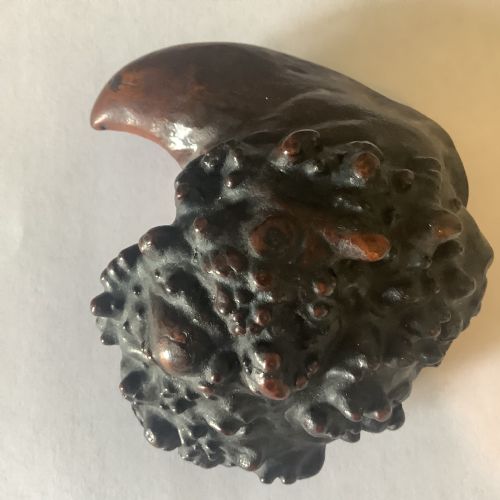
Turners and carvers utilised dense hardwoods such as fruitwood, sycamore, lignum vitae, laburnum, and burr walnut. These timbers provided the fine grain and stability required for intricate punching, incised lines, and turning on a lathe.
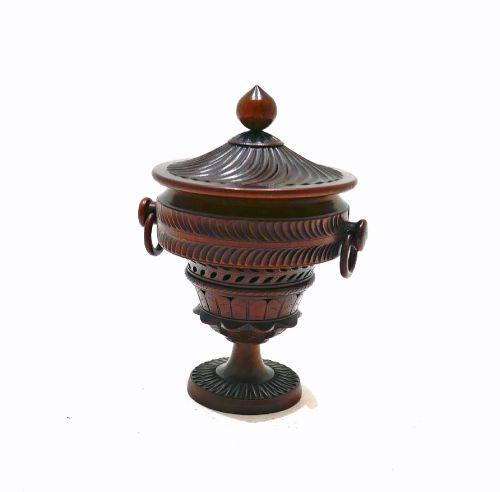
Decoration relied on hand tools rather than machinery, incorporating chip carving, punchwork, engine turning, and occasional bone inlay. Iron mounts, wrought hardware, and painted surfaces supplemented the exposed timber on specific vessels and containers.
Antique Carved Treen Retail Price Guide 2026
Typical asking prices for carved treen among the pieces listed under this phrase on Sellingantiques today, from the lower quarter to the upper quarter. They describe what is for sale here now, not the wider market.
Listings feature fruitwood, sycamore, and lignum vitae across periods spanning from the seventeenth century to the Edwardian era.
Distinctions in quality
Quality rests upon the crispness of the hand-carved detail, the integrity of the original form, and the depth of the surface patina accumulated through handling and age. Objects retaining sharp punchwork, intact inlay, and minimal structural alteration stand apart from heavily worn examples.
Provenance and mechanical complexity further elevate certain pieces, such as double-opening snuff shoes, functional spice grinders, or specialised knitting sheaths with intricate regional motifs.
The Antique Carved Treen Glossary
- Treen
- Small handmade wooden domestic objects and utensils produced before the widespread adoption of mass manufacturing. The word derives from the Middle English term for tree.
- Knitting sheath
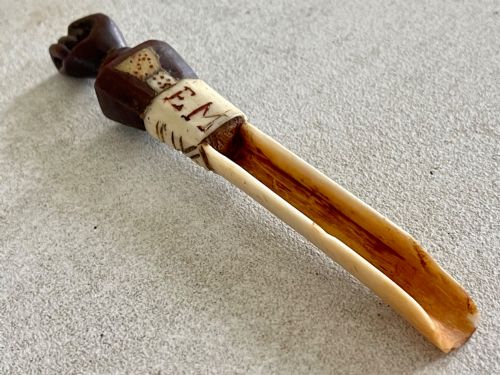
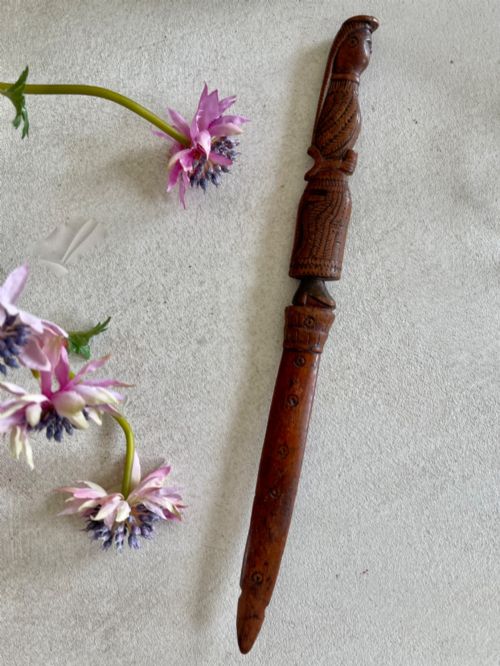
- A small carved wooden holder tucked into a belt or apron string to support a single knitting needle while working. These objects frequently served as token gifts bearing punchwork and inlaid bone.
- Snuff box
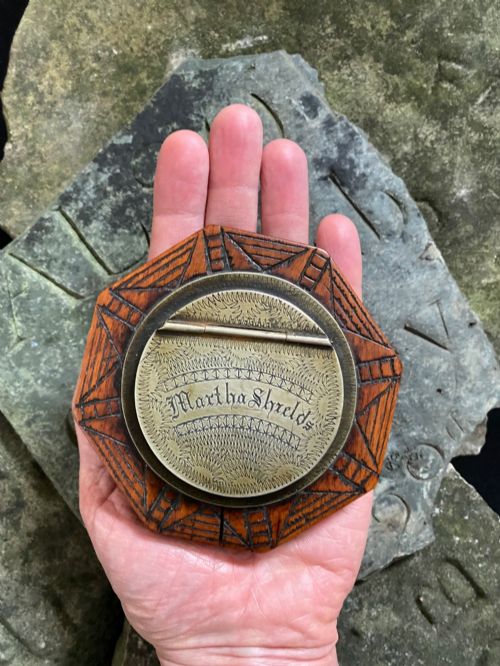
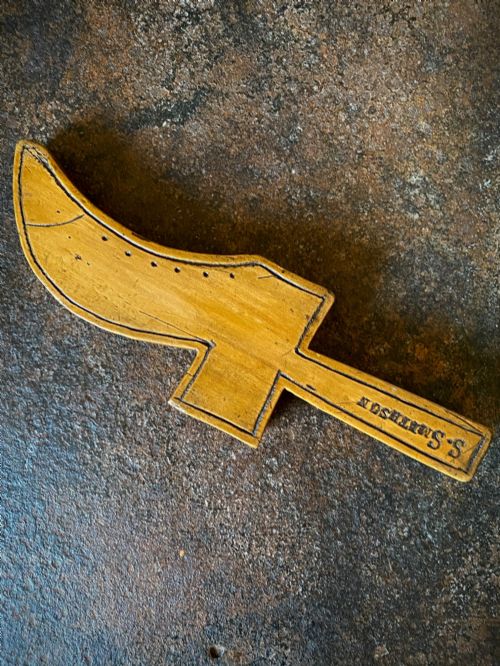
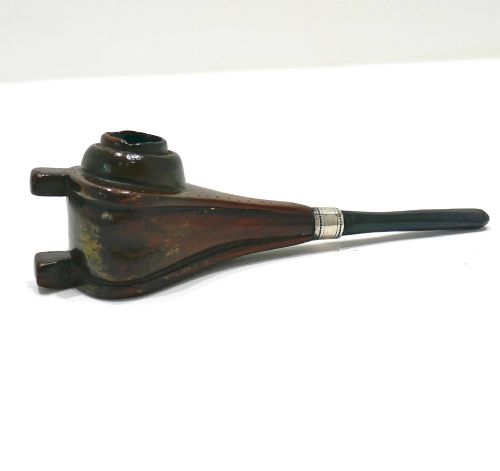
- A small lidded container designed to hold powdered tobacco for inhalation. Examples in this category often take playful figurative forms, such as shoes, books, or bellows.
- Lovespoon
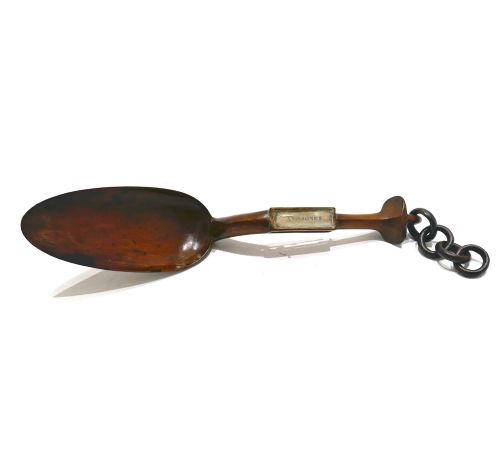
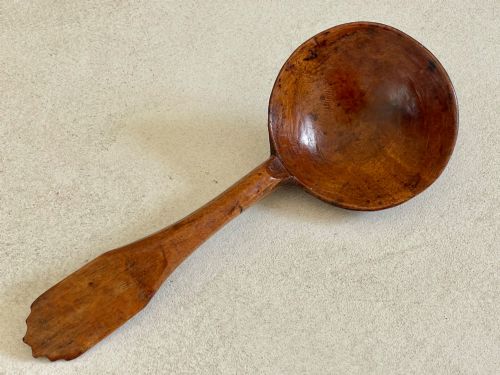
- An ornamental wooden spoon traditionally carved by a suitor to demonstrate skill and affection for an intended partner. They frequently incorporate pierced hearts, chains, and vine leaves.
- Patina
- The surface sheen and colour developed by wood over decades of handling, exposure to light, and polishing. A deep natural patina indicates genuine age and regular use.
Antique Carved Treen: Frequently Asked Questions
What is antique treen used for?
These wooden objects served practical domestic functions, from grinding spices and storing tobacco to shaping cheese and holding knitting needles.
Over time, many utilitarian items also acquired sentimental value, functioning as tokens of affection or decorative desktop objects within the home.
How do I date antique treen?
Dating relies on identifying the tool marks, timber choices, and stylistic conventions associated with specific centuries, such as seventeenth-century lignum vitae turnery or nineteenth-century folk art chip carving.
Wear patterns, construction methods, and regional decorative traits provide additional clues for placing an object within a specific period.
How should I care for carved wooden objects?
Keep wooden pieces away from direct heat sources and sudden temperature fluctuations to prevent the timber from splitting or warping.
An occasional application of appropriate wax helps nourish the surface and preserves the historical patina without altering the colour of the wood.
How can I tell regional styles apart?
Regional attribution depends on specific carving techniques and forms, such as Welsh lovespoons featuring intricate pierced hearts or Cumbrian knitting sheaths showing distinct geometric punchwork.
Scottish pieces often demonstrate precise engine-turned decoration on laburnum containers, whereas Scandinavian items may incorporate painted motifs or engraved handles.