



Antique Carved Intaglio
These antique carved intaglio pieces are engraved gems and seals designed to press into wax or display classical motifs, offering a tangible connection to historical glyptic art.
Antique Carved Intaglio
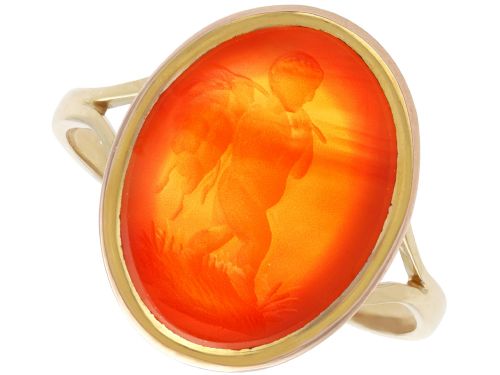
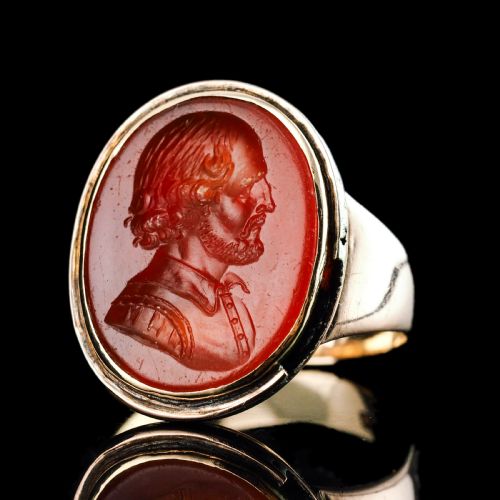
An antique carved intaglio is a recessed design cut into hardstone, gem, glass, or metal, allowing the motif to leave a raised impression when pressed into sealing wax. Collectors encounter these primarily mounted as rings, fob seals, and pendants originating from the eighteenth, nineteenth, and early twentieth centuries.
The pieces on this page span several distinct stylistic revivals, including Georgian, Victorian, Edwardian, and Art Deco interpretations. Buyers regularly find rings and swivel fobs featuring classical figures, portraits, and armorial crests carved into stones such as carnelian, agate, and chalcedony.
Originating from periods influenced by Grand Tour travel and Classical Revival taste, these items served both practical administrative uses and decorative functions. The form persists across various scales, from small signet rings to larger desk seals and inkstands.
How they were made
Carvers utilised fine rotating drills and abrasive powders to sink detailed portraits, animals, and mythological figures beneath the surface of hardstones. These gems were then set into mounts of yellow gold, ranging from nine carat and eighteen carat alloys to gold cased brass and gilt metal.
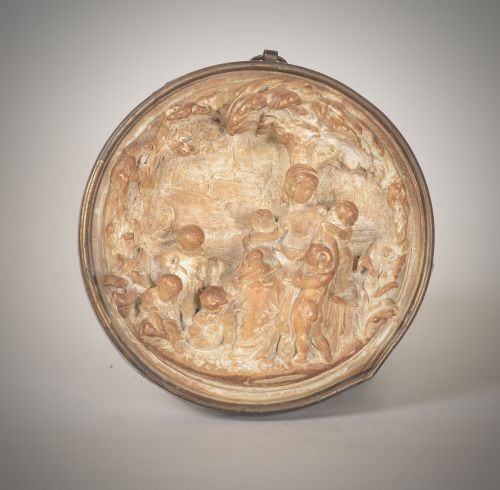
Stones like carnelian, chalcedony, agate, bloodstone, and rock crystal provided the necessary hardness and colour contrast for crisp intaglio carving. Artisans also worked in bronze for signet rings and utilised plaster or marble for relief plaques and Grand Tour souvenirs.
Antique Carved Intaglio Retail Price Guide 2026
Typical asking prices for carved intaglio among the pieces listed under this phrase on Sellingantiques today, from the lower quarter to the upper quarter. They describe what is for sale here now, not the wider market.
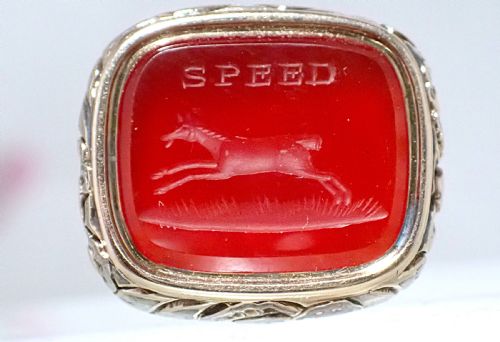
One stubborn Georgian seal carries the carved word SPEED alongside a running horse, ensuring your wax stamp gets the last word.
What varies in quality
The substance and weight of the precious metal mount, alongside the integration of the swivel mechanism or ornate fob bale, contribute to the overall integrity of the jewellery. Settings that retain their original gold proportions without thinning or repair maintain stronger structural presence.
The Antique Carved Intaglio Glossary
- Intaglio
- A design incised or engraved into the surface of a gemstone or metal so that an impression taken in wax is in relief. This technique contrasts with cameo carving, where the background is lowered to leave the motif raised.
- Fob seal
- A small pendant attached to a pocket watch ribbon or chain, featuring a carved stone matrix at the base for stamping wax seals. These frequently incorporate swivel mechanisms to present different stones or monograms.
- Carnelian
- A brownish-red variety of the quartz mineral chalcedony, widely utilised for intaglio rings and seals due to its pleasing translucency and resistance to wear. It remains one of the most common stones encountered in antique glyptic jewellery.
- Hardstone
- A semi-precious gemstone such as agate, chalcedony, jasper, or sardonyx used for carving decorative objects and jewellery. These materials require specialised abrasive cutting tools to shape and engrave.
- Grand Tour
- A cultural journey undertaken by wealthy young Europeans through France and Italy during the eighteenth and nineteenth centuries, resulting in the acquisition of local souvenirs such as micro-mosaics, carved intaglios, and plaster reliefs.
Antique Carved Intaglio: Frequently Asked Questions
What is an intaglio used for?
An intaglio functions primarily as a personal stamp, pressing a sunken design into hot sealing wax to authenticate documents and letters. They also served as decorative jewellery elements worn on rings, watch chains, and pendants.
Over time, the practical need for sealing documents faded, shifting the role of these pieces toward purely aesthetic adornment and collection.
How do I date a gold intaglio ring?
Dating relies on stylistic clues, mounting techniques, and the cut of the stone, often supported by hallmarks stamped into the gold. Georgian mounts tend to feature closed-backed settings and robust hand-carved shoulders, whereas Victorian examples introduce varied granulation and cast ornamentation.
Reviewing the specific iconography, such as Neoclassical motifs or Classical Revival figures, helps narrow the decade of manufacture alongside known periods like the Edwardian era or Art Deco.
What stones are used in antique intaglios?
Carvers typically selected hardstones with distinct colour layers or uniform translucency, including carnelian, chalcedony, sardonyx, and various forms of agate. Softer materials like rock crystal, bloodstone, and even coral or bronze appear in specific medieval and nineteenth-century pieces.
The choice of stone often determined how fine the engraved details could be without fracturing the material during the drilling process.
What is a Grand Tour intaglio?
A Grand Tour intaglio is a souvenir acquired by travellers visiting classical sites in Italy and Greece during the eighteenth and nineteenth centuries. These items include carved hardstone rings, lava cameos, plaster relief sets, and desk accessories.
Such pieces reflect the era's deep fascination with classical antiquity, Roman emperors, and mythological scenes collected as tangible proof of elite education and travel.