

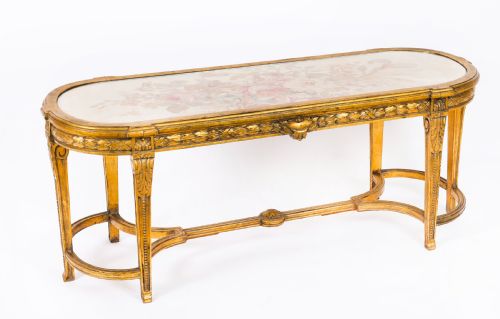
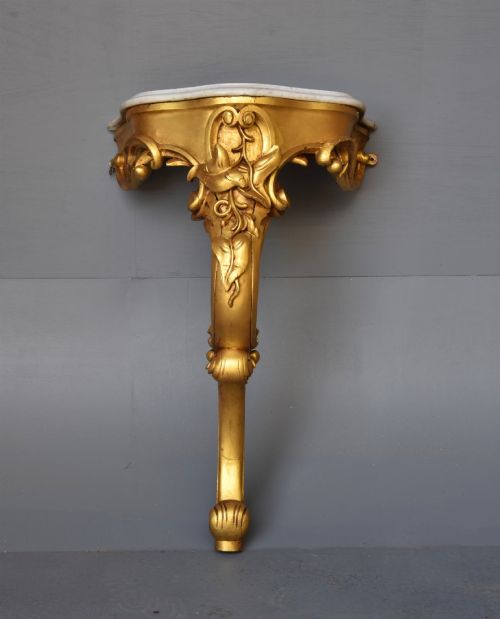

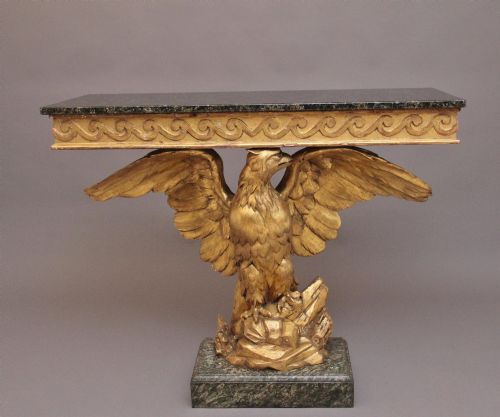
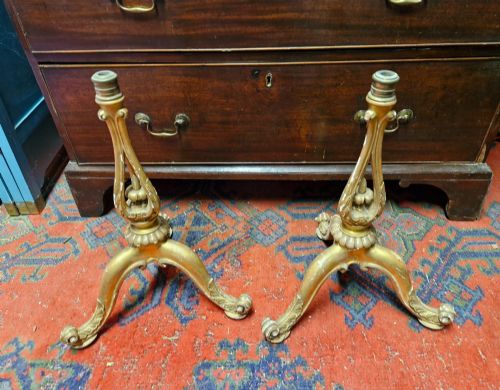
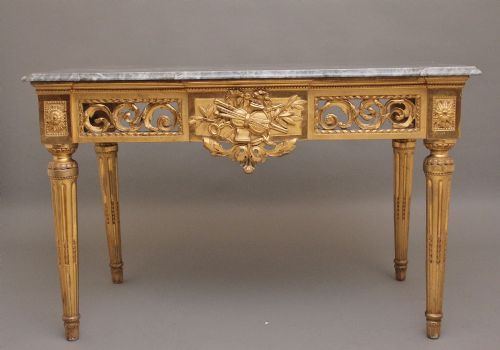
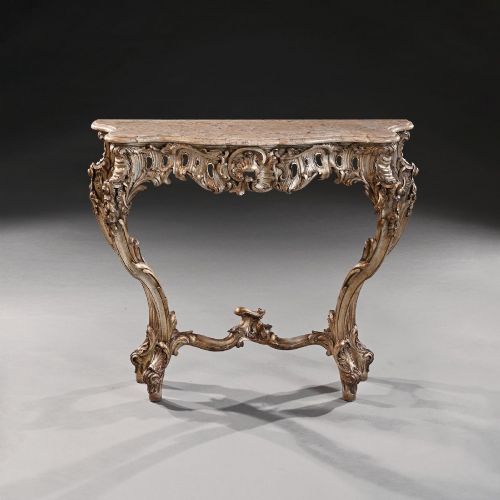
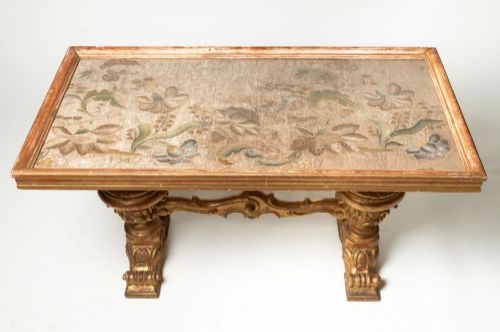
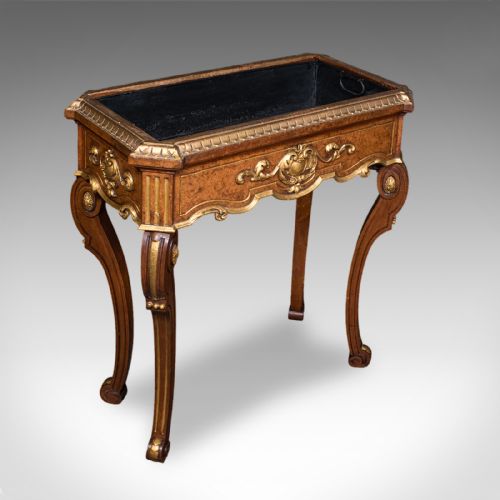
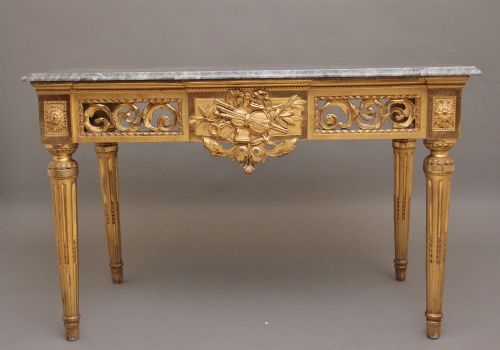
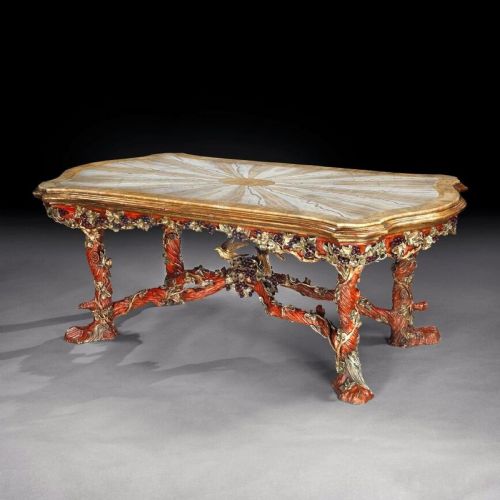
Antique Carved Gilded Table
An antique carved gilded table brings architectural presence and metallic warmth to a room, drawing the eye with rich surface gilding and carved detail.
How they were made
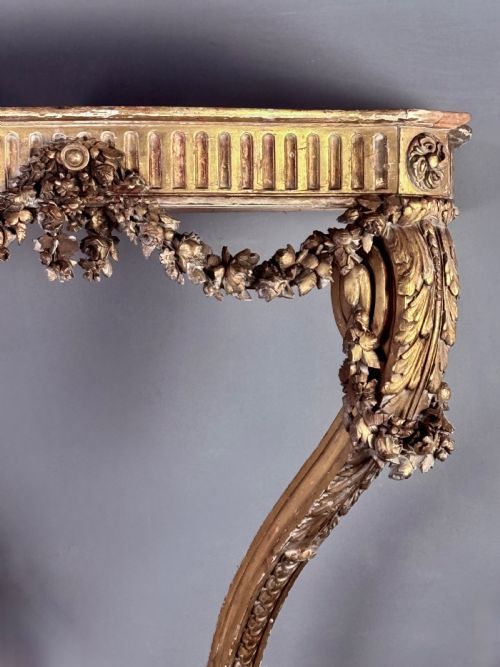
Carpenters shaped foundational structures from timber such as pine, oak, walnut, and limewood, applying deep relief carving to create scrolls, foliage, and architectural motifs. Gesso was laid over the carved wood to provide a smooth, receptive ground for subsequent gilding layers.
Finishers applied gold leaf or silver gilt onto the prepared surfaces, sometimes combining the metallic leaf with paintwork or ivory finishes. Heavy stone elements, particularly marble slabs, were cut and polished to fit precisely onto the wooden bases of console and coffee tables.
What varies in quality
The depth and crispness of the wood carving separate standard items from superior pieces, as skilled hands produced sharper foliage, more fluid scrolls, and finer definition in figures and dolphins. The quality of the gesso application directly impacts how cleanly the gold leaf catches the light.
Materials dictate upper tiers, particularly the selection of thick, well-figured marble slabs paired with genuine gold leaf rather than basic metallic paint. Structural integrity in the joints and the preservation of the original gilded surface without excessive modern over-painting define the better examples.
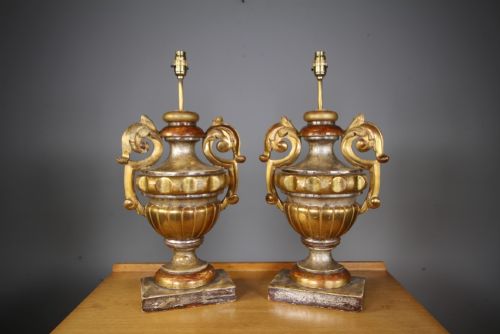
Object forms include standard console and coffee tables alongside more unusual items like easel table mirrors, urn lamps, and dressing table stools.
Felix Alfred Ternisien
The Antique Carved Gilded Table Glossary
- Giltwood
- Wood that has been coated with gold leaf over a prepared gesso ground. This technique creates a radiant metallic surface that defines the aesthetic of these tables.
- Console table
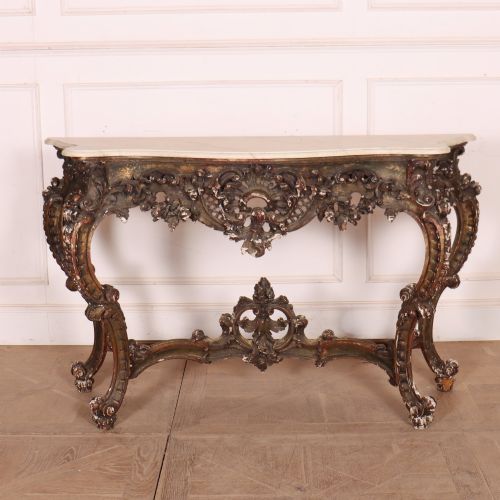
- A table designed to stand against a wall, frequently supported by two front legs and secured to the wall structure. They often feature shaped marble tops.
- Gesso
- A plaster mixture applied to carved wood to create a smooth surface for gilding. It allows carvers to achieve sharp detail before laying gold leaf.
- Neoclassical
- A design style inspired by classical Greece and Rome, characterised by symmetry, straight lines, and motifs such as urns and fluting. It heavily influences late eighteenth and nineteenth-century tables.
- Breche d'alep
- A type of quarried marble showing a variegated pattern of browns, greys, and creams. It provides a heavy, decorative top for period console and coffee tables.
Antique Carved Gilded Table: Frequently Asked Questions
Where should I place a console table?
Console tables sit naturally in entrance halls, living rooms, or dining spaces against a flat wall. Their shallow depth allows them to occupy narrow corridors without blocking walkways.
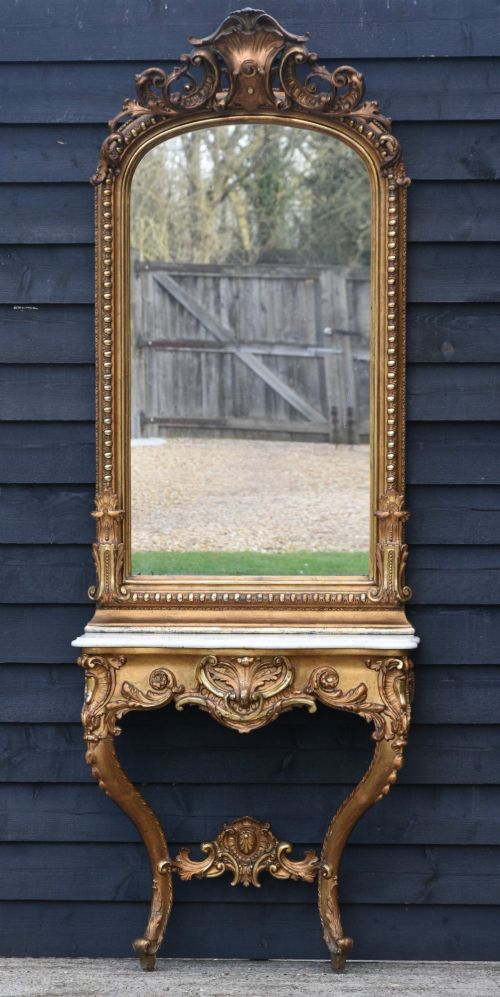
Pairs of console tables or matching pier mirrors placed above them create a balanced, formal arrangement that reflects light into darker corners of a room.
Are marble tops removable?
Marble slabs on antique tables typically rest loose on top of the wooden base, held in place by their own considerable weight. This allows the stone to be lifted off safely during transport.
Some pieces secure the marble with original wooden blocks or pins underneath, so check beneath the frame before attempting to lift the stone slab.
How do I identify French Rococo Revival?
French Rococo Revival pieces feature asymmetric C-scrolls, shell motifs, and naturalistic floral carvings that echo eighteenth-century designs. Look for serpentine fronts and cabriole legs.
This style reappeared strongly during the nineteenth century, built with heavier timbers and brighter gilding than the original period pieces.