


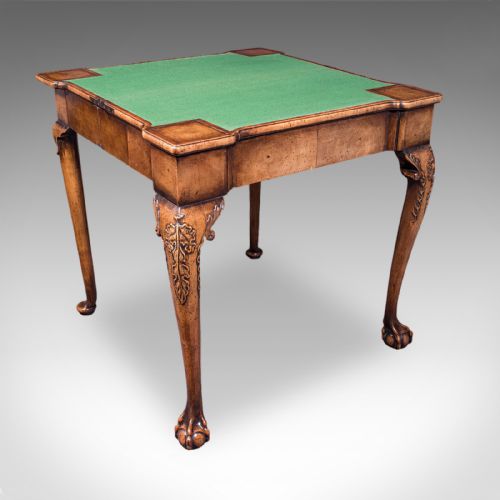
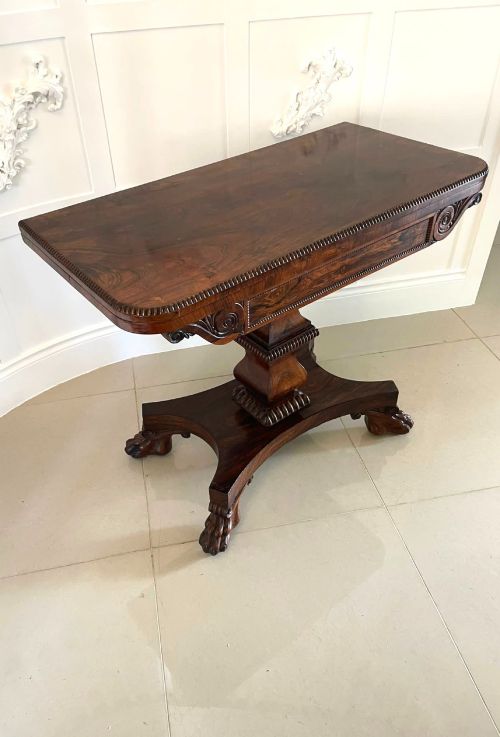
Antique Carved Gaming Table
An antique carved gaming table brings both social history and fine cabinet-making into a room, offering fold-over tops and integrated boards for card play.

Antique Carved Gaming Table
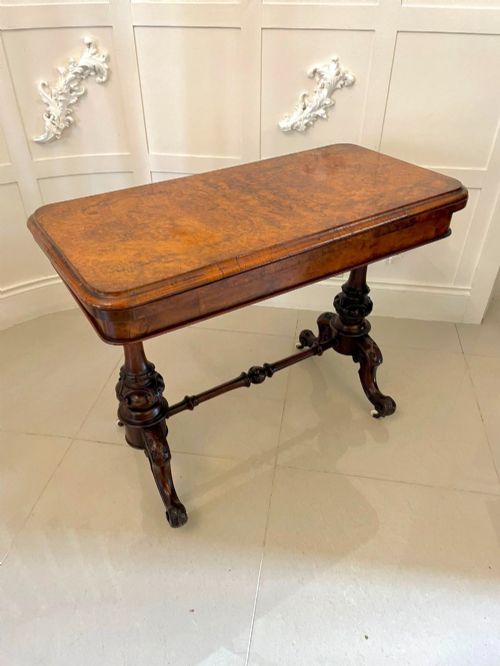
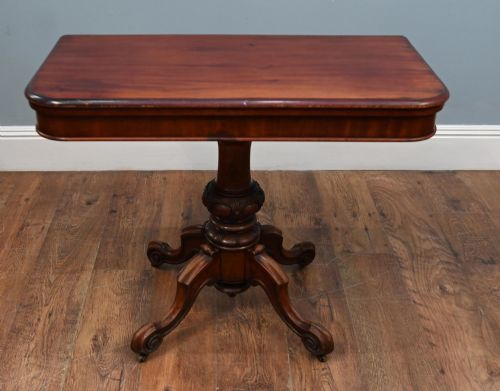
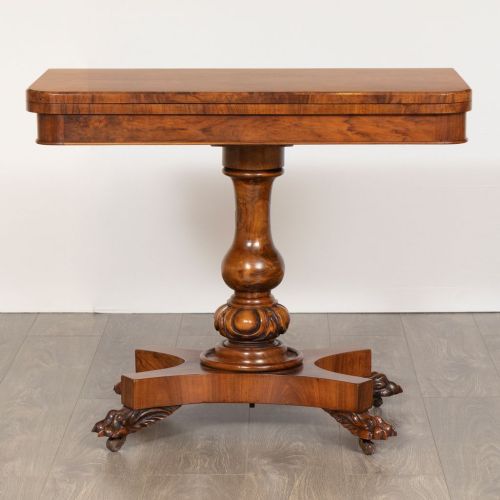
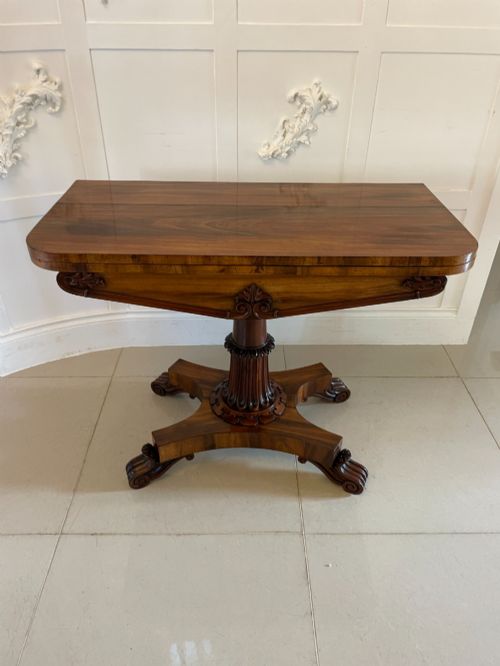
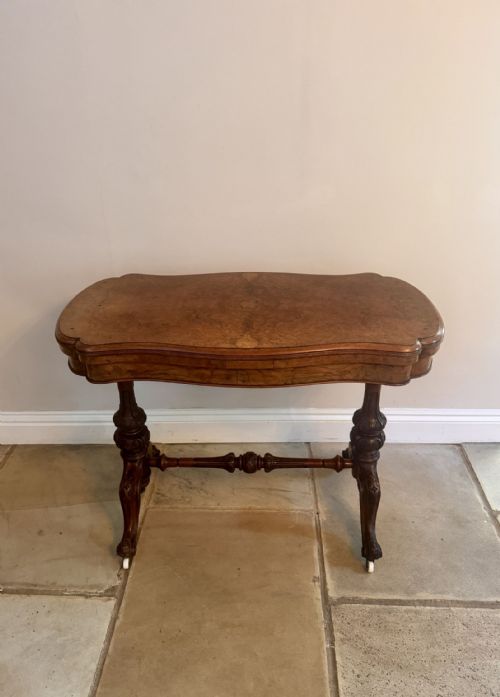
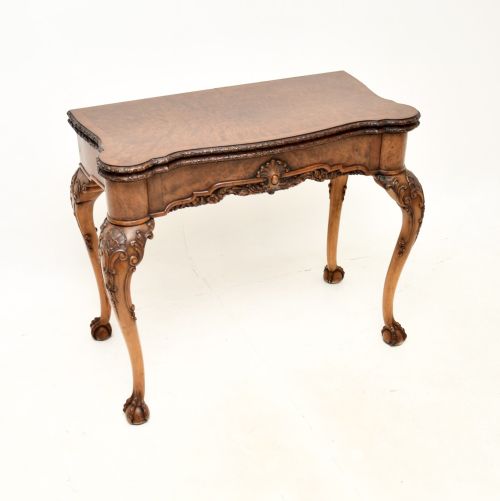
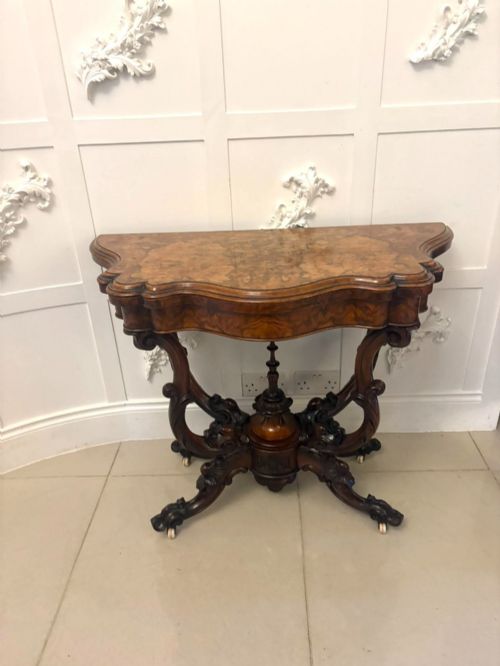
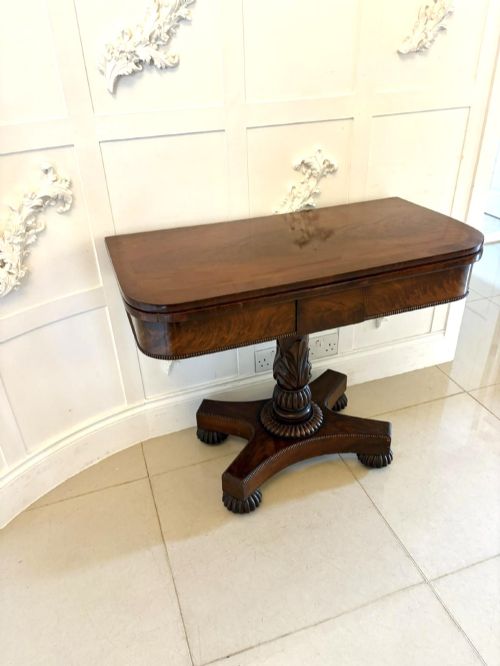
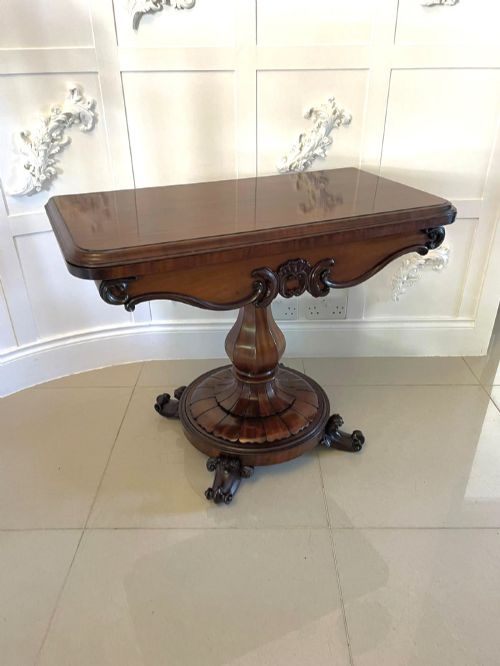
An antique carved gaming table is primarily encountered in Victorian and Georgian forms designed for card games, chess, and backgammon. These pieces frequently feature fold-over tops, concertina actions, and revolving surfaces that reveal hidden compartments or inlaid playing boards beneath.
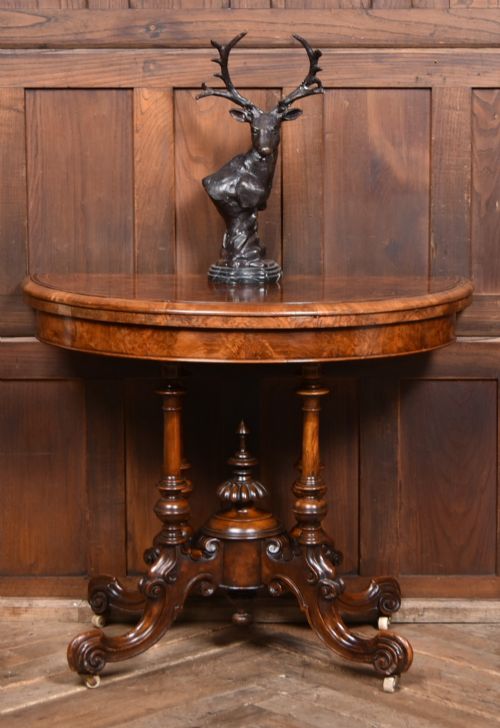
The selection ranges from George II mahogany concertina action tables to elaborate Victorian burr walnut examples with carved basket bases and pillar supports. Alongside dedicated card tables, the listings include occasional tables, work tables with sewing compartments, and specialised pieces like oak skittles games.
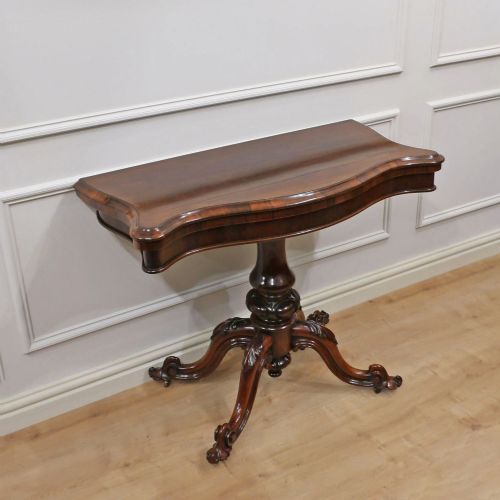
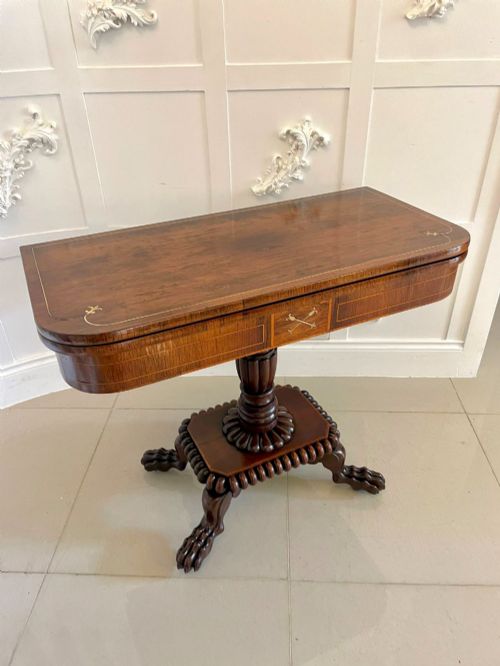
Originating predominantly from British workshops, the pieces span the eighteenth, nineteenth, and early twentieth centuries, encompassing Regency rosewood designs and Irish mahogany variants.
Materials and construction
Cabinet-makers utilised dense timbers such as mahogany, rosewood, and burr walnut, often applying figured veneers and intricate wood inlay to the primary surfaces.
Structural integrity relied on solid timber framing for folding tops and pedestal supports, complemented by brass hardware, ormolu mounts, and baize-lined playing surfaces.
Georgian examples show a preference for solid mahogany and concertina actions alongside Irish stylistic influences.
Distinctions in quality
Quality rests on the crispness of the timber carving, the selection of highly figured burr walnut or mahogany veneers, and the precision of the concertina or fold-over mechanism.
James Shoolbred And Co·Giles Grendey·Gillows
The Antique Carved Gaming Table Glossary
- Concertina action
- A table frame construction that expands outward on hinged rails to support a double-folding top, allowing all four legs to move symmetrically. This design originated in the eighteenth century for stability during card play.
- Baize
- A coarse woolen fabric used traditionally to line the playing surfaces of card and games tables. It provides a soft texture that protects playing cards and dampens the sound of dice.
- Parquetry
- Geometric mosaic woodwork formed by small pieces of veneer fitted together to create patterns on table tops. It showcases the precision skill of the cabinet-maker.
- Ormolu
- Gilded bronze mounts applied to furniture for decorative enrichment during the nineteenth century. These metal details reflect French influence on British cabinet-making.
Antique Carved Gaming Table: Frequently Asked Questions
What is an antique carved gaming table used for?
These tables served primarily for indoor leisure activities, including card games, chess, and backgammon, within domestic parlours and drawing rooms.
When not in use for gaming, the fold-over tops allowed the pieces to function as standard side tables, tea tables, or console tables against a wall.
How do I identify the period of a gaming table?
Dating relies on observing the timber choices, such as eighteenth-century mahogany contrasted with Victorian burr walnut, alongside stylistic indicators like Regency brass inlay or Georgian concertina frames.
Secondary clues include the complexity of the carved pillar supports and the integration of specialised boards for chess or backgammon.
Can I use a gaming table for daily dining?
These tables are generally unsuited for daily dining due to the delicate mechanics of their fold-over leaves and the presence of baize playing surfaces.
Instead, they function best as occasional furniture in living spaces where the convertible tops can be displayed closed or opened for leisure.
How do I care for the wood and baize?
Preserve the polished wood surfaces by avoiding direct sunlight and excessive moisture, applying appropriate furniture wax sparingly to maintain the original patina.
Brush the baize lining gently to remove dust and protect the fabric from spills during use.