


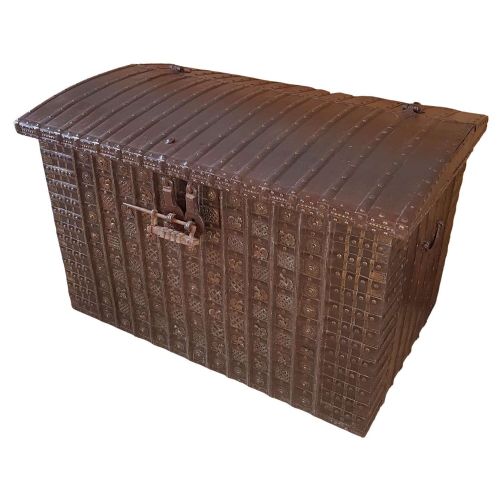


Antique Carved Dowry Trunk
An antique carved dowry trunk is a sturdy vessel built to hold a bride's worldly goods, offering rich surface detail and deep historical character.
Antique Carved Dowry Trunk
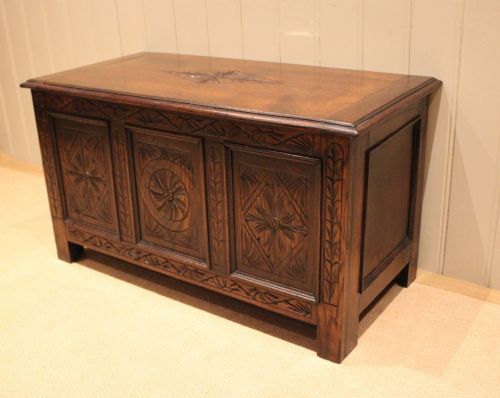
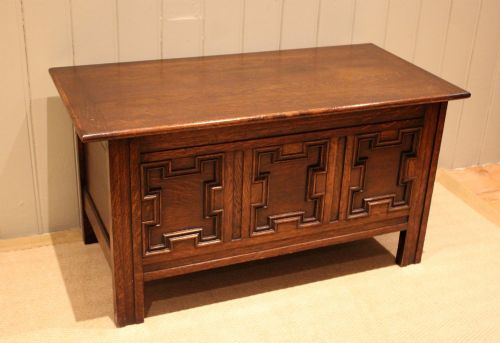
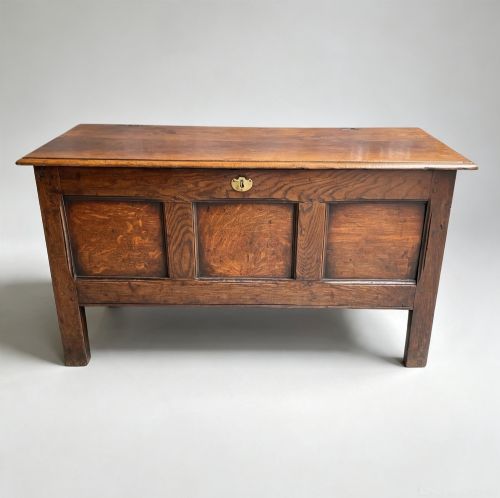
The antique carved dowry trunk appears in various regional forms across this selection, spanning British oak pieces from the seventeenth and eighteenth centuries alongside ornate Asian and Middle Eastern examples. These storage chests served as central household pieces for families marking a marriage, constructed to secure textiles and valuables.
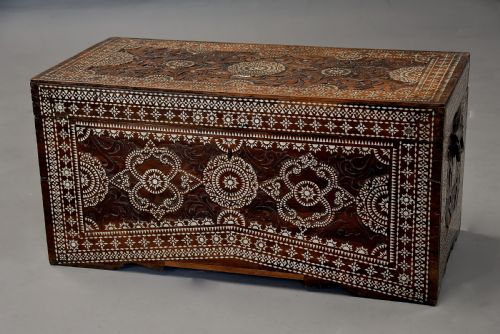
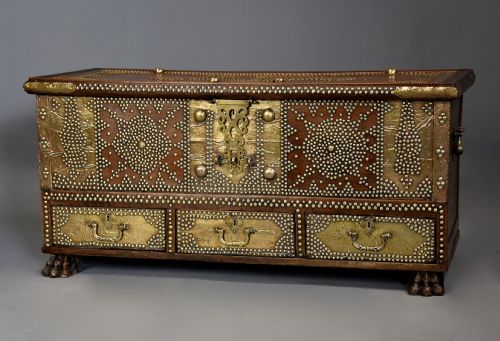
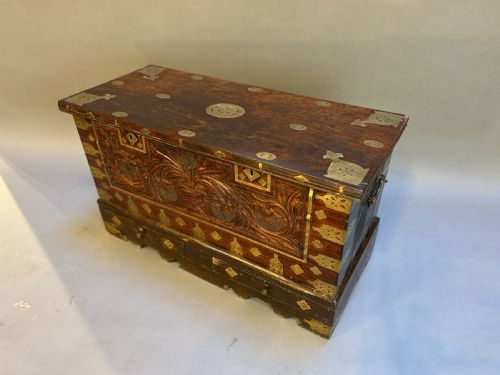
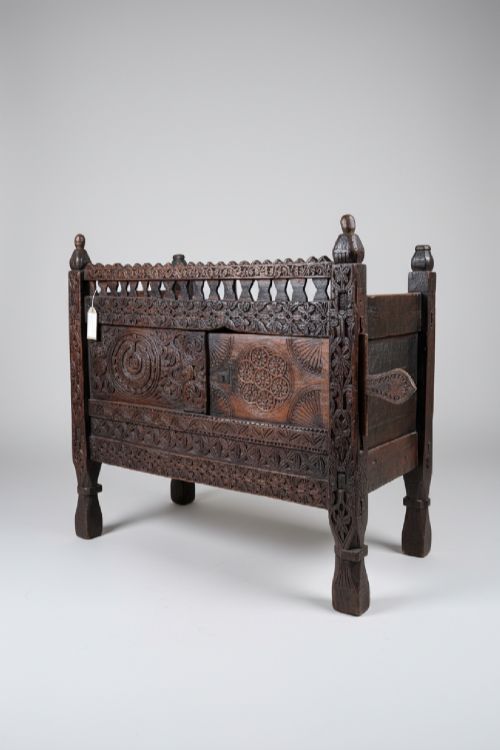
British examples favour solid oak with scratch carving or panel detailing, while pieces from regions such as Rajasthan, Swat Valley, and Zanzibar utilise teak, hardwood, and pine enriched with brass, iron banding, or mother of pearl inlay. Buyers encounter everything from early seventeenth-century Yorkshire coffers to nineteenth-century Indian damchiya chests and painted marriage coffers.
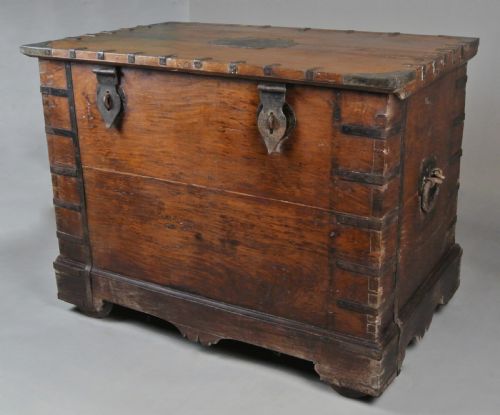
The domestic British iterations often double as window seats or heavy blanket chests, whereas the tropical hardwood variants bring substantial ironwork and intricate geometric carving. Each regional tradition applies distinct decorative vocabulary, meaning a buyer chooses between the restrained architecture of English oak and the elaborate artistry of Eastern marriage chests.
Materials and construction methods
Construction relies heavily on durable timbers including oak, teak, cedar wood, and general hardwoods, selected for their strength and longevity. Joinery methods involve traditional pegged framing and heavy board construction designed to withstand decades of domestic movement and storage demands.
Surface ornamentation integrates hand carving, scratch carving, and painted finishes alongside structural metalwork. Blacksmiths provided forged iron bands, hinges, and complex locks, while specialists added brass studding and mother of pearl inlay to specific regional trunks.
Listings feature woods ranging from native British oak to exotic teak, cedar, and Chinese elm.
Assessing quality and authenticity
Quality rests in the integrity of the timber, the depth and crispness of the hand carving, and the survival of original structural elements. Pieces retaining their early iron hinges, operational locks, and untouched surface patination command greater appreciation among collectors.
The relationship between the woodwork and auxiliary materials dictates overall merit, such as the precise setting of brass inlay or the heavy forging of iron bands on nineteenth-century trunks. Alterations to feet, replacement lids, or overly aggressive cleaning diminish the character built over centuries of use.
The Antique Carved Dowry Trunk Glossary
- Coffer
- A heavy wooden chest traditionally used for storing valuables, textiles, or documents. These pieces usually feature hinged lids and sturdy boarded or panelled construction.
- Damchiya
- A traditional low storage chest or cabinet originating from regions like Rajasthan, often fitted with intricate doors or panels and reinforced with iron work. They formed an essential part of a bride's household goods.
- Scratch carving
- A simple early decoration technique where a pattern is gouged or scratched directly into the surface of the timber using pointed tools. It appears frequently on seventeenth-century English oak furniture.
- Cassone
- An Italian marriage chest or coffer, often large and highly decorated with painted scenes or carved panels. These wealthy European trunks celebrated union and family alliances.
- Iron-banded
- Construction strengthened by exterior straps and braces of forged iron. This method secured heavy hardwood trunks intended for travel or secure household storage.
Antique Carved Dowry Trunk: Frequently Asked Questions
What is an antique carved dowry trunk?
These pieces are large storage chests created to hold household linens, garments, and valuables prepared for a wedding. Families commissioned or acquired them across various cultures to mark a marriage.
They function today as practical storage furniture or decorative focal points in living spaces, holding blankets or acting as low tables.
How do I date an oak coffer?
Dating relies on examining construction methods, tool marks, joinery styles, and the nature of the timber. Seventeenth-century examples often display pegged frame-and-panel assembly and scratch carving, while later Victorian pieces show different wear and hardware.
Hardware such as hinges and locks also provides key clues, though fittings can sometimes be replaced over long periods of domestic use.
Can I use a dowry chest as a coffee table?
Many buyers place a heavy trunk in a reception room to serve as a low table with internal storage. Their flat tops and solid build make them suitable for supporting books and objects.
Care should be taken with historical surfaces, ensuring hot cups or moisture do not damage the ancient wax or polish.
What is the difference between a coffer and a chest?
The terms are often used interchangeably, though a coffer traditionally denotes a more secure box with a flat lid used for valuables, sometimes featuring interior tills. Chests generally cover a broader category of lidded storage furniture.
Regional names like cassone, damchiya, or Zanzibar chest describe specific cultural variations of these foundational storage forms.