
Antique Carved Coffer Chest
An antique carved coffer chest offers robust domestic storage rooted in centuries of woodworking tradition.
Antique Carved Coffer Chest
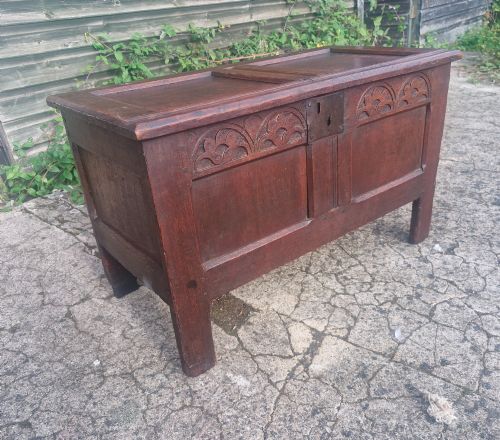
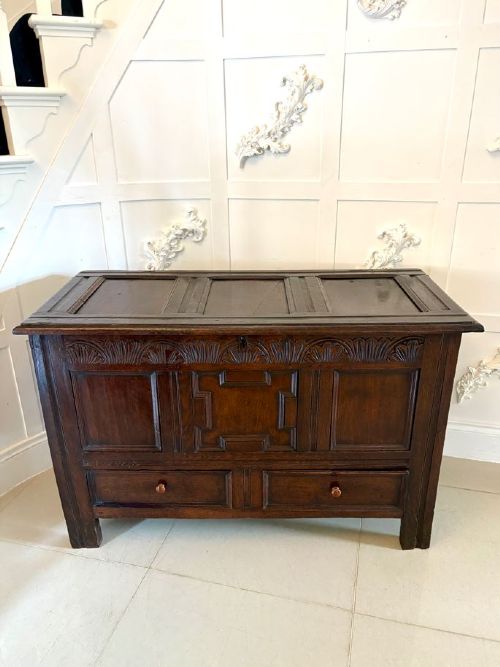
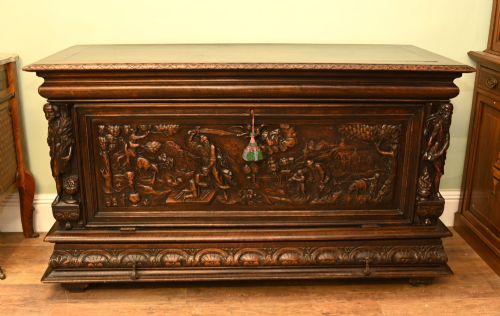
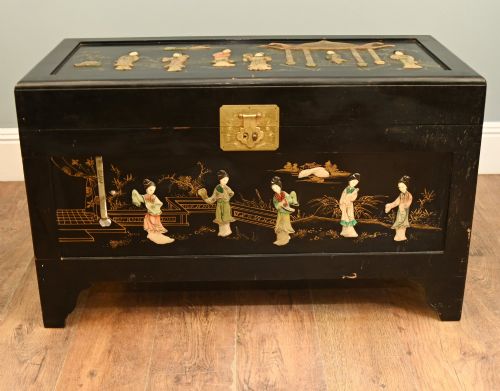
An antique carved coffer chest serves as a traditional storage box or blanket chest, frequently constructed with heavy timber panels. Buyers encounter domestic receptacles originating from the sixteenth, seventeenth, and eighteenth centuries, alongside later revival pieces.
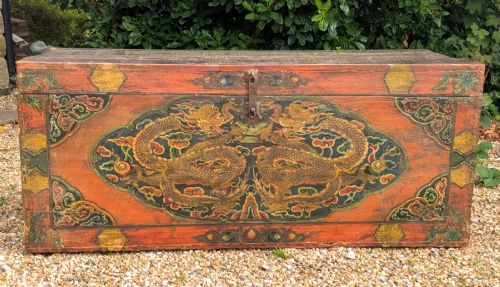
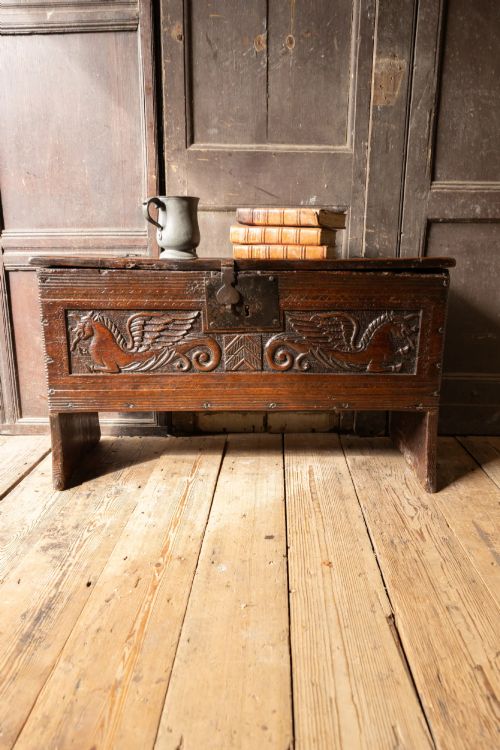
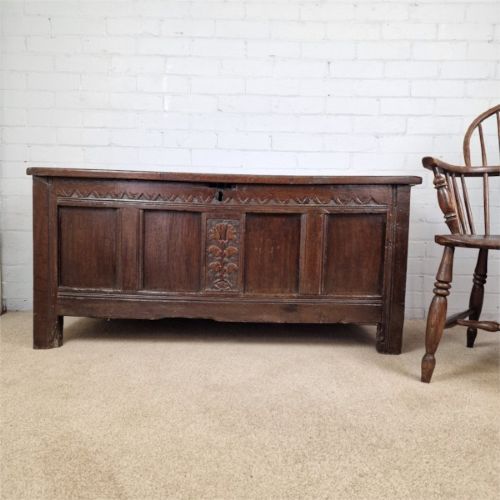
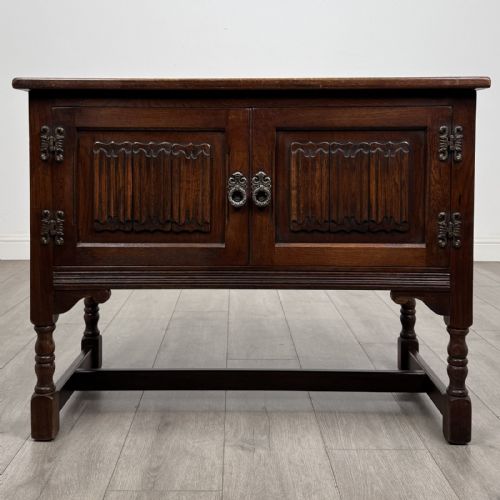
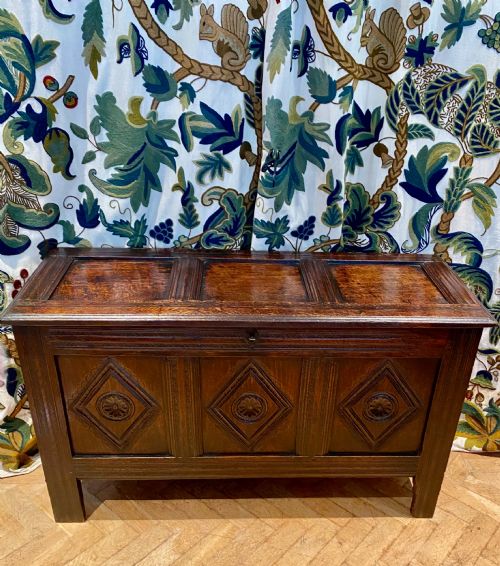
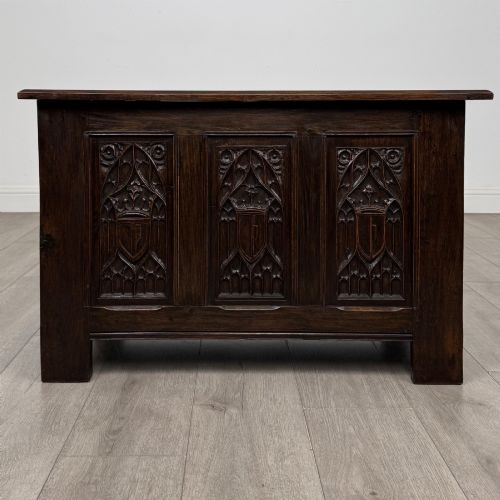
The selections span regional English oak examples to continental marriage chests, utilising forms ranging from simple boarded trunks to sophisticated panelled boxes. Many surviving specimens display carved geometric motifs, stylised foliage, or inscribed dates reflecting their period of manufacture.
How they were made
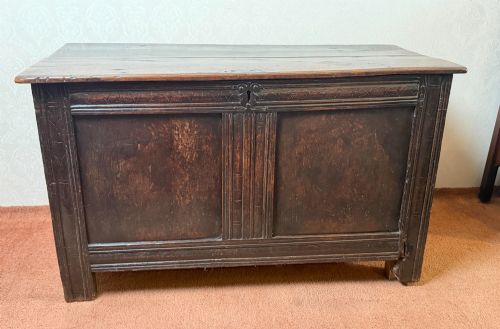
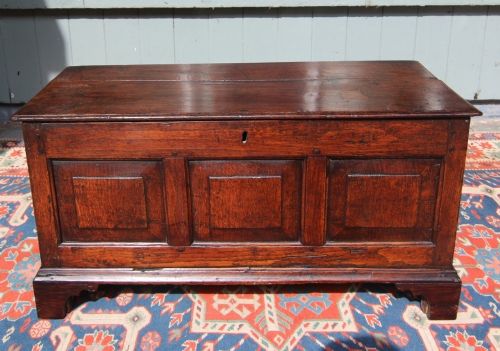
Makers relied primarily on solid oak, joined using traditional pegged mortise and tenon frames around panelled inserts. Selected examples incorporate supplementary materials such as iron hinges, brass fittings, elm, walnut, and decorative wood inlay or marquetry.
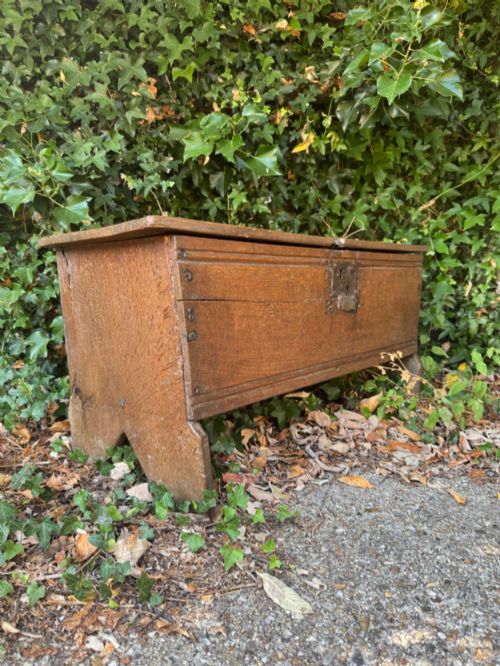
Surface ornamentation relied on chip carving, gouge work, and low relief panels executed with hand chisels. Joiners utilised boarded six-plank construction for simpler early boxes before adopting framed panel methods to accommodate timber movement.
The inventory records oak, elm, walnut, and cypress wood spanning from the sixteenth century through the twentieth-century revival periods.
What varies in quality
Construction methods dictate structural integrity, separating joined panelled chests from simpler boarded trunks. Superior pieces retain original hinges, locks, floorboards, and lids without extensive timber replacement.
The depth, crispness, and complexity of the hand carving distinguish ordinary boxes from exceptional works. Original surface patination and untouched dry timber finishes elevate the standing of surviving seventeenth and eighteenth-century examples.
The Antique Carved Coffer Chest Glossary
- Coffer
- A heavy wooden chest traditionally used for storing valuables, documents, or household textiles. These boxes usually feature a hinged lid and elevated feet or stiles.
- Mule chest
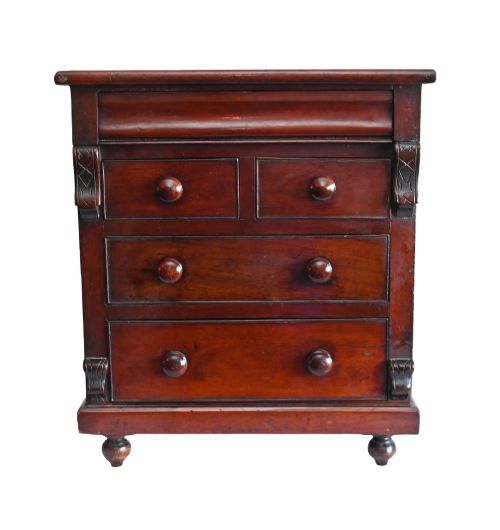
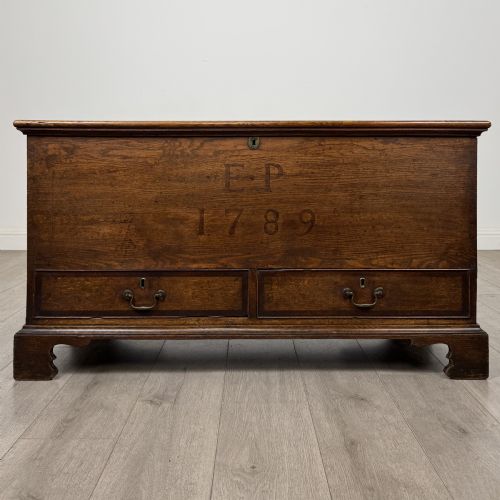
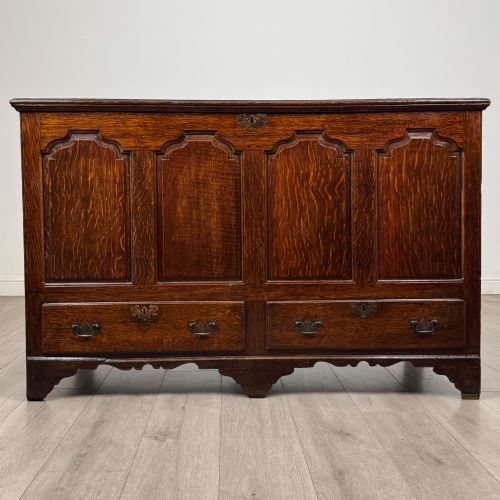
- A storage chest featuring one or more drawers built into the base beneath the main compartment. This form bridges the evolution between the traditional coffer and the chest of drawers.
- Cassone
- A large Italian marriage chest typically decorated with elaborate carving, marquetry, or painted finishes. These pieces were commissioned to hold a bride's trousseau.
- Marquetry
- The art of applying decorative veneer pieces in wood to form geometric patterns or pictorial designs. Craftsmen embedded contrasting timbers into the primary surface.
- Stile
- The vertical upright member of a panelled wooden frame. In early coffers, extended stiles often serve as the feet resting directly on the floor.
Antique Carved Coffer Chest: Frequently Asked Questions
What did people store inside a coffer?
These domestic boxes primarily held valuable household textiles, heavy woollen blankets, fine garments, and family documents. Because early homes lacked built-in closets, the lockable chest provided secure storage for portable wealth.
Heavier specimens also served as seating benches or temporary tables within the main hall of a dwelling when not actively accessed for storage.
How do I date an oak coffer?
Dating relies on observing construction techniques, tool marks, joinery methods, and the style of surface carving. Sixteenth and seventeenth-century examples typically employ heavy framed panels with pegged joints, whereas later revival pieces often display machine-cut timber or different fastening methods.
Inscribed dates and maker's initials occasionally appear carved directly into the front panels, though these require careful comparison against the overall joinery style to confirm authenticity.
How do I maintain an antique oak chest?
Maintain stable indoor humidity levels and avoid placing wooden chests near direct heat sources or strong sunlight. Sudden environmental shifts cause the ancient oak timbers to shrink, expand, or split along the grain.
Apply a traditional beeswax polish sparingly to nourish the dry timber surface and preserve the natural patina without sealing the pores of the historic wood.
What is the difference between a coffer and a trunk?
A coffer typically describes a joined furniture piece constructed by skilled joiners utilising frame and panel techniques. A trunk or boarded chest often relies on simpler longitudinal planks nailed or pegged together at the edges.
Coffers generally exhibit more architectural detailing, mouldings, and carved ornamentation suited to permanent placement in principal rooms.