


Antique Captains Armchair
An antique captains armchair is a sturdy low-backed seat built for the study or office, offering solid timber support and often featuring swivelling movement for daily workspace comfort.
What the pieces are
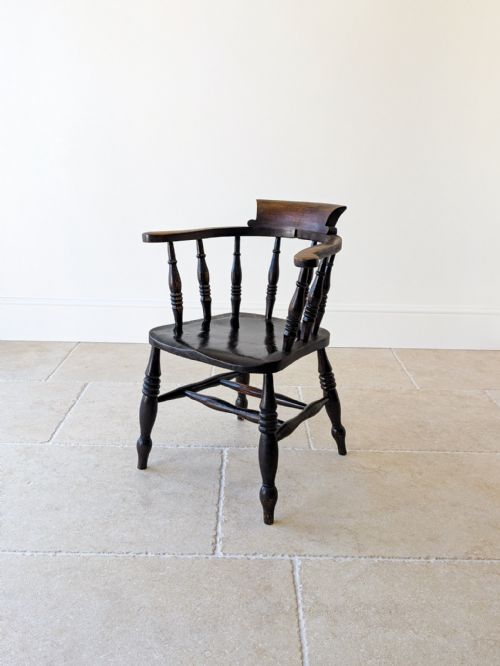
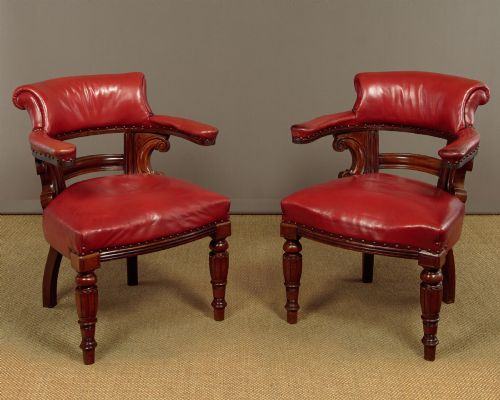
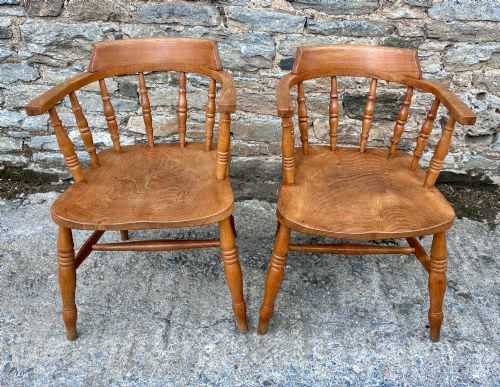
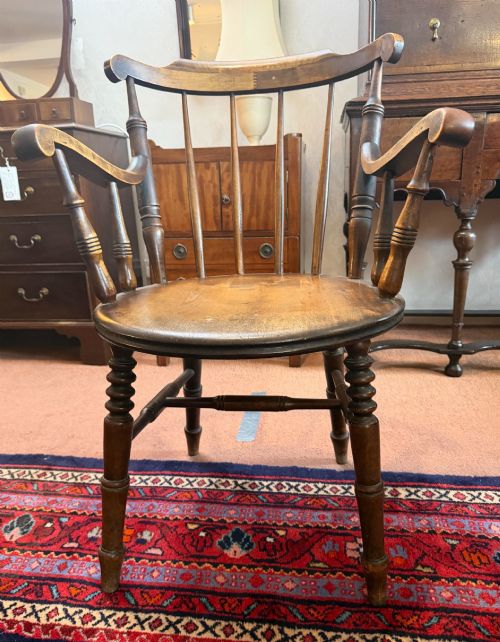
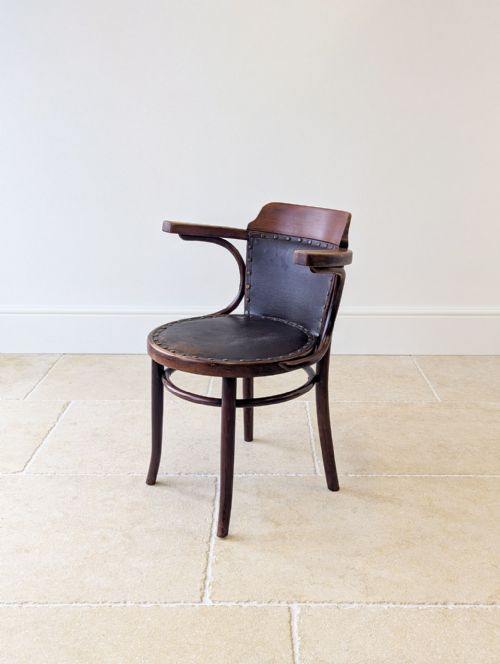
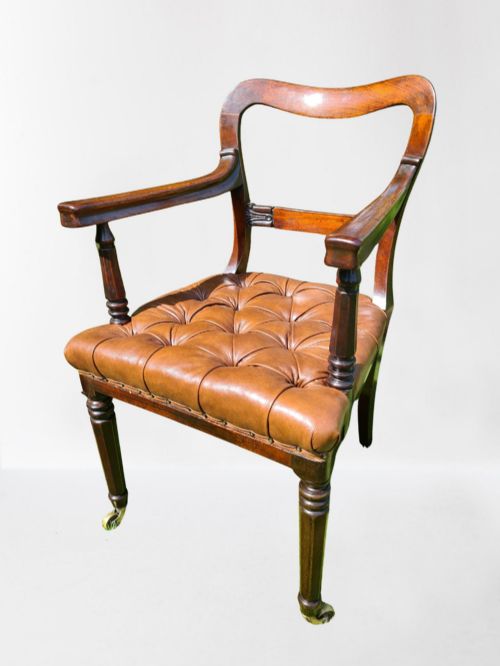
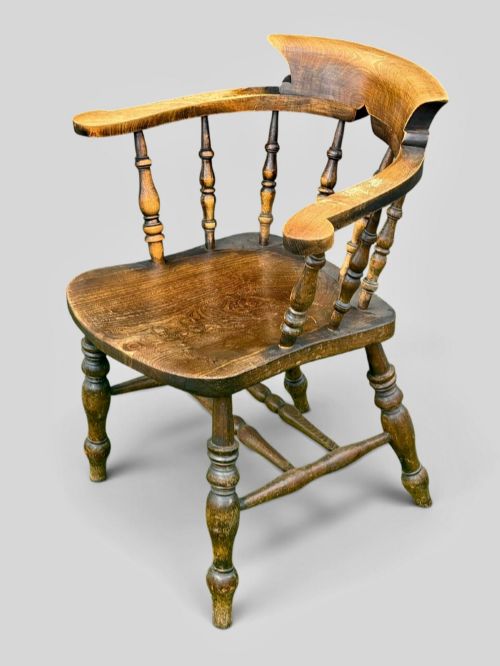
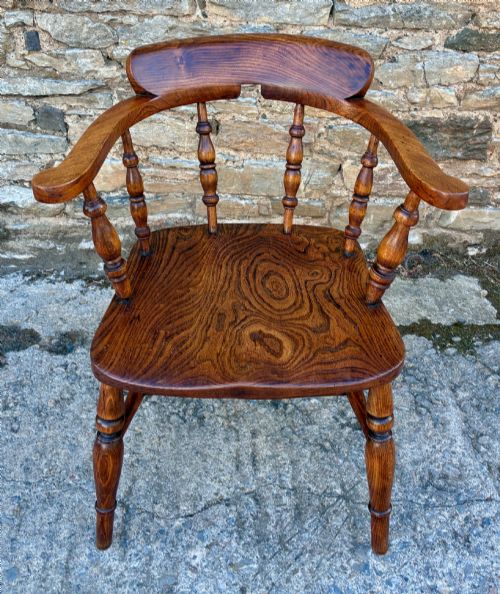
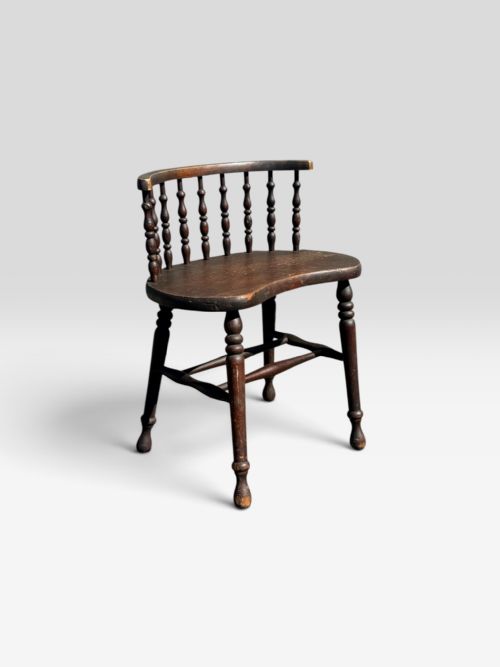
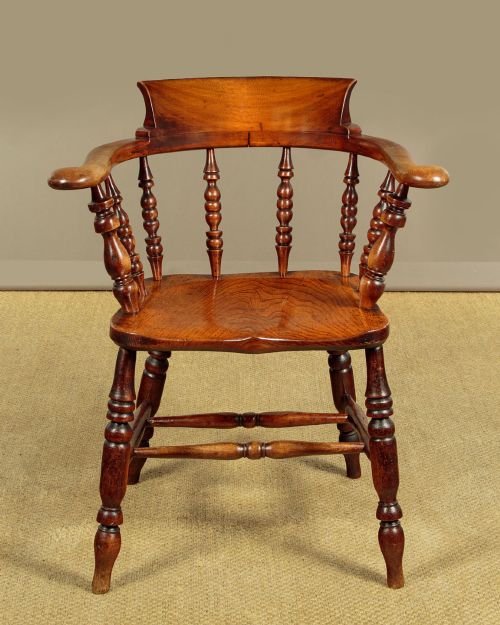
An antique captains armchair combines the low, curved back of a traditional country Windsor design with the functional base of a desk or office seat. Buyers encounter versions ranging from nineteenth-century country workshop pieces in elm and beech to formal Victorian library chairs upholstered in leather.
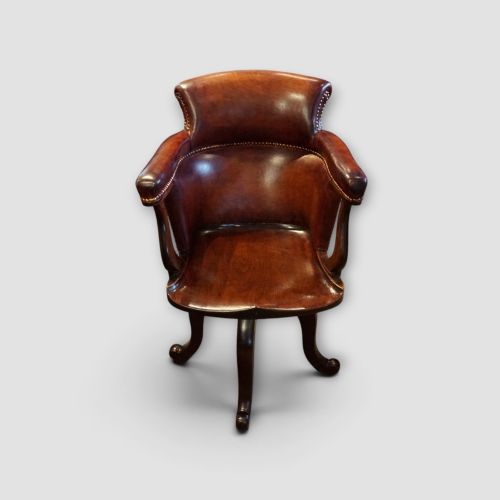
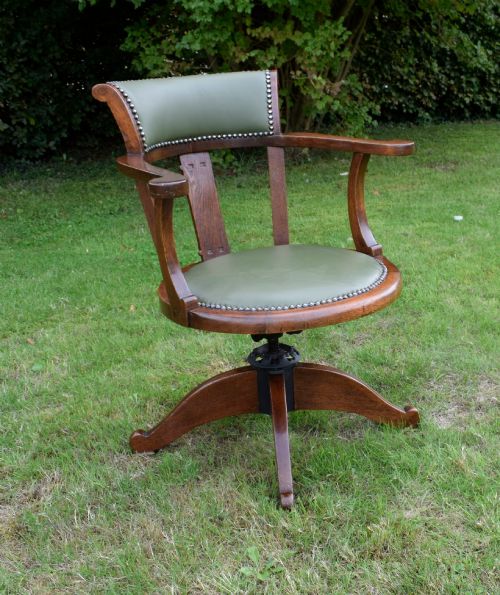
The form bridges domestic comfort and working utility, appearing as fixed-leg smoker's bows or swivel models with adjustable heights. Oak and mahogany dominate the more formal library variations, while regional country makers utilised native timbers like alder and ash.
Examples span the Victorian and Edwardian eras through to the early twentieth century, reflecting both high-status office environments and robust provincial use. The most frequent iteration on this page is the sturdy timber Windsor or smoker's bow variant built for sustained writing tasks.
How they were made
Joiners and cabinet makers constructed these chairs using solid native timbers, pairing turned spindles and bentwood rails with carved saddle seats. Country pieces frequently combined elm for the seat with beech and alder for the spindles and legs.
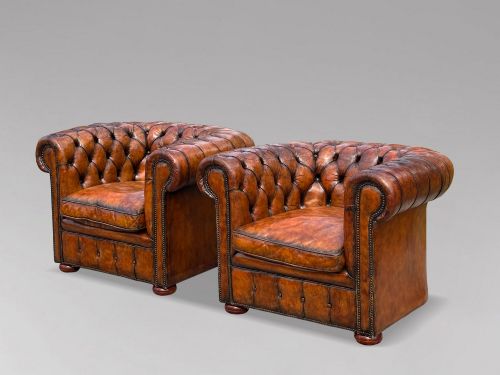
Formal library and office versions incorporated wrought iron and brass mechanisms to enable revolving movement and height adjustment. Leather upholstery was hand-tacked to padded seats, frequently accented with brass studding along the borders.
Retail Price Guide 2026
Typical UK retail prices for captains armchair, calculated from the Sellingantiques database of over a million retail prices indexed since 2003. This retail price guide relies exclusively on Sellingantiques data; no external sources or auction records are used, so the figures do not describe the wider market.
Listings feature periods spanning from the nineteenth century through the Edwardian era and into the nineteen-twenties.
What varies in quality
Superior examples demonstrate thoughtful timber selection, such as richly figured mahogany or deeply grained elm with distinct character. The crispness of the turning on spindles and legs separates workshop standards, alongside the robust engineering of early swivel mechanisms.
Construction integrity defines the upper tier, where joints remain tight and original timber patination is preserved rather than heavily sanded. The quality of the leather upholstery and the durability of the iron and brass working parts dictate the lasting utility of desk chairs.
R. Tyzack
The Antique Captains Armchair Glossary
- Smoker's Bow
- A sturdy low-backed wooden armchair related to the Windsor tradition, featuring a continuous curved armrail supported by turned spindles.
- Swivel
- A mechanical desk chair base that allows the upper seat portion to rotate fully on a central spindle, often paired with adjustable height mechanisms.
- Saddle Seat
- A solid wooden seat base scooped and shaped by hand to resemble an equestrian saddle for ergonomic sitting comfort.
- Bow Back
- A chair back formed from a single steam-bent piece of timber curving around to create both the backrest and the armrests.
- Windsor
- A traditional chair construction method where legs, back spindles and arms are wedged directly into a solid carved wooden seat slab.
Frequently Asked Questions
What is a captains armchair?
A captains armchair is a low-backed wooden or leather-upholstered seat traditionally designed for use at a desk or in a library. The form combines a comfortable curved armrail with sturdy support for writing.
These chairs evolved from regional Windsor and smoker's bow designs into swivel office furniture by the late nineteenth century. They provide a compact footprint while maintaining robust lumbar support.
How do I date an antique captains armchair?
Dating relies on examining the timber species, construction joints, turnings and any mechanical hardware present on the base. Victorian and Edwardian examples often display specific tool marks and patent mechanisms.
Earlier nineteenth-century pieces typically feature hand-turned spindles and native timbers like elm and ash. Edwardian and later versions frequently incorporate iron swivel screws and mahogany or oak framing.
Are these chairs comfortable for daily use?
Most captains armchairs were engineered for administrative or study work, making them well-suited for modern desk use. The scooped wooden seats or leather upholstery offer genuine ergonomic support.
Swivel models with adjustable heights provide the flexibility needed for contemporary workspaces. Fixed-leg variants work equally well as desk seats or accent chairs in living spaces.
How should I care for timber and leather?
Maintaining these materials involves keeping them away from direct heat sources and sudden humidity changes to prevent timber splitting. Regular dusting and occasional feeding preserve the original surface finish.
Leather upholstery benefits from gentle conditioning to keep the hide supple. Unpolished wooden elements respond well to traditional beeswax applications.