


Antique Candlestick Lustre
An antique candlestick lustre brings candlelight alive through hanging prisms, casting reflections across the room.
Antique Candlestick Lustre
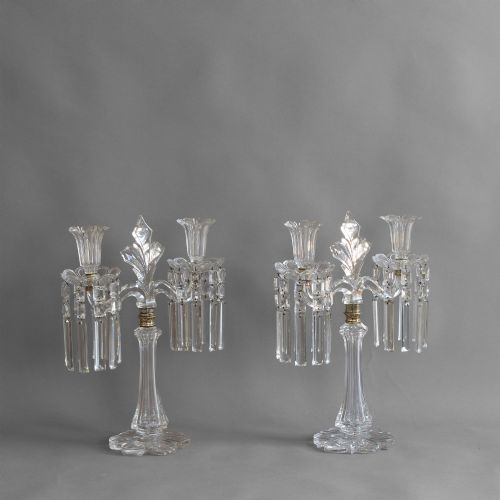
An antique candlestick lustre functions primarily as a decorative lighting piece designed to catch and multiply the flicker of a candle flame. These pieces combine a standard candle holder with a ring of hanging glass pendants, known as drops, which refract the light. When people search for an antique candlestick lustre, they encounter forms ranging from single mantel pieces to grand pairs meant for a dining table or sideboard. The selection spans periods from the eighteenth century through the Victorian era and into the early twentieth century.
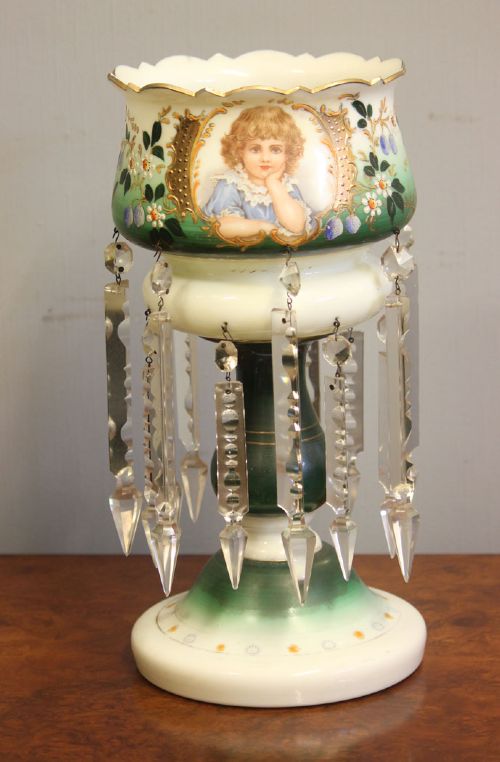
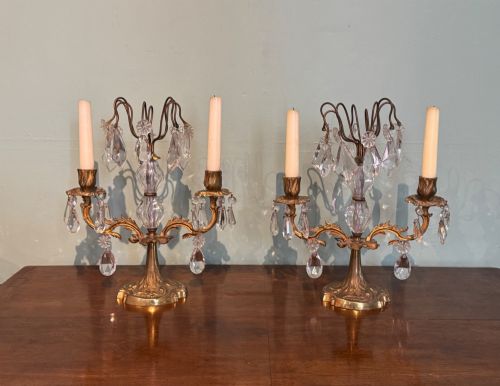
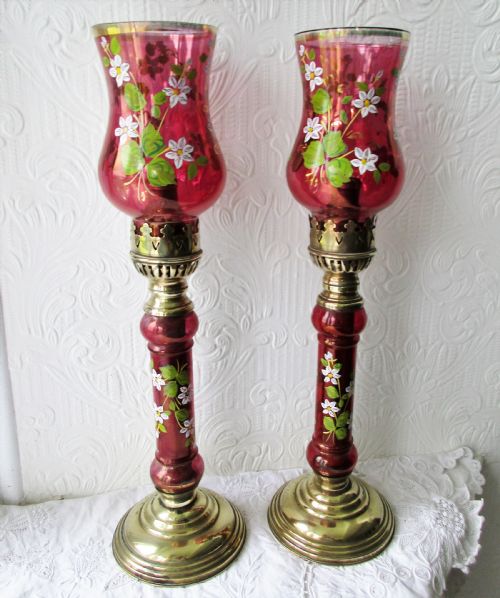
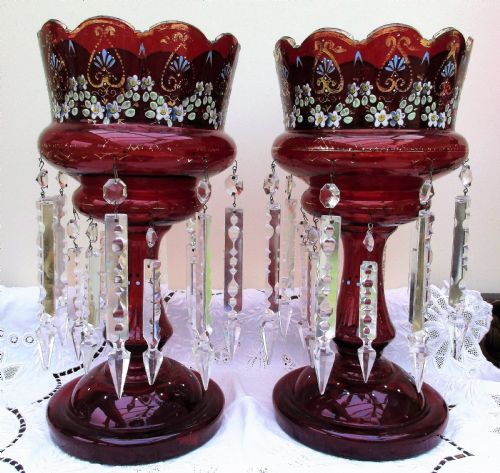
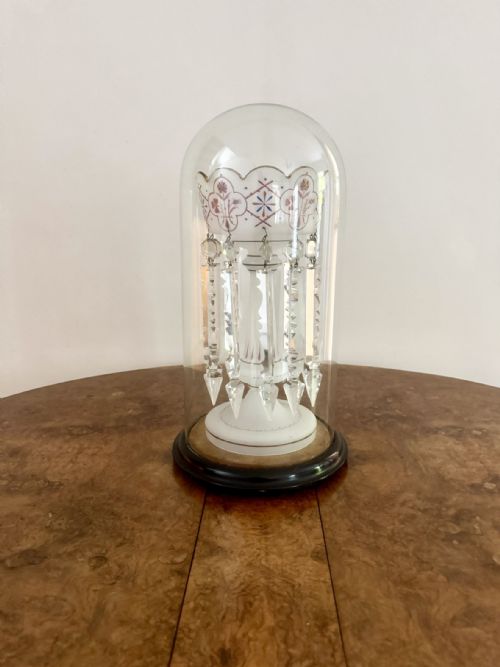
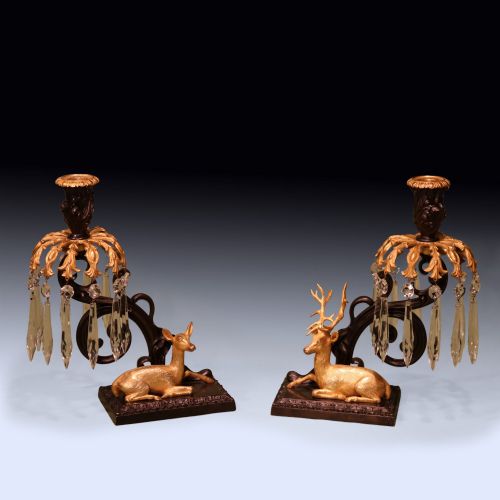
The most common examples on this page are Victorian glass lustres, often found in rich colours like ruby and cranberry alongside clear cut crystal. Alongside pure glass models, the evidence shows pieces combining brass, bronze, ormolu, and enamel. Forms vary from simple columnar candlesticks fitted with drops to elaborate figural mounts featuring stags, does, or griffins. Buyers also find related lighting such as candelabra, candle lamps, and pieces equipped with storm shades or glass domes.
How they were made
Makers utilised heavy cut glass and crystal to form the bodies and the faceted hanging prisms, shaping the material by hand before polishing the facets to maximise brilliance. Glass blowing and mould pressing provided the foundational shapes for both the stem and the sconce. Coloured glass varieties, such as ruby and cranberry, relied on precise mineral additives during the melting process to achieve their deep hues. Enamel work frequently decorated the surfaces of these glass bodies with hand-painted floral motifs or gilt detailing.
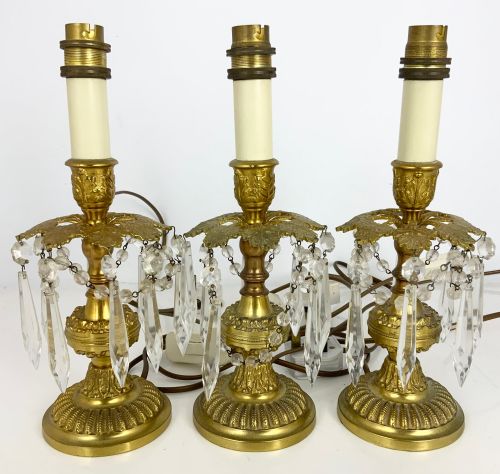
Metal components involved casting brass, bronze, and gilt bronze, often finished with mercury gilding or ormolu techniques to impart a rich golden lustre. Founders assembled these metal bases with threaded rods or pins to secure the glass bowls and drip pans. Prisms hung from the upper rims by means of wire loops threaded through small drilled holes, allowing each pendant to sway and chime softly.
Several Victorian models incorporate cast bronze stags, does, and griffins holding the candle sockets.
What varies in quality
The distinction between ordinary and superior examples rests on the depth of hand-cutting on the glass and the crispness of the metal casting. Heavy, brilliant crystal with deep, sharp prisms reflects light with far greater clarity than thin, pressed glass. In metalwork, finely chased ormolu mounts displaying sharp detail in fur, feather, or scrollwork indicate a higher standard of craftsmanship than plain, softly cast brass. The weight of the piece and the thickness of the glass components also signal superior manufacture.
Completeness dictates the integrity of an antique candlestick lustre, specifically the presence of a matching set of original hanging drops. Replacements or missing pendants alter the visual balance, while matching glass colour and uniform prism cuts maintain the harmony of the pair. The integration of mounts, such as bronze figures or gilt frames, should show secure, period-appropriate construction.
Clarkes
The Antique Candlestick Lustre Glossary
- Lustre
- A candlestick or vase fitted with a circle of hanging glass pendants designed to refract candlelight. These ornaments sat upon mantelpieces or tables to enhance the illumination of a room.
- Ormolu
- Finely ground high-carat gold applied to a bronze base using a mercury amalgamation technique. This process creates a durable golden finish characteristic of French decorative objects.
- Prism
- A cut glass pendant suspended from the rim of a lustre. These hanging drops catch and scatter light across the surrounding walls.
- Cricklite
- A proprietary brand of table lamp and candelabra utilising specialised glass shades and candle arrangements. Clarkes produced these patented lighting devices during the late Victorian period.
- Cranberry glass
- A transparent red glass made by adding gold chloride to the molten batch. The resulting colour ranges from a pale pink to a deep crimson.
Antique Candlestick Lustre: Frequently Asked Questions
What is a lustre?
A lustre is a decorative candlestick or vase adorned with a ring of hanging glass prisms. These drops catch and amplify the light from a candle flame.
Originating in the eighteenth century, they served as both functional lighting and ornamental centerpieces for formal rooms.
How do I clean an antique lustre?
Cleaning requires warm soapy water and a soft cloth applied by hand to each glass and metal surface. You must remove the hanging drops individually to wash them safely without knocking them together.
Avoid harsh chemical cleaners or submerging mixed-material pieces containing delicate gilt or enamel work.
Are all lustres found in pairs?
Many examples survive as matched pairs intended to flank a clock or mirror on a mantelpiece. Single pieces do appear in the record, often as independent decorative objects.
Sets of three also exist within certain styles, offering a balanced arrangement for larger sideboards.
How do I date a Victorian lustre?
Dating relies on examining the manufacturing techniques, glass colours, and metal mount styles present in the piece. Victorian examples often feature ruby or cranberry glass alongside heavy brass or ormolu mounts.
Comparing the cut of the glass prisms and the fastening methods helps distinguish mid-nineteenth-century work from later reproductions.