



Crystal Prism Vases
These crystal prism vases, known historically as lustres, catch and throw candlelight across a room with their dangling glass drops.
Crystal Prism Vases
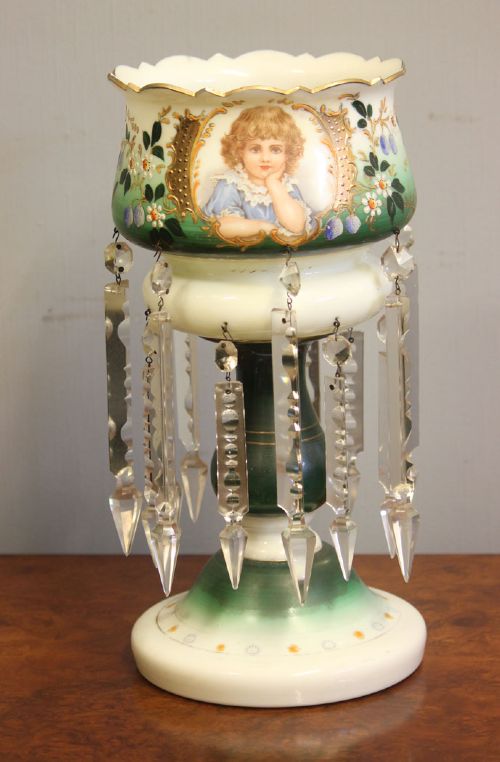
Crystal prism vases, frequently catalogued as mantel lustres or table lustres, are decorative centrepieces designed to sit on a fireplace mantel or parlour table. They combine a central glass or crystal vase body with a ring of hanging cut pendants that refract light.
The pieces appearing on this page belong predominantly to the Victorian era, spanning the nineteenth century from roughly eighteen sixty to nineteen hundred. English, French, and Bohemian workshops dominate the origin of these items.
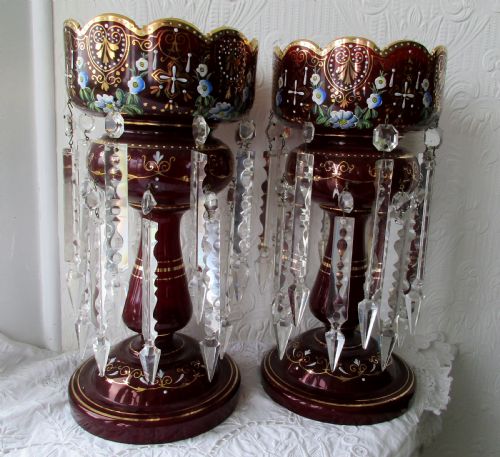
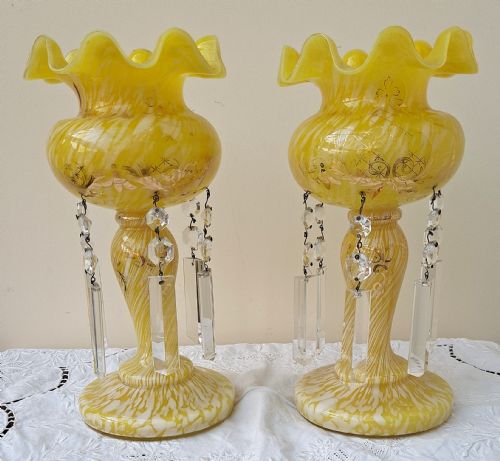
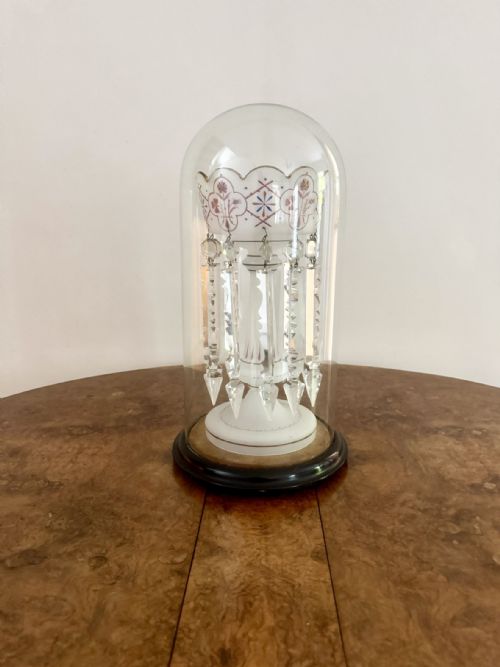
Most examples survive as pairs intended for mantel placement, though single table lustres and items accompanied by glass domes also appear. Formations typically incorporate a slender stem expanding into a flared bowl fitted with vertical hanging prisms.
Materials and construction
Manufacturers utilised lead crystal and coloured glass, employing techniques such as flash overlay and enamel decoration alongside gold leaf highlights. Coloured glass varieties include ruby, green, yellow, opal, and cranberry hues.
The hanging prisms were individually cut and faceted from heavy crystal to maximise light refraction, then suspended from the main body using wire or metal pins passed through drilled apertures in the rim.
Judging the work
Quality rests upon the depth and saturation of the coloured glass, the clarity of the lead crystal body, and the complexity of the hand-painted enamel or gilt detailing. Superior pieces display crisp faceting on the prisms and rich, uniform colouration without cloudiness.
The presence of a matching, complete set of original hanging crystal drops distinguishes finer examples, as replacements or missing pendants alter the visual balance and integrity of the piece.
The Crystal Prism Vases Glossary
- Lustre
- A decorative vase fitted with a circle of hanging glass pendants designed to reflect light. These items were popular during the Victorian period for mantelpiece display.
- Mantel lustre
- A specific form of lustre designed to stand upon a fireplace mantelpiece. They are frequently found in pairs to flank a clock or mirror.
- Overlay glass
- A technique involving layers of different coloured glass fused together, where parts of the outer layer are cut away to reveal the contrasting colour beneath.
- Flash glass
- A thin layer of coloured glass applied over a clear or contrasting glass body before cutting or etching. This method creates intense colour saturation while retaining interior brightness.
- Cranberry glass
- A transparent pinkish-red glass coloured by the addition of gold chloride during manufacture. It enjoyed widespread popularity in Victorian decorative wares.
Crystal Prism Vases: Frequently Asked Questions
What are crystal prism vases?
These objects are decorative Victorian glass vessels ornamented with dangling cut crystal pendants around the rim. They were designed to sit on mantelpieces and tables to catch the ambient light.
Most examples seen here date from the nineteenth century and originate from English, French, or Bohemian glassmakers.
How were lustres used?
Victorian households placed these items on mantelpieces, often flanking a central clock or garniture set. The hanging prisms caught the flicker of candlelight or gaslight to brighten dimly lit rooms.
They served primarily as ornamental showpieces rather than functional flower holders, though their bowls could hold small stems.
How do I date a lustre?
Dating relies on stylistic markers, glass colours, and manufacturing techniques characteristic of the nineteenth century. Victorian pieces often feature rich ruby, green, or cranberry hues combined with hand-painted enamel and gilt work.
Formations from eighteen sixty to nineteen hundred show distinct variations in the cutting of the crystal prisms and the shaping of the central stem.
Are they usually found in pairs?
Many survive as matching pairs intended to balance each other on opposite ends of a mantelpiece. Single examples also appear occasionally in collections.
Matching pairs command stronger interest among collectors who wish to display them in their original symmetrical arrangement.
How do I care for crystal lustres?
Maintenance involves gentle cleaning of the glass body and individual prisms using lukewarm water and a mild detergent. The hanging drops require careful handling to avoid chipping the faceted edges.
Removing the pendants during cleaning prevents accidental damage to the wire attachments and the drilled holes on the vase rim.