


Antique Campaign Luggage
Antique campaign luggage consists of portable travel furniture and trunks built for officers and travellers during the Georgian and Victorian eras, prized for their sturdy construction and clever folding mechanisms.
Antique Campaign Luggage
Antique campaign luggage encompasses a robust class of portable furniture and storage trunks designed for officers on the move across the 18th and 19th centuries. Buyers searching for antique campaign luggage encounter sturdy trunks, chests, and occasional pieces that were built to withstand the rigours of military deployments and long sea voyages.
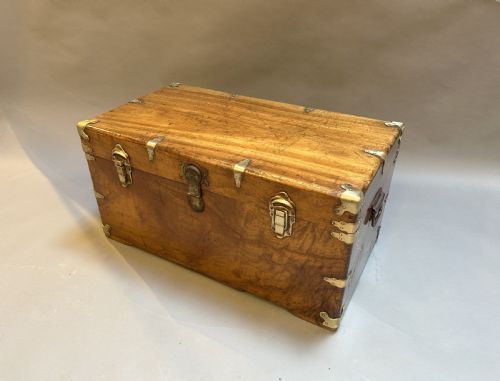
The pieces appearing most frequently range from compact camphorwood chests and brass-bound leather trunks to specialised hat boxes and occasional tables. These items reflect the practical requirements of British and colonial service, where possessions needed to pack securely and travel efficiently.
Originating across Georgian, Regency, and Victorian periods, this luggage displays a functional aesthetic defined by recessed hardware and protective corner brackets. Surviving examples demonstrate how officers maintained domestic order while traversing distant territories.
How they were made
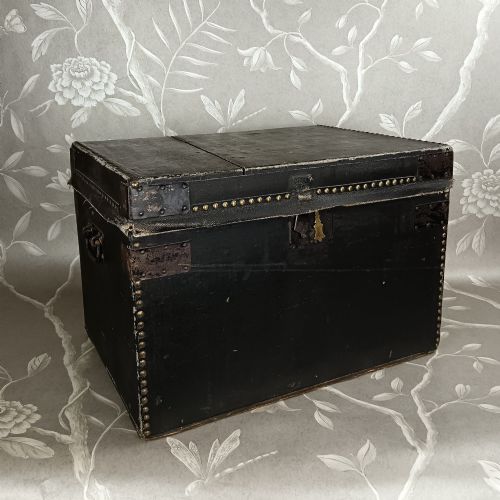
Cabinet makers utilised durable timbers such as camphorwood, oak, and pine to construct carcases capable of resisting humidity and rough handling. These woods were frequently encased in tough cowhide, canvas, or painted toleware to provide an extra layer of defence against the elements.
Brass corners, flush-fitting handles, and heavy iron bindings reinforced structural stress points while allowing items to pack tightly without protruding edges. Lockplates and hinges were countersunk into the wood to prevent damage during transit.
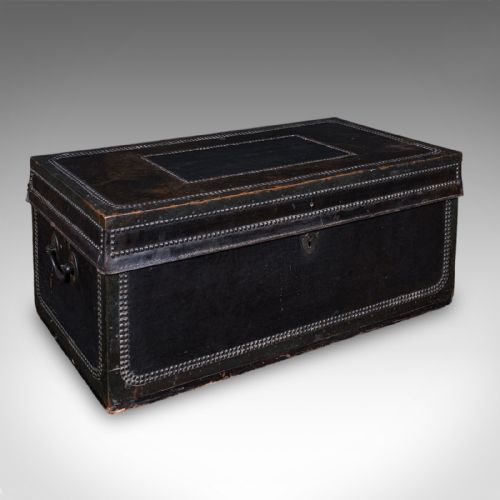
Linings often featured zinc, tin, or quality cotton to protect contents from moisture and dust during prolonged travel. Leather work involved meticulous hand-stitching and iron studding to secure the hides firmly to the timber frames.
Listings feature pieces spanning the 18th, 19th, and early 20th centuries, utilising leather, camphorwood, brass, and canvas.
What varies in quality
Quality rests upon the calibre of the original maker and the integrity of the materials selected for service. Pieces bearing the stamp of established makers display superior joinery, heavier gauge brassware, and more resilient framing than standard utility versions.
The degree of original hardware survival dictates the desirability of a piece. Trunks retaining their complete brass strapping, functional locks with working keys, and sound leather or canvas coverings sit at the upper end of the scale.
Internal fittings also distinguish finer examples from basic containers. Fitted compartments, zinc linings, and original maker labels indicate bespoke commissions tailored for high-ranking officers rather than mass-produced camp equipment.
Wm. Insall of Bristol·Chapple & Sons·JW Allen·Seabrook of St.Pauls·Drew & Sons·Allen of London·Hawkes & Co
The Antique Campaign Luggage Glossary
- Camphorwood
- An aromatic timber prized for campaign chests because its natural oils repel insects and resist dampness. It was widely utilised in colonial workshops.
- Toleware
- Enamelled and painted tinware used for durable travel accessories such as hat boxes. This material protected delicate items from crushing.
- Brassbound
- Furniture or trunks edged with brass strips and corners to protect the wood from heavy impact during transit. It provides both structural strength and a decorative finish.
- Steamer trunk
- A lower-profile trunk designed to fit beneath a cabin berth on ocean liners. These pieces emerged as travel evolved towards steamships.
- Recessed handle
- A folding handle set flush into the surface of a trunk or chest so it does not catch on other cargo. This mechanism is a defining characteristic of campaign design.
Antique Campaign Luggage: Frequently Asked Questions
What is antique campaign luggage?
Antique campaign luggage refers to portable storage chests, trunks, and tables constructed for military officers and travellers from the Georgian era through to the early 20th century.
These pieces were engineered for frequent relocation, featuring durable materials, protective brass bindings, and folding mechanisms designed to save space during transit.
How was campaign luggage used?
Officers utilised these trunks and chests to transport uniforms, documents, mess gear, and personal belongings across difficult terrain and long sea voyages.
When stationary at camp or in quarters, the trunks doubled as temporary furniture or storage chests, keeping essential items organised and protected from moisture.
How do I live with campaign trunks?
These versatile pieces integrate easily into modern interiors as coffee tables, end tables, or bedroom storage while offering practical hidden space.
Positioning them away from direct heat sources helps preserve the antique leather, wood, and brass surfaces without requiring complex maintenance.
How do I identify different periods?
Early 19th-century and Georgian pieces often feature simpler lines, exposed dovetails, and lighter camphorwood construction, while Victorian examples frequently showcase heavier leather bindings and brass studwork.
Edwardian and later 20th-century pieces introduce specialised steamer formats and modern canvas materials tailored for early globetrotters.