


Antique Caddy Container
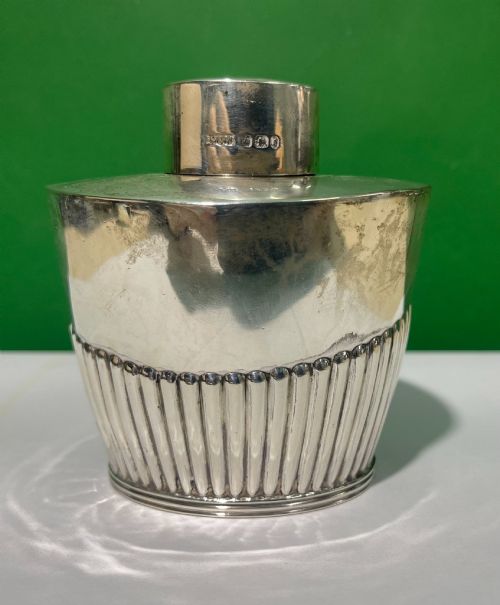
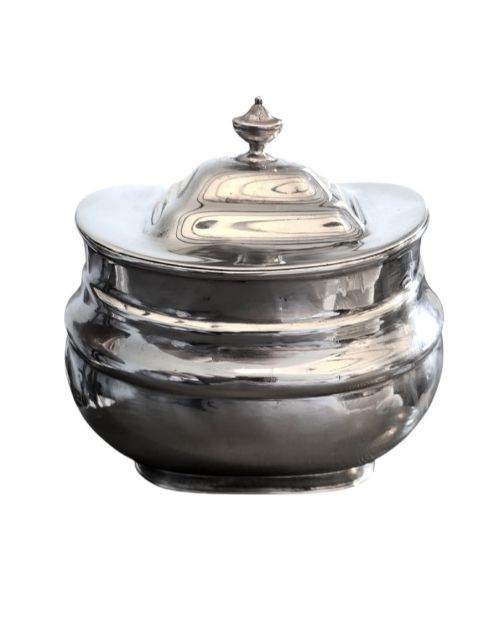
These antique caddy container examples span Georgian, Victorian, and Edwardian periods, bringing functional storage and decorative appeal to any room.
Antique Caddy Container
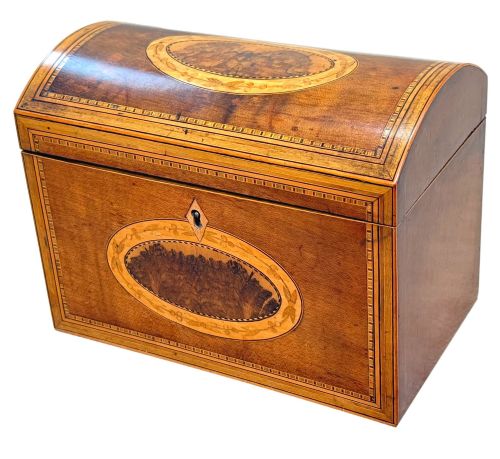
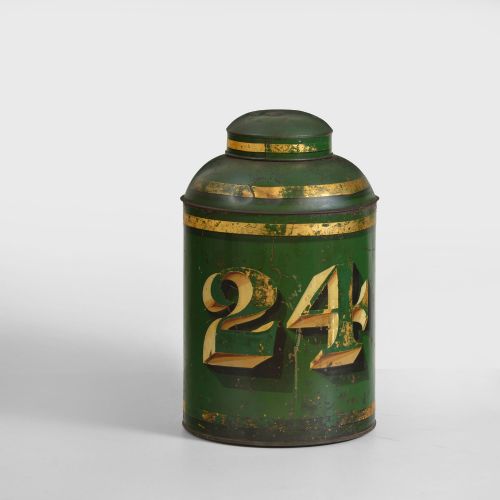
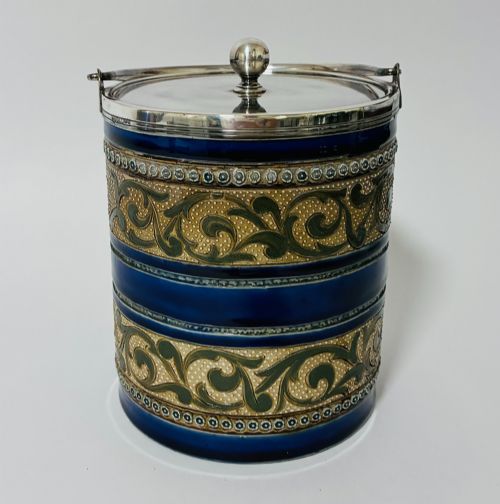
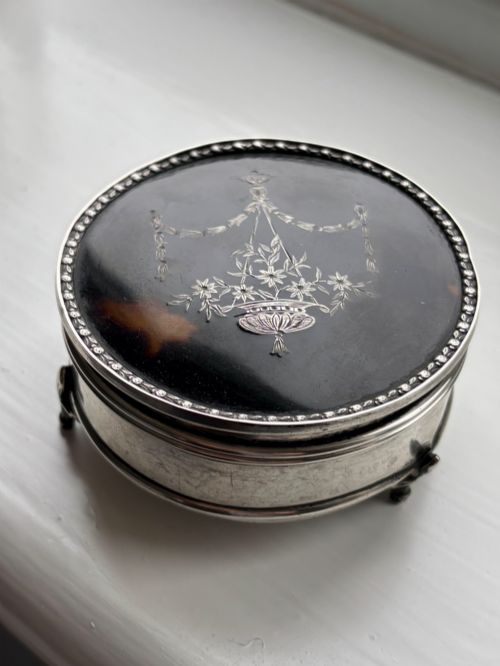
An antique caddy container encompasses tea caddies, canisters, and biscuit barrels originally designed to store dry goods securely. Buyers encounter various forms, from wooden tea chests with fitted interiors to silver and ceramic vessels.
The pieces on this page originate primarily from the Georgian, Victorian, and Edwardian eras, spanning the nineteenth and early twentieth centuries. Wooden box forms and metal canisters dominate the selection.
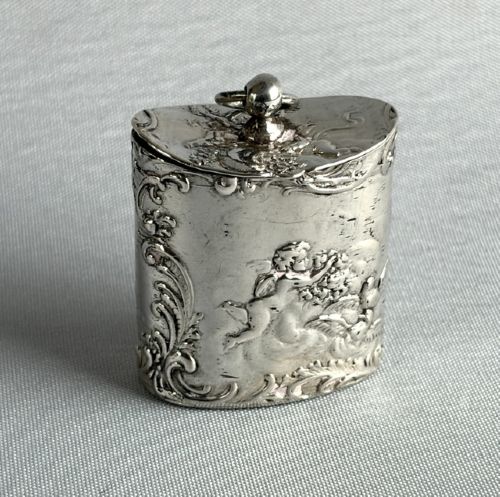
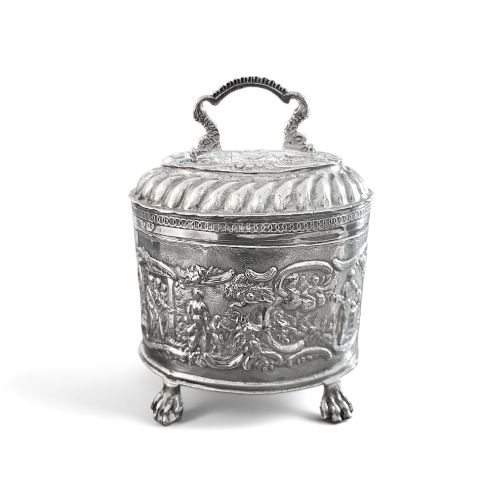
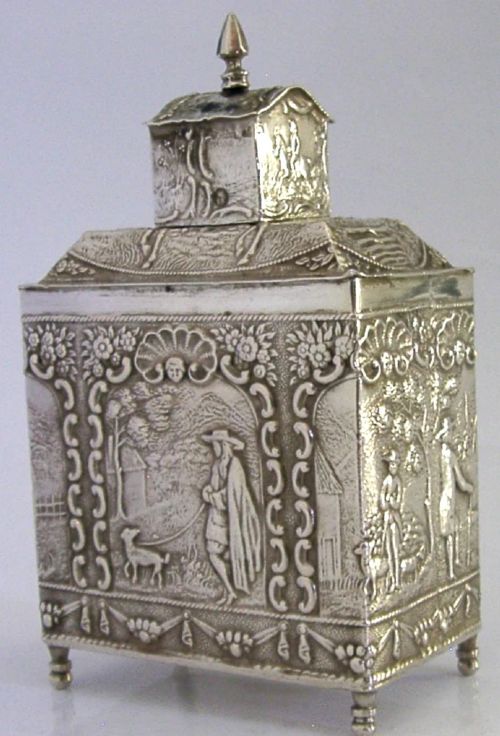
Makers utilised diverse regional traditions, incorporating Anglo-Indian carving, Dutch repoussé, and English cabinetmaking. Each period contributes distinct shapes, such as knife box forms and bombe silhouettes.
Materials and Technique
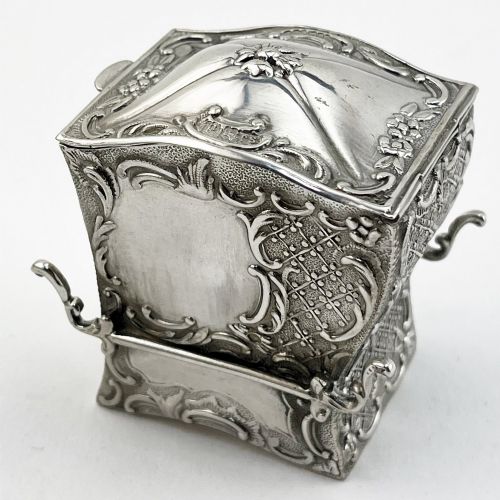
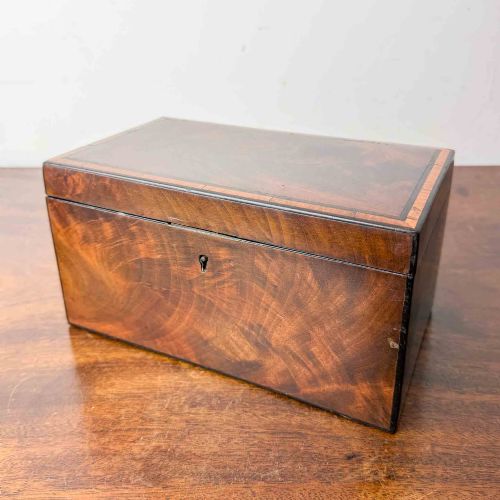
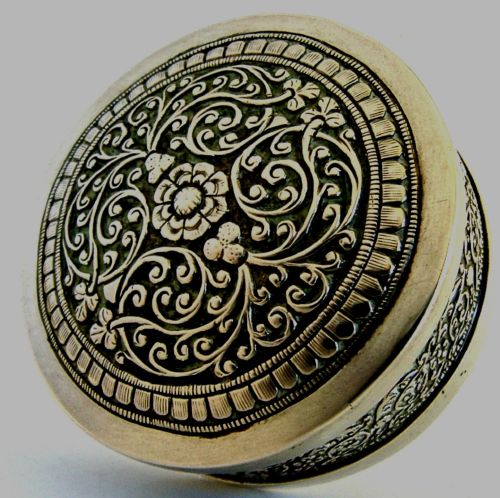
Cabinetmakers constructed wooden containers using flame mahogany, parquetry, and Tunbridge ware, often lining the interiors with foil or compartments. Metal workers shaped sterling silver and silver plate through repoussé, embossing, and cutting.
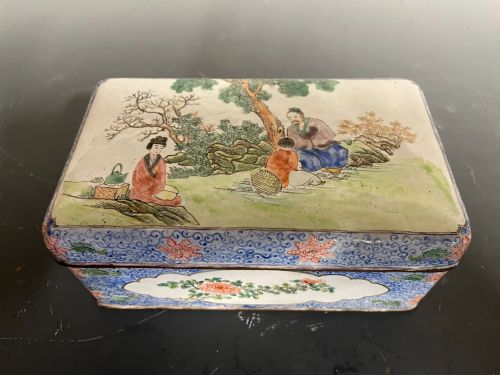
Ceramic and glass examples involve moulded crystal, Doulton Lambeth stoneware, and porcelain with flow blue decoration. Artisans also employed papier-mâché, bamboo, and red lacquer for specialised boxes and canisters.
Antique Caddy Container Retail Price Guide 2026
Typical asking prices for caddy container among the pieces listed under this phrase on Sellingantiques today, from the lower quarter to the upper quarter. They describe what is for sale here now, not the wider market.
Listings feature sterling silver, brass, wood, and ceramic, spanning the Georgian, Victorian, and Edwardian periods.
Craftsmanship and Weight
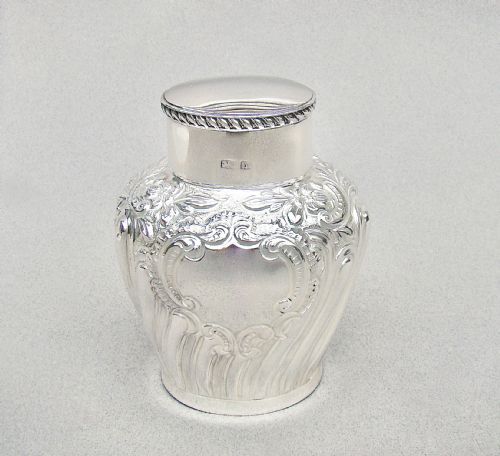
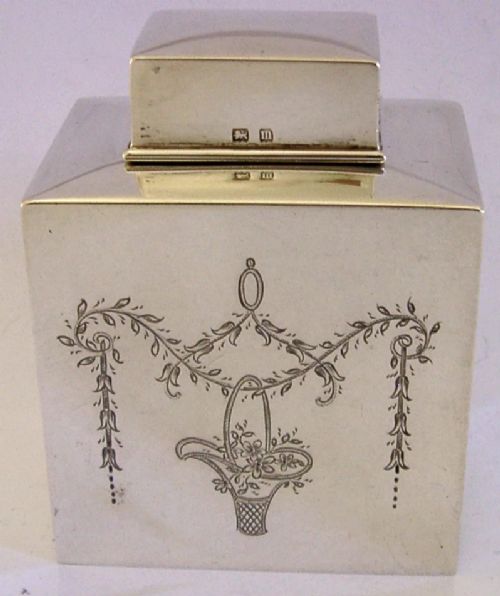
Substantial metal weight and gauge separate heavier sterling silver caddies from lighter silver-plated alternatives. The crispness of repoussé work and hand-carved details indicates the skill level of the original maker.
Internal fittings, such as original mixing bowls, functioning locks with keys, and intact foil linings, elevate the desirability of wooden and metal tea containers. The precision of parquetry and joinery determines the structural integrity of boxes.
Robert Hennell·Martin Hall and Co·Mappin and Webb·William Hutton and Sons·Georg Jensen
The Antique Caddy Container Glossary
- Repoussé
- A metalworking technique where the artisan hammers the design from the reverse side to create a raised relief on the front. This ornamentation appears frequently on silver containers.
- Tunbridge Ware
- A type of woodworking characterised by intricate mosaic patterns made from tiny wood blocks of various natural colours. These geometric designs decorate the surfaces of specific boxes.
- Bombé
- A swelling, rounded contour found on the sides of certain silver and wooden caddies. This curved profile gained popularity during the Victorian period.
- Navette
- A boat-shaped silhouette with pointed ends, commonly seen in Georgian snuff boxes and small containers. The symmetrical design sits flat on tables.
- Parquetry
- A geometric mosaic of wood pieces used to create patterned surfaces on boxes and tea chests. Craftsmen select contrasting timbers to produce visual depth.
Antique Caddy Container: Frequently Asked Questions
How do I identify a Georgian tea caddy?
Georgian tea caddies often feature flame mahogany, finely matched veneers, or sterling silver with restrained neoclassical motifs. They frequently include interior compartments designed to separate different tea varieties.
Examine the construction methods, such as dovetail joints in wooden boxes and early hallmarks on silver examples, to confirm the period.
Were these containers only used for tea?
While many containers originated as tea caddies, the category also encompasses biscuit barrels, spice boxes, grocer shop canisters, and general dressing table boxes. Materials ranged from ceramic and glass to bamboo and metal.
Different dry goods required specific internal designs, such as fitted lids and protective linings to preserve contents.
How should I clean silver caddies?
Clean silver caddies gently using a soft cloth and a reputable silver polish formulated to preserve antique surfaces. Avoid harsh abrasives that can wear down engraved details and repoussé relief.
Regular, careful dusting prevents tarnish build-up without disturbing the underlying metal or any remaining interior foil.