






Antique Buttoned Stool
An antique buttoned stool brings deep upholstery and turned timber together, offering a functional seat that grounds a room with period character.
Antique Buttoned Stool
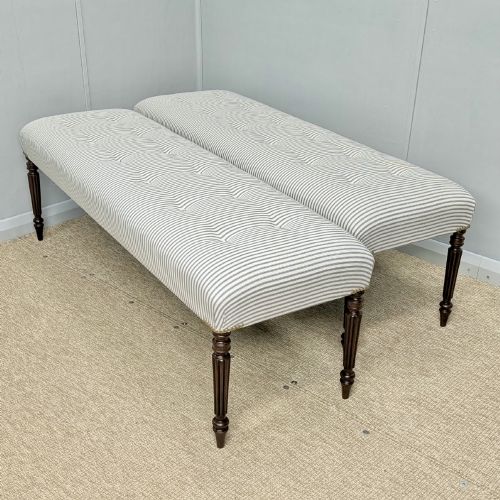
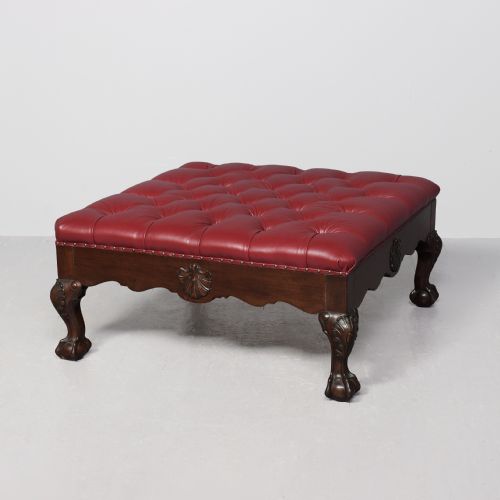
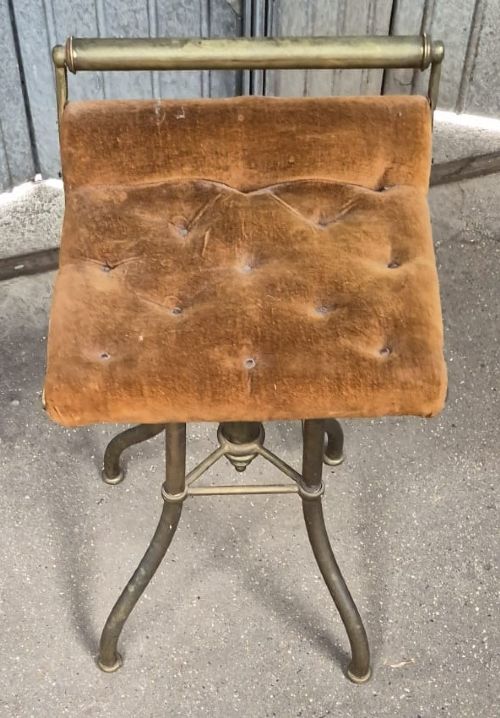
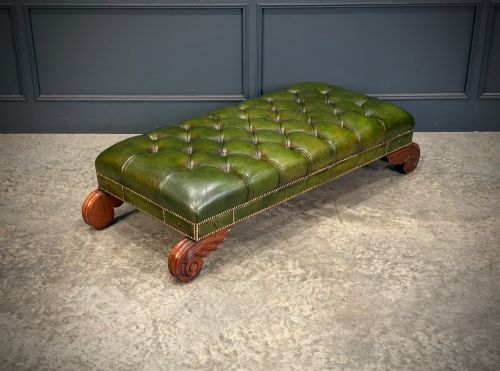
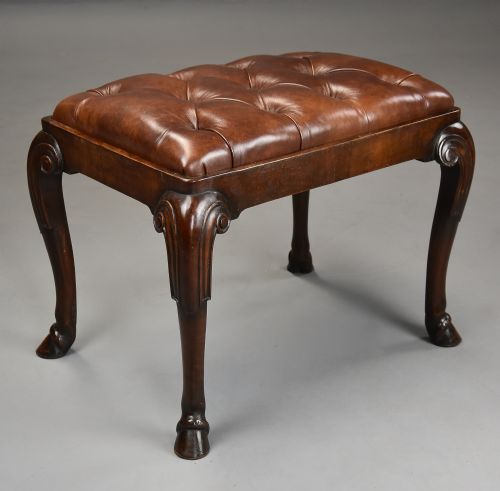
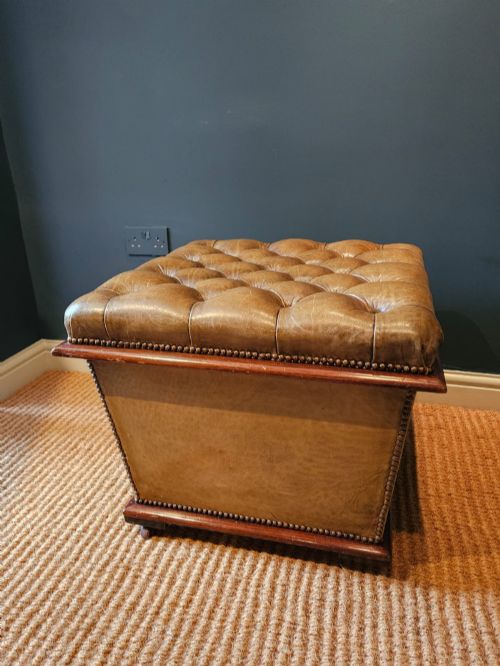
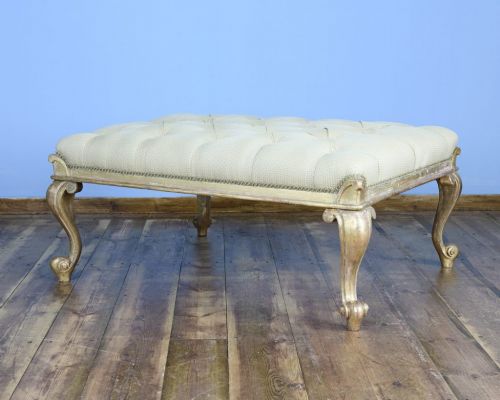
An antique buttoned stool combines a padded top secured with tufted buttons and a wooden framework, appearing in forms such as low footstools, piano seats, and long window benches. These pieces originate across the nineteenth century and the Edwardian era, bearing stylistic traits from the Regency, William IV, and Victorian periods.
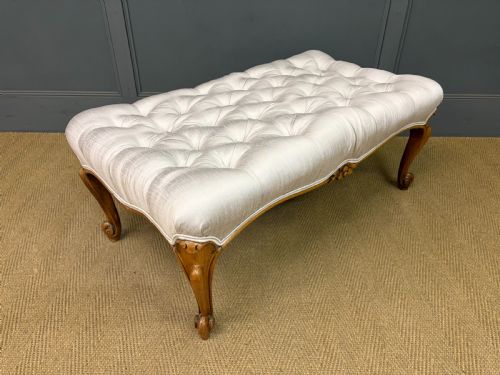
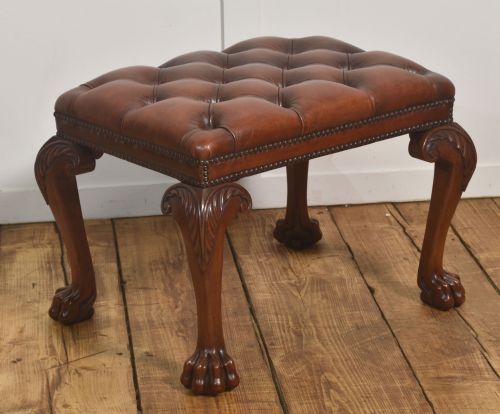
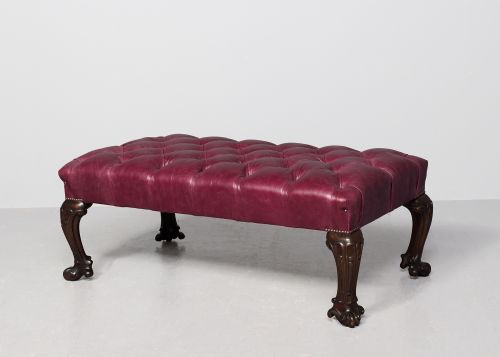
The versions most frequently met on this page are Victorian footstools and long centre stools upholstered in leather or velvet. Timber frames in mahogany, walnut, and rosewood support the padded tops, often resting on cabriole legs, fluted supports, or brass castors.
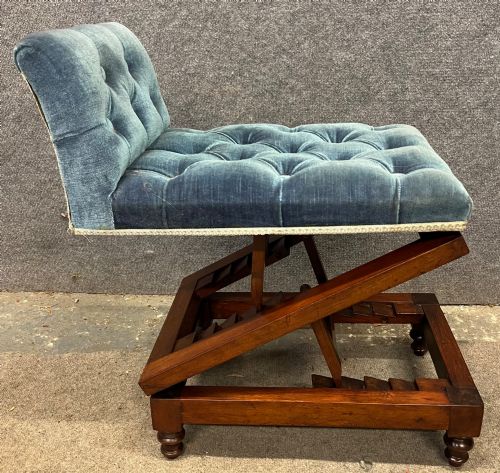
Makers and designers also produced specialised seating, including harpist chairs, revolving music stools, and pairs of library window seats. The phrase covers a broad spectrum of domestic utility, spanning small gout stools to grand scale country house ottomans.
Materials and construction methods
Cabinet makers built the structural frames using dense hardwoods like mahogany, walnut, rosewood, and oak. These timbers were shaped into cabriole legs, X-frames, or straight fluted supports, frequently joined with traditional methods to bear weight.
Upholsterers applied deep buttoning through leather, hide, velvet, or fabric surfaces, pulling the material tight against internal stuffing to create distinctive geometric indentations. Brass studs often finished the perimeters of the leather hides, securing the edges to the wooden rails.
Antique Buttoned Stool Retail Price Guide 2026
Typical asking prices for buttoned stool among the pieces listed under this phrase on Sellingantiques today, from the lower quarter to the upper quarter. They describe what is for sale here now, not the wider market.
Listings feature nineteen-century Victorian designs alongside earlier Regency and George III styles, constructed from mahogany, walnut, and rosewood.
Distinctions in craftsmanship
The calibre of an antique buttoned stool rests upon the selection of timber and the precision of the frame's carving. Finely figured walnut or rosewood and hand-carved cabriole legs separate superior examples from plain utilitarian seating.
The execution of the deep buttoning dictates the aesthetic standard of the upholstery. Evenly spaced tufts and supple, high-grade leather or velvet indicate skilled workshop production rather than hurried commercial output.
James Shoolbred·A.M.E. Fournier
The Antique Buttoned Stool Glossary
- Deep buttoning
- A tufting technique where twine is pulled through the padding and secured to create recessed indentations in the upholstery. This method holds the internal stuffing firmly in place while forming a patterned surface.
- Cabriole leg
- A furniture leg that curves outward at the knee and tapers inward toward the foot, inspired by animal limbs. It appears frequently on walnut and mahogany frames from the eighteenth century onward.
- Gout stool
- A specialised low footstool featuring an adjustable inclined top designed to elevate and support a foot. These pieces are typically upholstered in leather and supported on small wooden frames.
- X-frame stool
- A form featuring intersecting diagonal legs that cross in the centre to form an X shape. This structural style draws upon classical precedents and provides robust support.
- Centre stool
- A large freestanding stool designed to sit in the middle of a room rather than against a wall. These pieces often feature grand proportions and extensive buttoned leather upholstery.
Antique Buttoned Stool: Frequently Asked Questions
What is an antique buttoned stool used for?
These pieces served multiple domestic functions, operating as footrests, piano seats, dressing table chairs, and window benches.
Larger variants acted as centre stools in libraries or country houses, providing flexible seating that could be moved around a room easily.
How do I style an antique buttoned stool in a modern room?
A leather footstool works well positioned in front of a sofa or armchair to introduce texture and warmth.
Longer benches and window seats fit neatly at the end of a bed or beneath a large window, adding practical surface area without blocking light.
How can I tell the period of a stool?
The timber choice and leg style offer primary clues to the era of manufacture, with rosewood and heavy mahogany pointing toward the nineteenth century.
Details such as hand-turned adjustable mechanisms on piano stools or specific revival styles like Queen Anne and Chippendale help narrow down the decade.
Are these stools comfortable to sit on?
The deep buttoning and traditional stuffing provide a firm, supportive surface rather than a soft, sinking cushion.
Upholstered in durable leather or velvet, they were built to withstand regular daily use in Victorian and Edwardian households.