



Antique Butterfly Jewellery
Antique butterfly jewellery brings the delicate symmetry of the natural world into wearable art, treasured for its vibrant enamels and intricate silverwork.
Antique Butterfly Jewellery
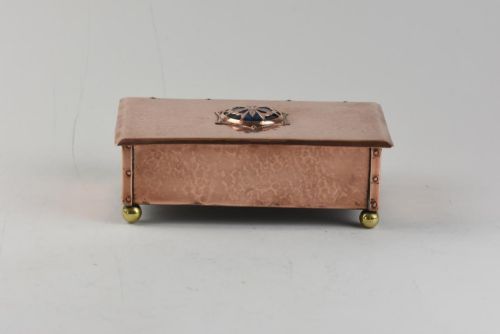
When you search for antique butterfly jewellery, you encounter pieces spanning from the Victorian era through the Art Deco period, capturing insects in various metallic and organic forms. Brooches and pendants dominate these selections, alongside occasional hatpins and trinket boxes featuring insect motifs.
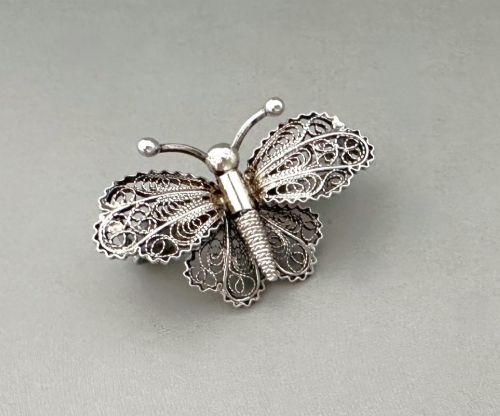
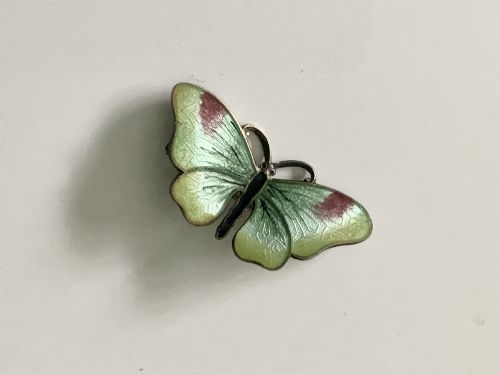
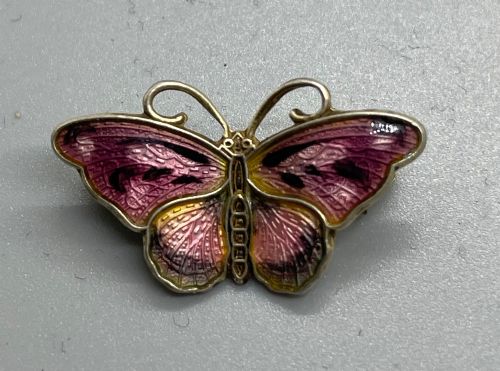
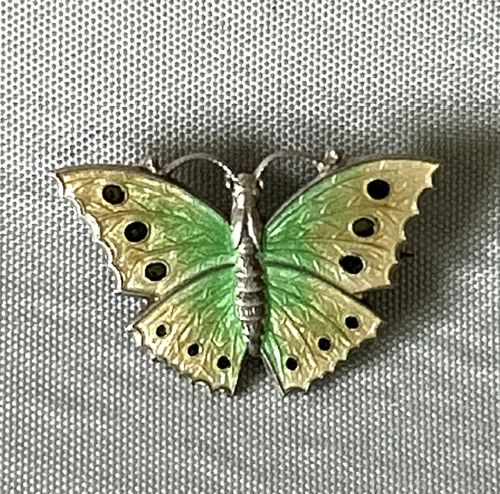
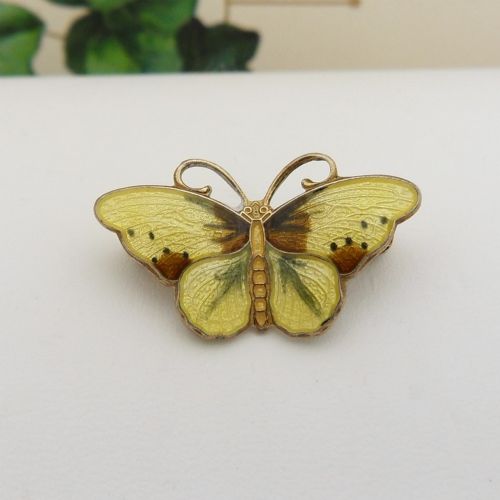
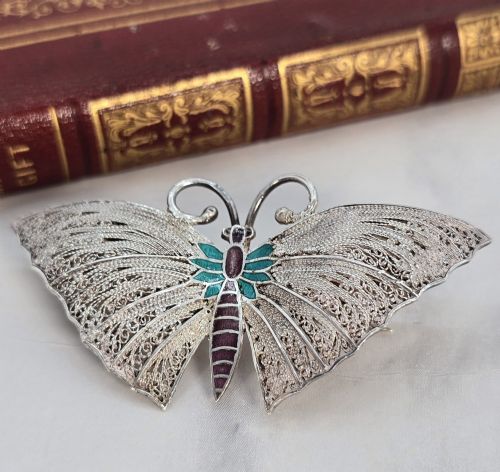
The most common versions on this page are silver and enamel brooches from the 1930s, often combining guilloche work or butterfly wing panels with filigree settings. Art Deco and Arts and Crafts examples appear regularly alongside earlier Victorian gem-set interpretations.
How they were made
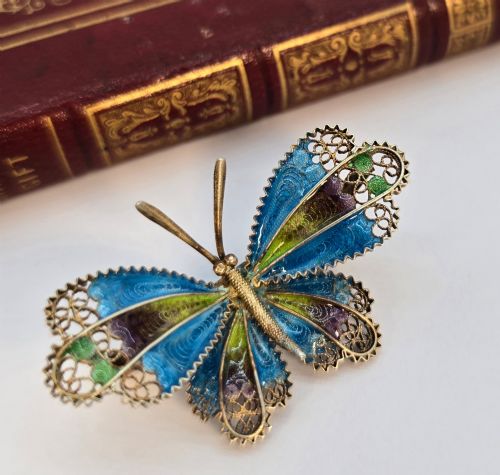
Makers utilised sterling silver and silver gilt as the primary foundation for wings and bodies, shaping wire into delicate filigree patterns or casting solid mounts. Enamel techniques, particularly guilloche and plique-a-jour, added translucent colour to resemble natural insect markings.
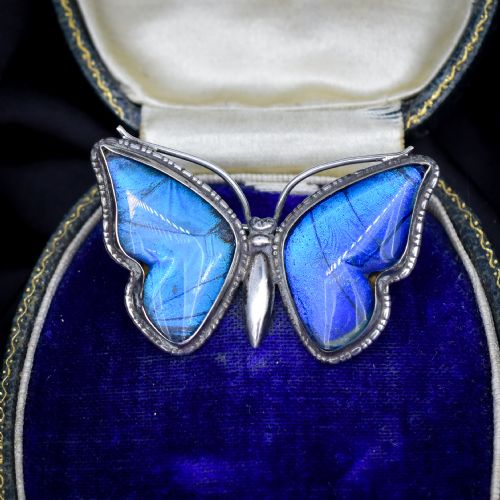
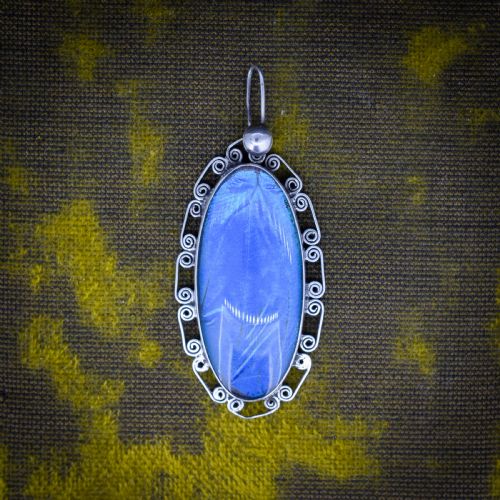
Organic materials such as iridescent butterfly wings and cabochon moonstones were sealed beneath glass panels or mounted directly into metal frames. Gemstones including diamonds, sapphires, emeralds, and pearls frequently highlighted the bodies and wing edges of high-status pieces.
Gemstones utilised in the selection include diamonds, sapphires, emeralds, and moonstones mounted in gold or silver frames.
What varies in quality
The sophistication of the enamel work dictates much of the distinction between standard and exceptional pieces, with smooth, multi-layered guilloche surfaces commanding greater visual depth. Precision in wirework and the crispness of the filigree reveal the maker's technical capability.
Material selection significantly influences the standing of a piece, separating simple silver and butterfly wing designs from those set with diamonds, sapphires, or emeralds in gold frames. The integration of the insect motif into the overall form also determines aesthetic success.
Knoll and Pregizer·Argy Rousseau·Thomas L Mott·Martin Mayer·Rene Lalique
The Antique Butterfly Jewellery Glossary
- Filigree
- Fine metal wire twisted and soldered into openwork patterns. It creates the intricate, lace-like wing structures seen in many silver brooches.
- Guilloche
- An engraved decorative technique covered with translucent enamel. This method produces repetitive geometric patterns beneath coloured glass.
- Plique-a-jour
- Enamelling without a backing, resembling miniature stained glass. Light passes directly through the transparent coloured cells.
- Silver Gilt
- Silver covered with a thin layer of gold. This treatment provides a warm golden finish while using a silver base structure.
- Cabochon
- A gemstone shaped and polished with a smooth convex surface rather than faceted. Moonstones are frequently cut in this manner for these designs.
Antique Butterfly Jewellery: Frequently Asked Questions
What periods do these pieces come from?
The items span from late Victorian times through the Arts and Crafts and Art Nouveau movements into the Art Deco era of the 1920s and 1930s.
Victorian examples tend to use heavy gold and precious gems, while 1930s pieces often favour silver, enamel, and butterfly wing panels.
How were butterfly wings used in jewellery?
Artists placed iridescent Morpho butterfly wings beneath bevelled glass to create vibrant blue metallic effects that shift in the light.
This technique became particularly popular during the Art Deco period, often framed within sterling silver settings.
How do I style an antique brooch?
Brooches can be pinned to lapels, collars, scarves, or hats to add a distinct focal point to modern or vintage garments.
Heavier pieces require sturdier fabrics to support the weight of the silver and stone settings properly.
What is the difference between Art Nouveau and Art Deco designs?
Art Nouveau pieces from the early 1900s feature flowing, asymmetrical natural lines and techniques like plique-a-jour enamel.
Art Deco items from the 1920s and 1930s lean towards geometric symmetry, stylised forms, and crisp silver filigree.