

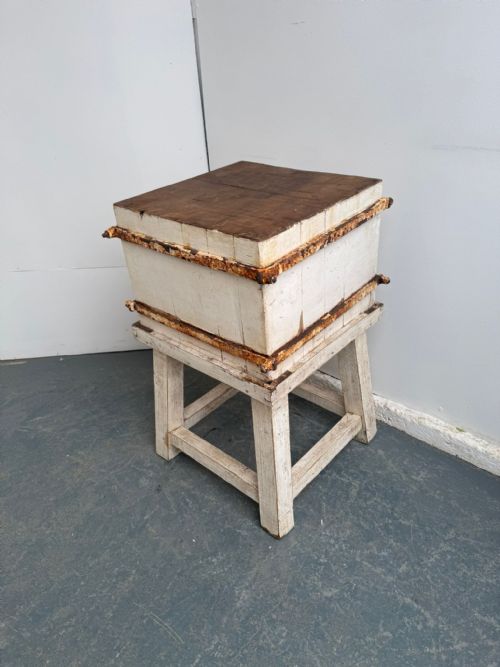
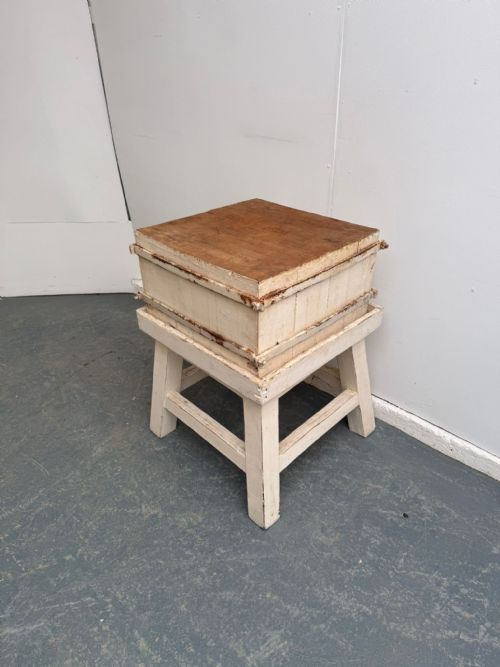

Antique Butcher Table
An antique butcher table brings heavy-duty timber and hard-won utility straight into a modern kitchen, offering a solid surface built for honest work.
Antique Butcher Table
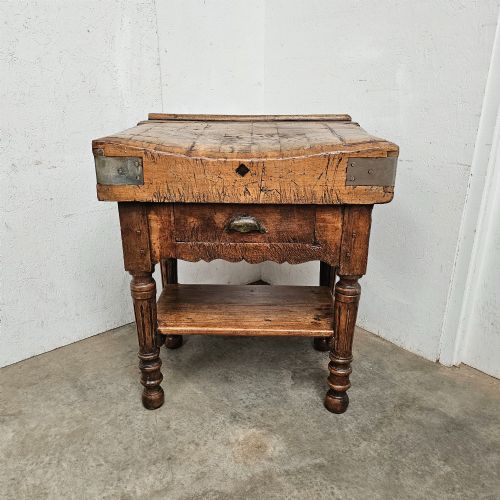
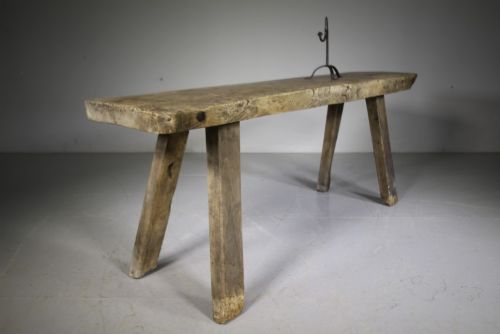
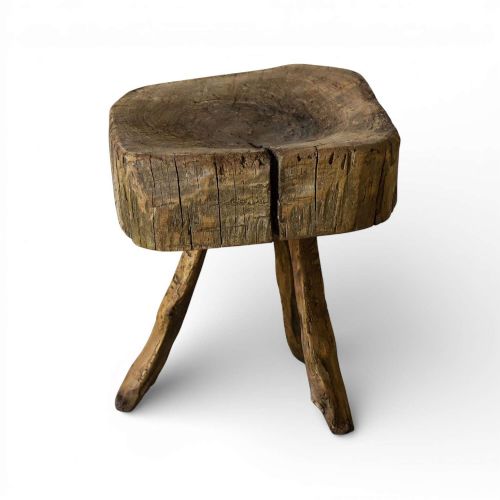
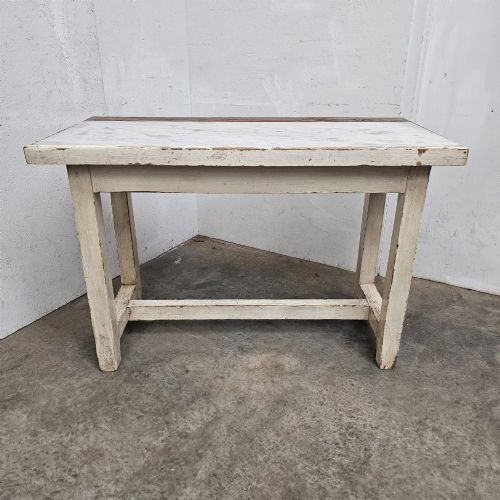
An antique butcher table serves as a robust focal point in domestic spaces, originally designed for heavy food preparation in trade environments. These pieces encompass sturdy butchers blocks, prep tables, and low pig benches sourced from regional workshops across Britain, France, and Hungary.
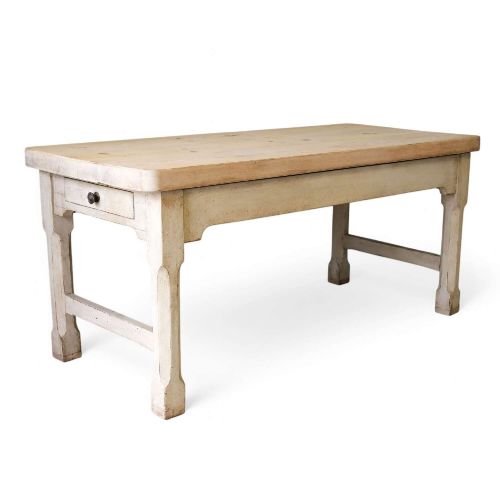
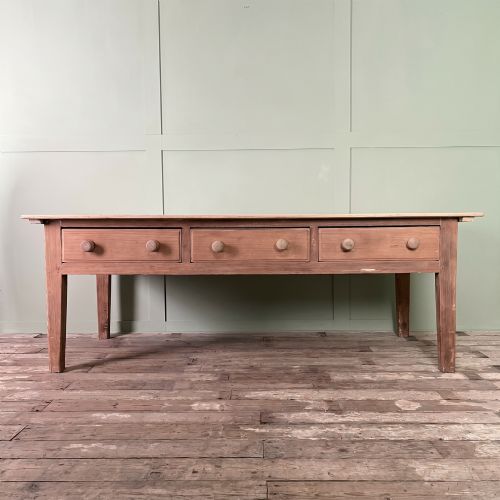
The versions most commonly met on this page span the nineteenth century and the Victorian era, displaying regional vernacular styles from French Provincial to rustic English country house aesthetics. They range from thick chopping blocks on stands to long sycamore, oak, and elm tables equipped with drawers or trestle bases.
Construction and materials
Construction relies heavily on dense domestic hardwoods chosen for endurance, with sycamore, beech, elm, and oak forming the thick working surfaces. Supporting frames utilise pine, ash, and structural iron or brass hardware to brace the heavy tops.
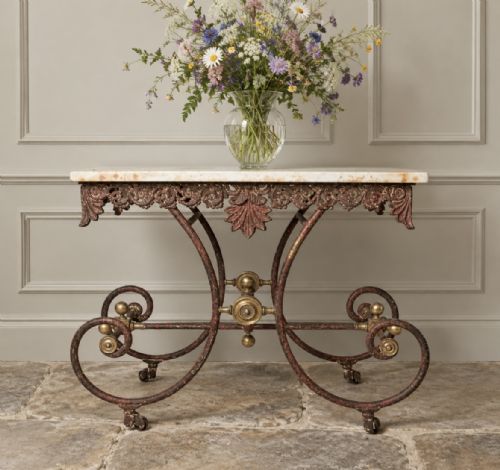
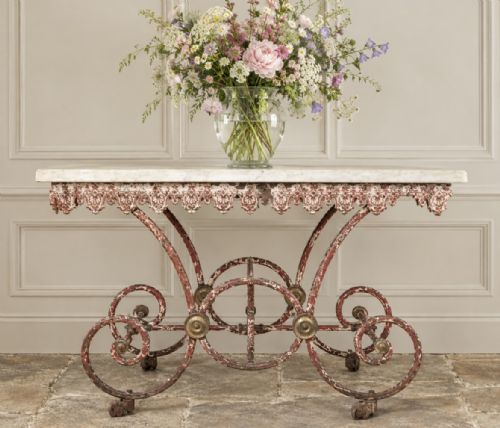
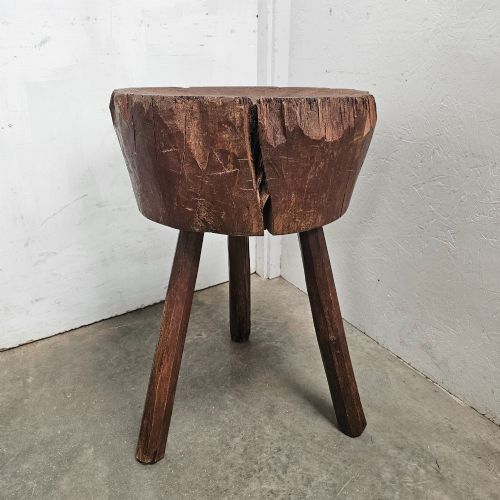
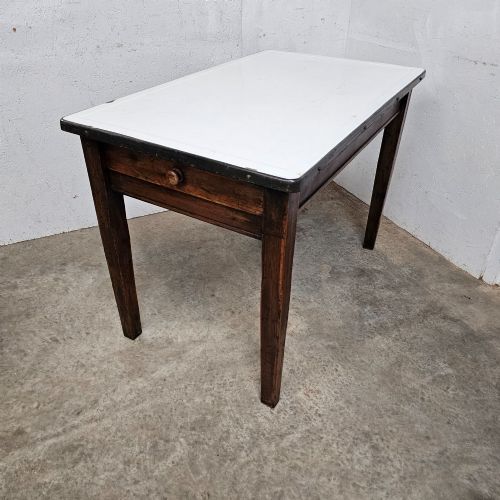
Working tops are often constructed from end-grain timber blocks or thick single slabs fixed to original stands, gnarled legs, or decorative bases. Additional elements such as enamel linings, later paint, or bronzed mounts appear on specific regional examples.
Some heavy game blocks still bear the deep, permanent scars of nineteenth-century French cleavers.
Evaluating craftsmanship and survival
Quality rests in the integrity of the primary timber top and the preservation of its original base or stand. Tables retaining their authentic surface patination and structural mass sit at the higher end of the range.
Proportion and regional character dictate desirability, particularly where structural joinery remains untouched by inappropriate modern alterations.
Trussant & Cie·Hennes France
The Antique Butcher Table Glossary
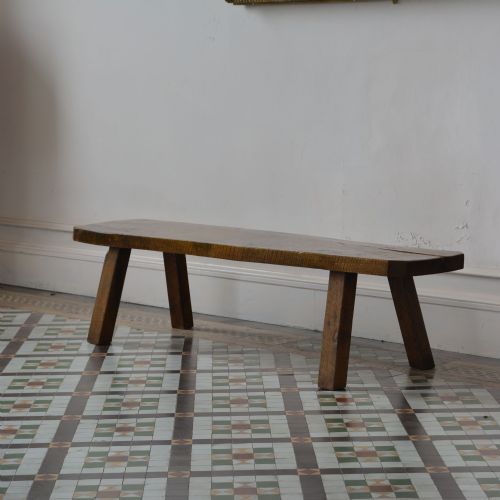
- Pig bench
- A low, narrow wooden bench traditionally used for butchery tasks. These items often feature heavy oak or hardwood tops.
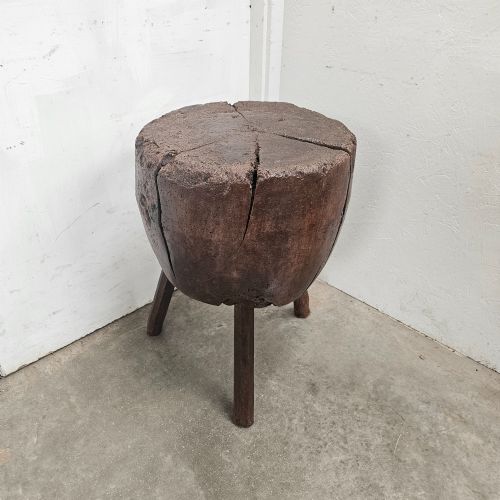
- Game block
- A dense, upright section of tree trunk or thick timber used for dressing game. They display deep end-grain marks from heavy cleaver work.
- Prep table
- A utilitarian wooden table fitted with a drawer or shelf for culinary preparation. Sycamore and pine were favoured for their clean surfaces.
- Trestle table
- A table structure where the top is supported by trestle feet rather than four traditional corner legs. This design provides maximum stability under heavy loads.
Antique Butcher Table: Frequently Asked Questions
How do I clean an antique butcher table?
Maintain the timber by scraping away dried debris and wiping the surface with a damp cloth and mild soap. Avoid soaking the wood to prevent warping and splitting.
Nourish dry end-grain surfaces periodically with food-safe mineral oil to preserve the timber without sealing it in modern synthetic varnishes.
Can I use an antique butcher table for food prep?
Many historic blocks retain decades of safe culinary use, provided the surface is thoroughly cleaned and sanitized. Scrubbing removes old surface dirt while keeping the original patina intact.
Inspect the depth of the top to ensure the timber remains thick enough to withstand active chopping without compromising the structural balance.
How do I identify French versus English tables?
French examples frequently utilise beech, elm, or fruitwood, often featuring shaped skirts or distinctive gnarled legs. English and Welsh pieces tend to employ oak, ash, or sycamore within straightforward vernacular frames.
Hardware choices also offer clues, as continental workshops utilised specific iron brackets and mounts distinct from British domestic joinery.