




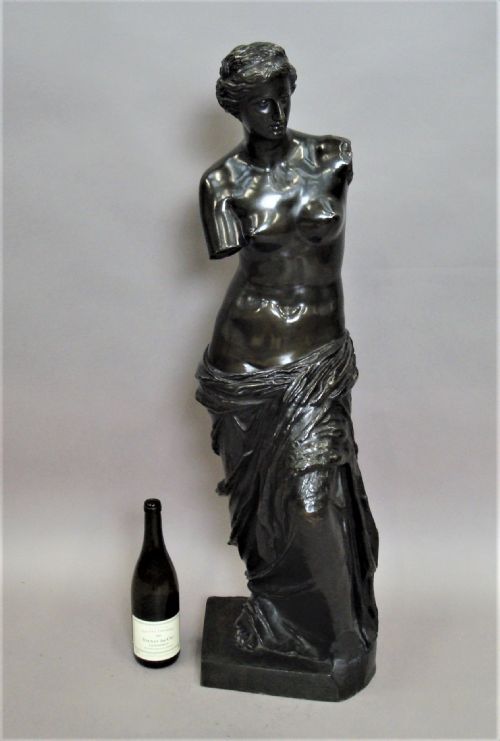


Antique Bronze Venus
These antique bronze venus figures bring classical mythology into the home, cast in heavy metal and often mounted on marble bases.
Antique Bronze Venus
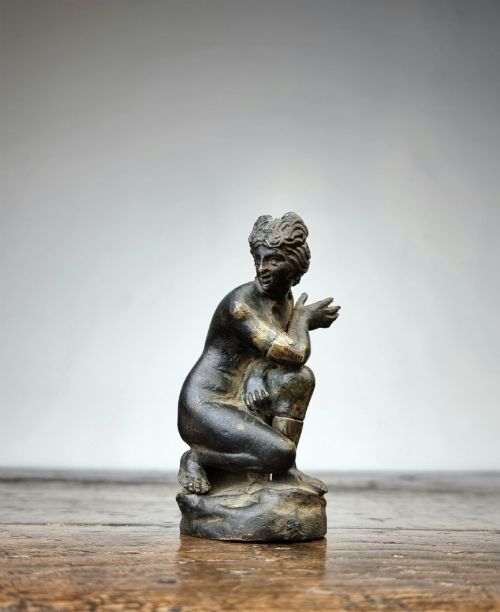
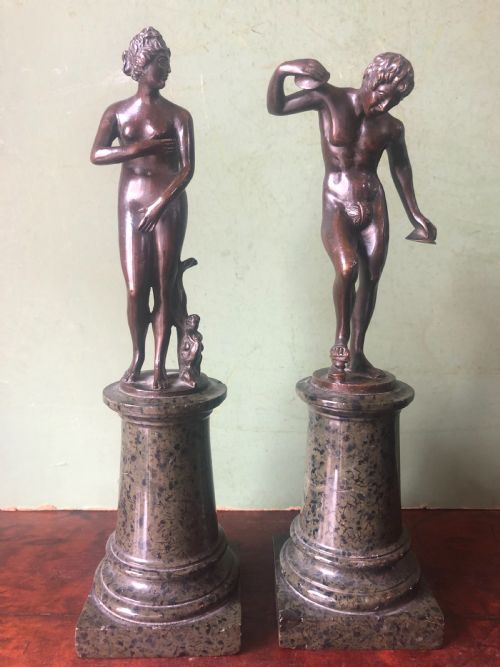
An antique bronze venus represents the classical goddess of love, appearing on this page as sculptures, statuettes, and reduction casts after famous ancient models. Buyers searching for an antique bronze venus encounter pieces ranging from small Grand Tour souvenirs to large foundry editions.
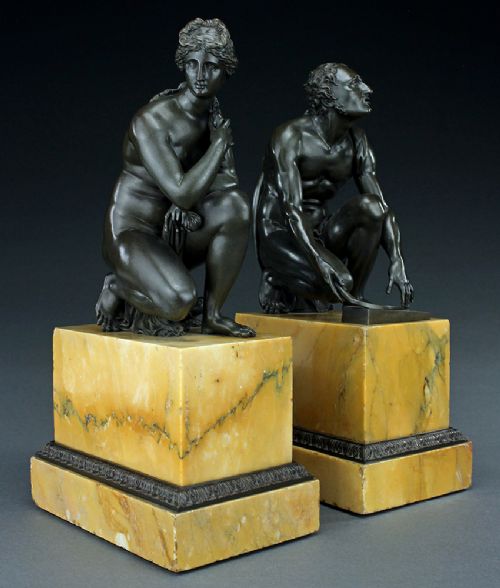
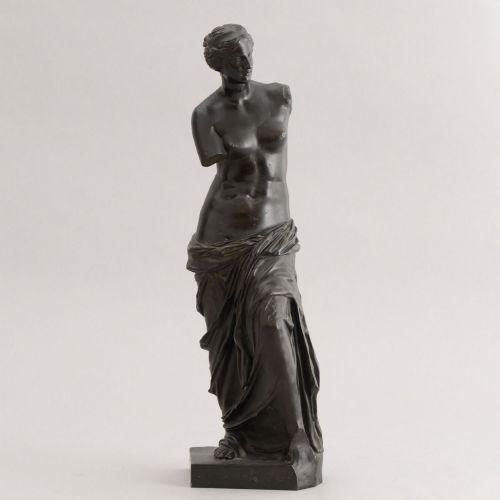
The most common subjects include the Venus de Milo, the crouching Venus, and the Venus of Capua. Many of these figures originate from nineteenth-century French and Italian workshops reproducing classical antiquity.
How they were made
Foundries utilised traditional lost-wax casting methods to capture the intricate drapery and anatomical detail of the human form. Metal compositions primarily consist of bronze, occasionally supplemented by brass or patinated metal.
Finished surfaces received hand-applied patination to create deep brown or greenish tones, while select examples incorporate parcel-gilt highlights or rest directly upon Siena marble plinths.
Listings span the seventeenth through the twentieth centuries, with the nineteenth century providing the majority of the bronze sculpture and statuette forms.
What varies in quality
The precision of the cast defines the upper tier of these sculptures, where sharp chisel work preserves the subtlety of the musculature and facial expression. Finer reductions maintain exact proportions to the ancient originals rather than softening the contours.
Foundry marks and the quality of the marble base also distinguish standard souvenir pieces from works produced by major nineteenth-century bronze houses.
Ferdinand Barbedienne·Ferdinando de Luca
The Antique Bronze Venus Glossary
- Grand Tour
- A nineteenth-century educational journey through Europe where travellers acquired bronze souvenirs of classical sculptures. These portable statuettes were collected as evidence of cultural refinement.
- Reduction
- A smaller scale copy of a larger sculpture, achieved through mechanical pantograph systems in the foundry. This process allowed famous museum marbles to be recreated as domestic mantelpiece bronzes.
- Patination
- The chemical treatment applied to the surface of the metal to alter its colour and protect against corrosion. Deep patination enhances the visual depth of the drapery.
- Parcel-Gilt
- A decorative technique where selective areas of the bronze surface receive a thin layer of gold leaf or gilding. This highlights specific details against the darker patinated metal.
Antique Bronze Venus: Frequently Asked Questions
How do I identify a Grand Tour bronze?
Grand Tour bronzes typically date from the nineteenth century and were produced as souvenirs for travellers visiting European museums. They often depict reduced versions of famous classical statues like the Venus de Milo.
These pieces frequently sit on polished marble bases and display patinated surfaces designed to mimic excavated antiquities.
What is the difference between Venus de Milo and crouching Venus?
The Venus de Milo depicts the standing goddess with draped fabric around her lower limbs, based on the Hellenistic marble in the Louvre. The crouching Venus portrays the goddess kneeling or squatting, derived from distinct classical prototypes.
Both forms were popular subjects for nineteenth-century bronze reducers and founders.
Are these figures solid bronze?
Many nineteenth-century bronze sculptures are hollow-cast rather than solid metal to reduce weight and material costs. Founders used a core material inside the mould during the lost-wax process.
Heavier examples often incorporate solid marble bases for stability.
How should I clean my bronze venus?
Dust the surface gently with a soft dry cloth to prevent the accumulation of grime in the crevices of the cast. Avoid using chemical polishes or water, which can damage the historic patina.
Applying a very light coat of microcrystalline wax can help protect the metal finish.