

Antique Bronze Sconce Lights
These antique bronze sconce lights bring architectural warmth to a room, casting a soft glow from walls through finely chased metal and gilded surfaces.
Antique Bronze Sconce Lights
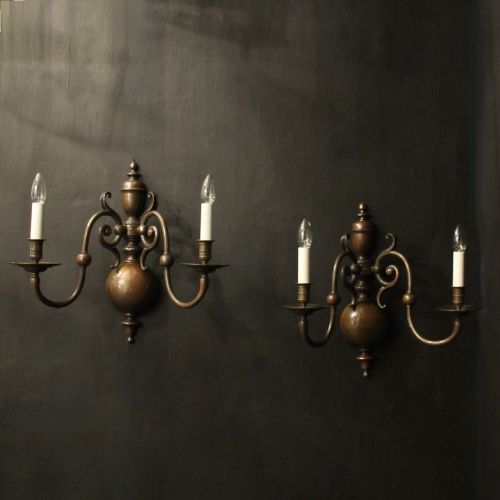
Antique bronze sconce lights comprise wall-mounted illumination fixtures designed to hold candles or electricity, frequently encountered in pairs or sets of matching numbers. These pieces originate predominantly from French workshops spanning the eighteenth, nineteenth, and early twentieth centuries, adopting styles such as Rococo, Empire, and Regency.
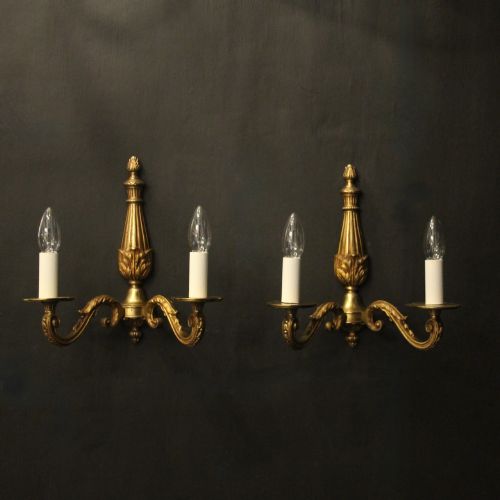
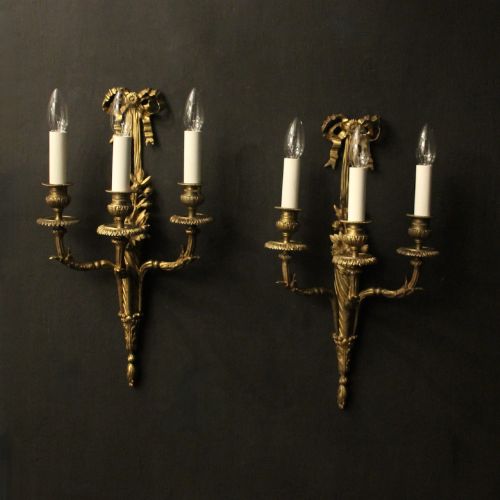
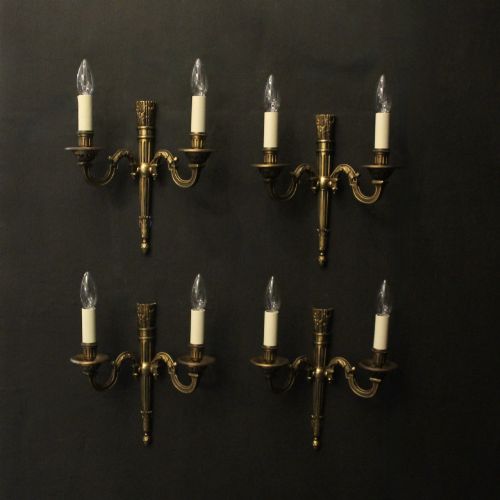
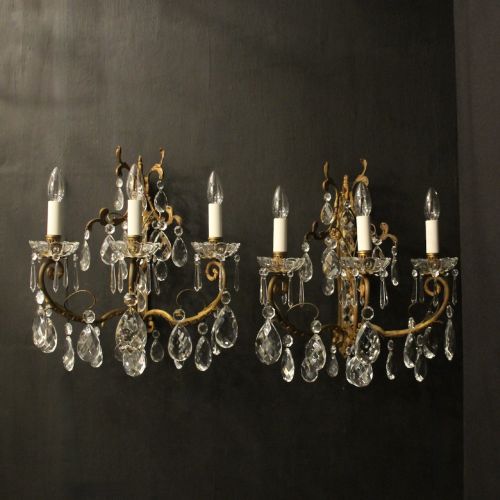
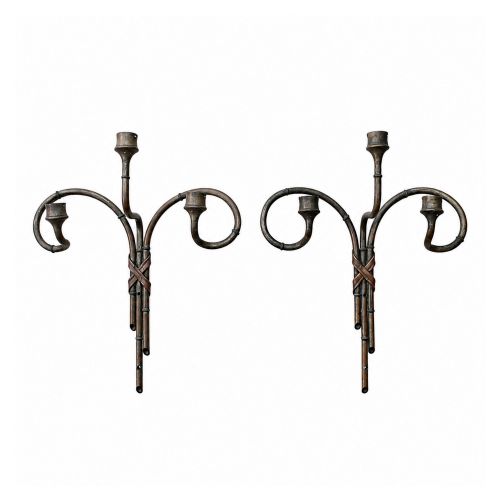
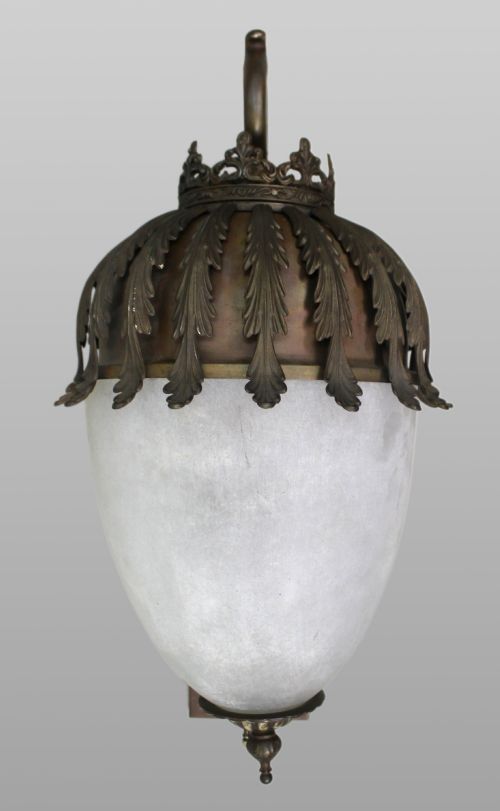
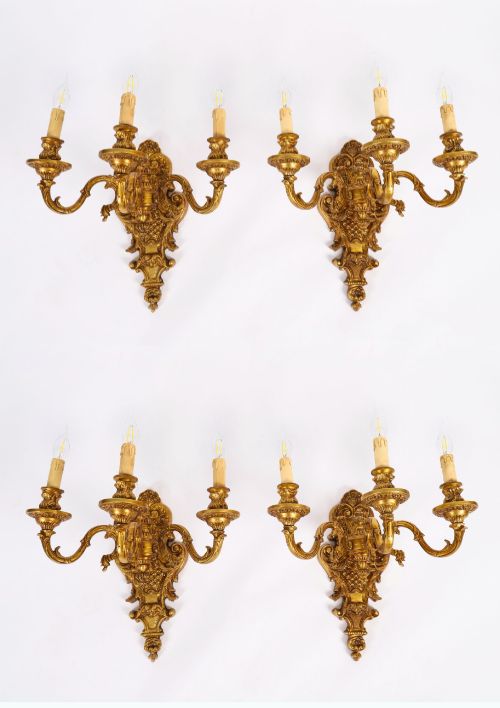
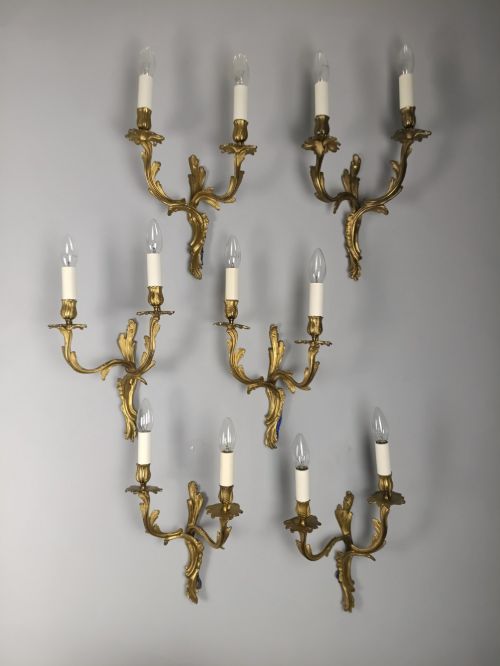
The forms range from single-arm brackets to multi-branch candelabras, wall lanterns, and girandoles mounted directly onto wood or plaster. Many examples incorporate materials like crystal drops, marble bases, porcelain flowers, or mirrored backplates to amplify the reflection of light.
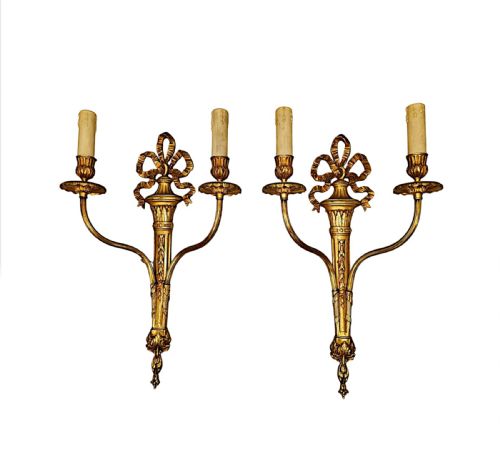
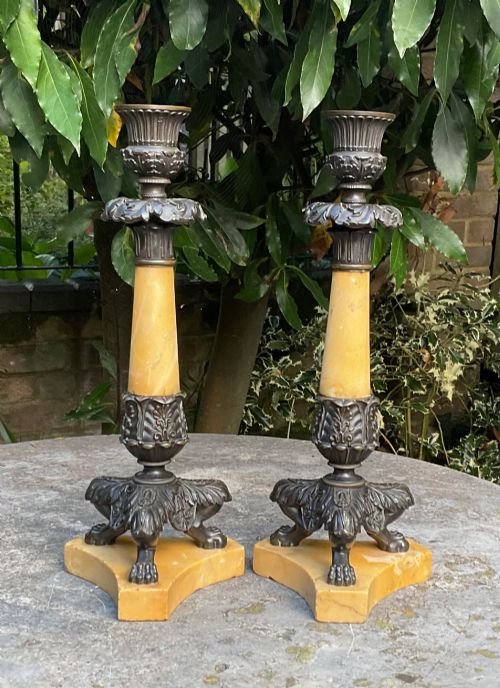
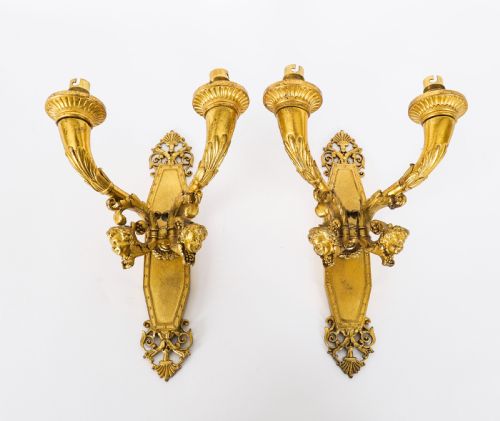
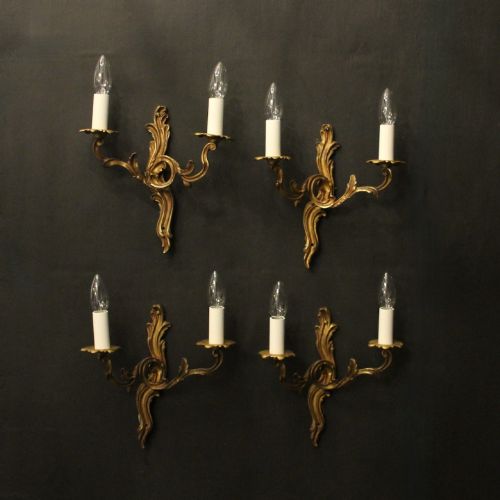
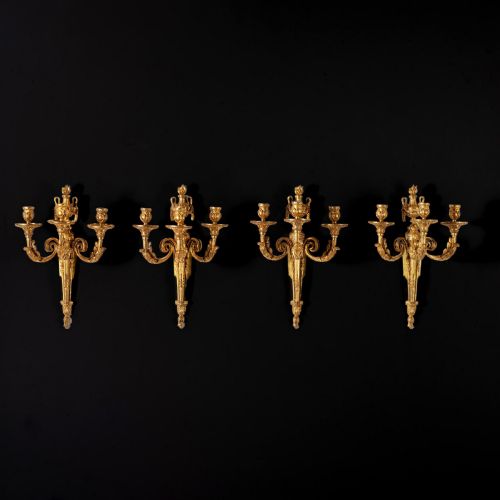
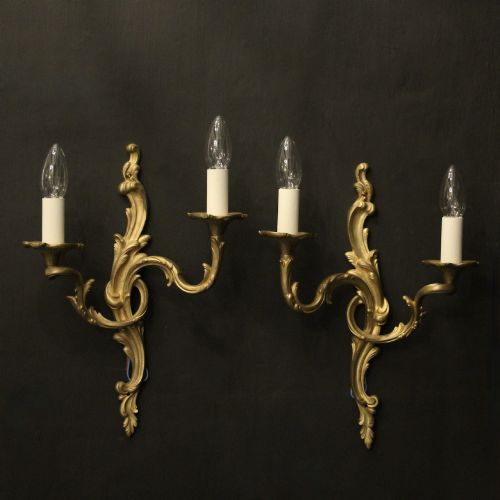
Buyers seeking antique bronze sconce lights select them to complement period interiors, utilising their sculptural qualities to punctuate wall spaces. The selection on this page demonstrates both restrained classical symmetry and exuberant asymmetrical scrollwork.
How they were made
Craftsmen utilised bronze, brass, and copper alloys, shaping them through casting techniques that allowed for intricate relief work and sculptural depth. Molten metal poured into moulds produced the foundational bodies of arms, backplates, and sconce cups.
Surfaces received decorative finishes through mercury gilding to produce ormolu, or through applied layers of gold leaf termed gilded bronze. Artisans chased the metal cold with chisels and punches to sharpen details like acanthus leaves, ribbons, and figural motifs before assembly.
Squirrels forage among branches alongside mythical griffins and mermaids on these sculptural antique sconces.
What varies in quality
The finish also determines merit, distinguishing hand-applied fire gilding or preserved ormolu from later painted or plated surfaces. Coarser castings often blur decorative edges and exhibit uneven surface textures.
Casier
The Antique Bronze Sconce Lights Glossary
- Ormolu
- Gilded bronze produced by applying a mercury and gold amalgam to a bronze base and heating it until the mercury vaporised. This technique created a durable, rich golden surface characteristic of fine French decorative arts.
- Girandole
- A branched wall sconce or candlestick featuring a mirrored backplate. The glass reflected the candlelight to increase illumination within eighteenth and nineteenth-century rooms.
- Applique
- A French term for a wall light or sconce mounted directly onto the surface. These fixtures often feature decorative backplates designed to protect the wall from soot.
- Campana
- A vase-shaped candle socket resembling an inverted bell. This classical form appears frequently on Regency and nineteenth-century light fittings.
- Chasing
- The manual finishing of cast metal using small steel punches and hammers. This process refines textures and adds intricate detail to the surface after casting.
Antique Bronze Sconce Lights: Frequently Asked Questions
How do I choose the right size sconce?
Consider the scale of the wall space and the height of the ceiling where the fixture will hang. Larger rooms often accommodate sets of three or four branch sconces, while smaller spaces suit single or twin-arm pairs.
Proportion remains key to balancing the visual weight of the bronze against surrounding furnishings and architectural details.
Were these sconces originally wired for electricity?
Most antique bronze sconces were originally designed for candles before being converted for modern electrical use. Many examples in the collection arrive rewired and ready for installation.
Buyers should inspect the internal wiring paths to ensure they meet current safety standards while preserving the exterior antique components.
How do I clean antique bronze and ormolu?
Dust the surfaces gently with a soft, dry cloth to prevent the accumulation of grime within the chased details. Avoid harsh chemical polishes that can strip away original gilding or patina.
Professional conservation cleaning is recommended for pieces showing heavy tarnish or oxidation over the bronze.
How can I tell the period of a sconce?
Stylistic cues provide the primary guide, as Rococo pieces display asymmetrical scrolls and naturalistic flora, while Empire designs feature strict classical symmetry and military motifs. Construction methods, such as the type of screws and the composition of the bronze alloy, also help determine age.
Comparing the casting sharpness against dated examples in archives narrows the decade of origin.