

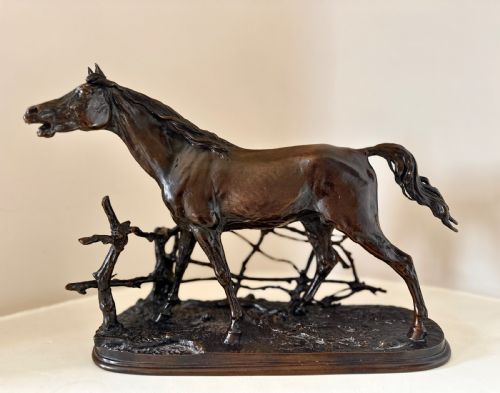


Antique Bronze Equine
These antique bronze equine pieces capture the muscle and spirit of the horse across Victorian, Art Deco, and Meiji periods.
Antique Bronze Equine
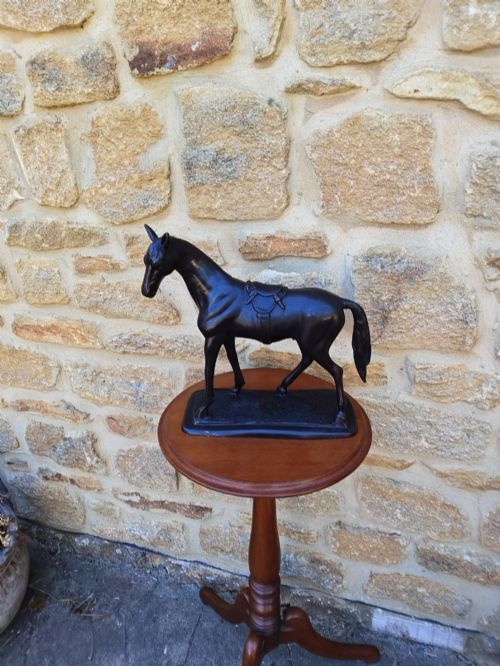
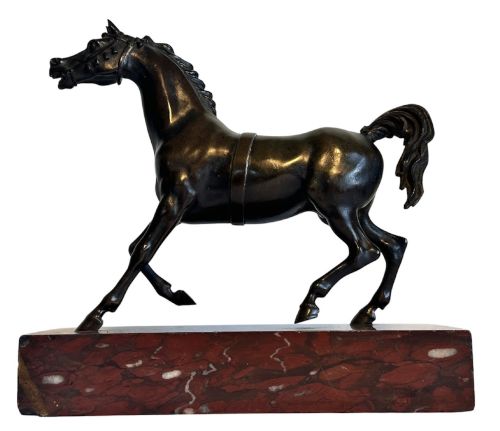
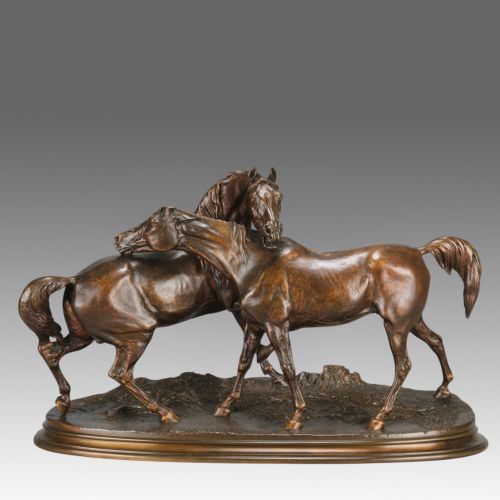
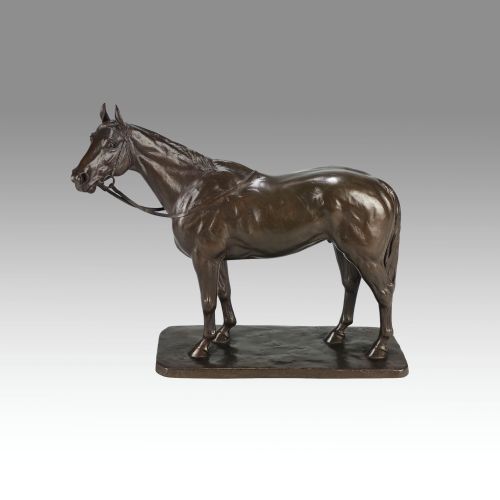
When you search for antique bronze equine, you encounter a range of sculptural forms spanning the nineteenth and early twentieth centuries. These figures capture horses in motion, standing at rest, or paired in monumental compositions derived from classical and naturalistic traditions.
You are most likely to meet French Animalier bronzes, Japanese sculptures from the Meiji and Taisho periods, and cold-painted Vienna bronzes on this page. Subjects vary from study pieces of stallions and arabian horses to large decorative figures mounted on marble and onyx bases.
The selection also includes sculptural fragments and works influenced by makers such as Bugatti, reflecting diverse international approaches to casting animal subjects. Each piece represents a specific period aesthetic, from Victorian academic realism to the clean lines of Art Deco design.
Materials and casting methods
The works listed utilise solid or hollow cast bronze, often enhanced with applied patination to create deep brown, black, or greenish surface tones. Founders frequently mounted these metal sculptures onto heavy stone plinths made of marble or onyx to provide stability and visual contrast.
Some smaller works incorporate cold-painting techniques, applying polychrome pigments directly onto the metal surface after casting. Other examples employ bronzed metal or brass alloys, reflecting the manufacturing traditions of European foundries and Japanese metalworkers.
Antique Bronze Equine Retail Price Guide 2026
Typical asking prices for bronze equine among the pieces listed under this phrase on Sellingantiques today, from the lower quarter to the upper quarter. They describe what is for sale here now, not the wider market.
The listings on this page span from the 1870s through the 1940s, incorporating Victorian, Edwardian, and Art Deco periods.
Distinctions in craftsmanship
Quality in these sculptures rests upon the crispness of the chase work, where the metal is finished by hand after casting to define musculature, veins, and mane details. Superior examples retain subtle surface textures and precise anatomical accuracy rather than smoothed or generalised forms.
The integration between the bronze figure and its base indicates the level of care taken during construction, particularly in nineteenth-century French and Japanese works. Finer pieces demonstrate balanced proportions and deliberate patination that deepens the visual presence of the metal.
P J Mêne·Kunio Itô·Franz Bergman·Sakai Kōzan
The Antique Bronze Equine Glossary
- Animalier
- A nineteenth-century artistic movement focused on the realistic depiction of animals. Sculptors in this tradition studied anatomy closely at menageries.
- Vienna bronze
- Small, highly detailed brass or bronze figures produced in Austrian workshops, typically characterised by polychrome cold-painted surfaces.
- Patination
- The chemical treatment or natural ageing process that colours the surface of the metal. It protects the bronze and creates varied tonal depths.
- Cast bronze
- Metal poured into a mould to form a sculptural shape. This method allows for intricate detail and durable construction.
- Marly horse
- A monumental equine sculpture type originating from classical models designed for French royal installations. These figures often depict rearing horses restrained by handlers.
Antique Bronze Equine: Frequently Asked Questions
How do I clean an antique bronze horse?
Dust the surface gently with a soft, dry brush to remove particles without disturbing the underlying patina.
Avoid using water, chemical polishes, or abrasive cloths, as these can strip the historical finish from the metal.
What is an Animalier bronze sculpture?
Animalier refers to nineteenth-century works dedicated to the realistic portrayal of animals in natural or dramatic poses.
Sculptors focused heavily on accurate anatomy, capturing tension and movement through detailed metal casting.
Where were these bronze horses displayed?
These sculptures typically decorated nineteenth-century studies, libraries, and drawing rooms as mantelpiece ornaments or desk accessories.
Larger pairs often stood in hallways or antechambers to demonstrate the owner's taste and wealth.
How can I tell Japanese bronzes apart from European ones?
Japanese bronzes from the Meiji and Taisho periods often feature distinct foundry signatures, character marks, and specific patination styles.
European works from the same eras frequently rely on Western classical realism or French Animalier conventions.