

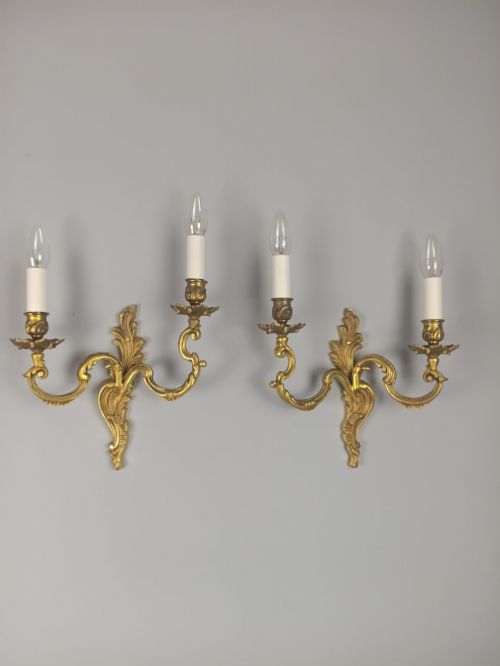
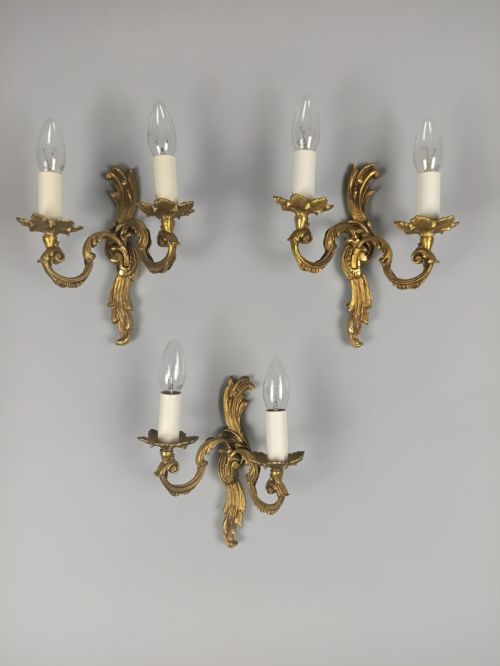
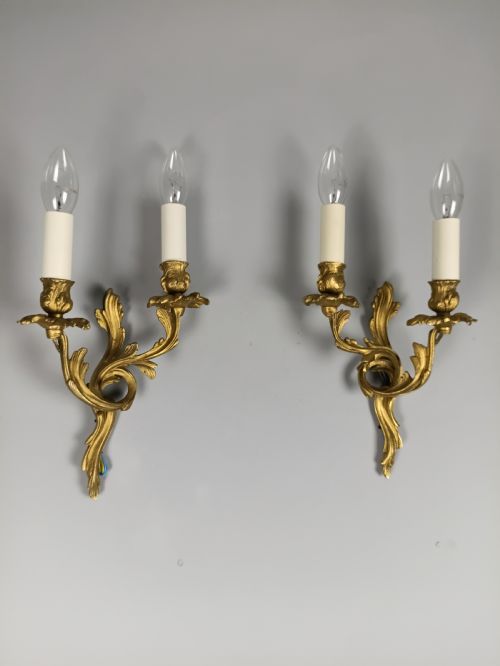
Antique Bronze Double Sconces
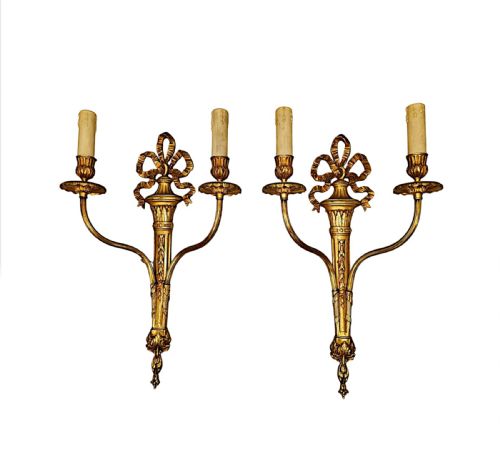
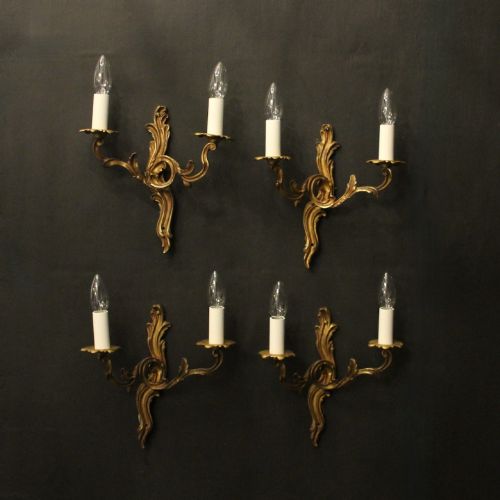
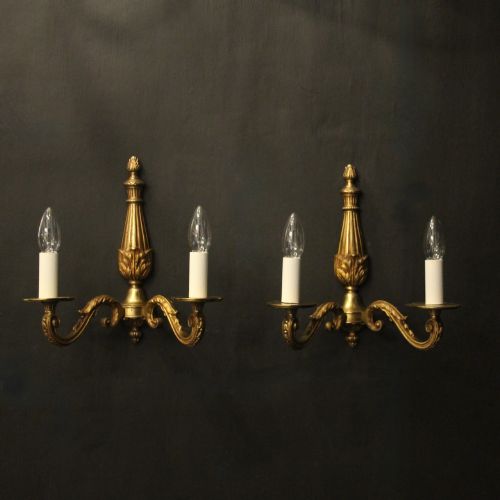
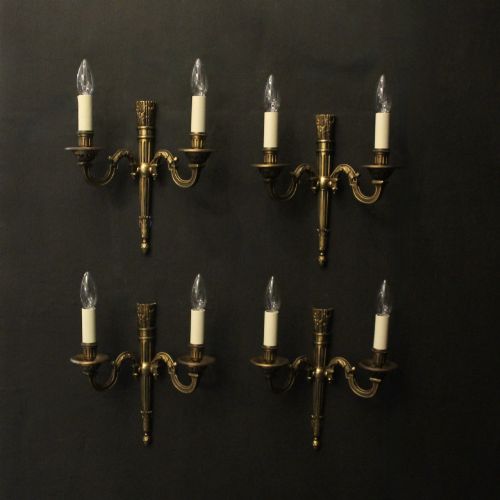
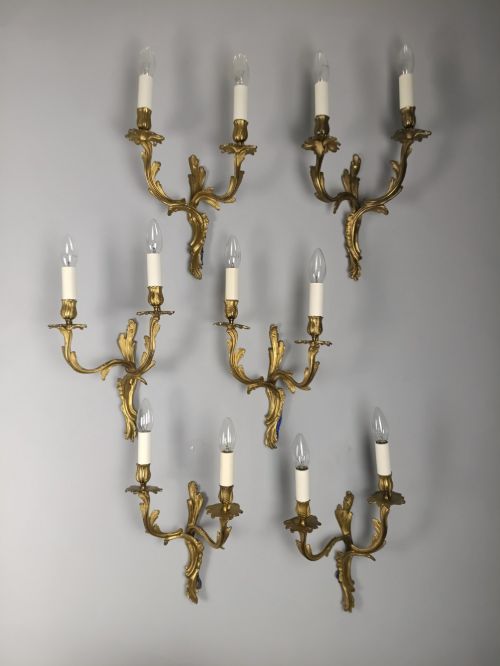
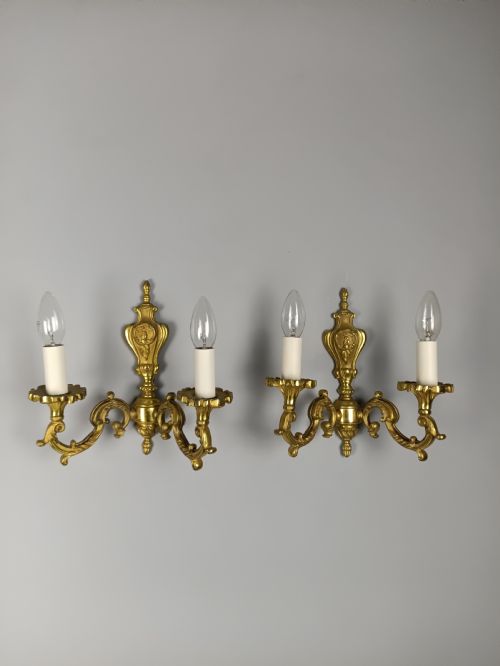
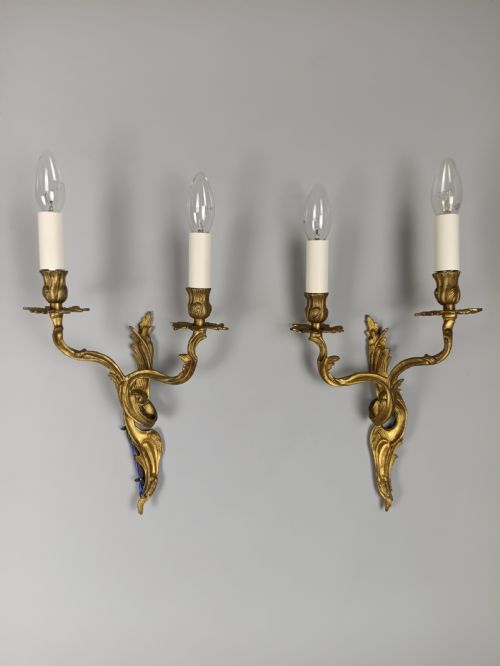
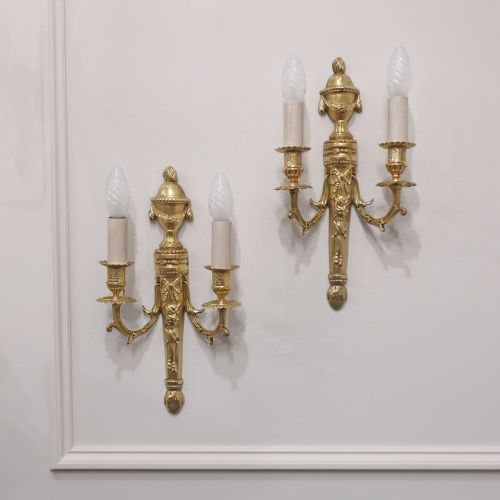
These antique bronze double sconces bring period illumination to a wall, formed in twin-arm and two-branch designs that collectors prize for symmetrical candlelight.
Antique Bronze Double Sconces
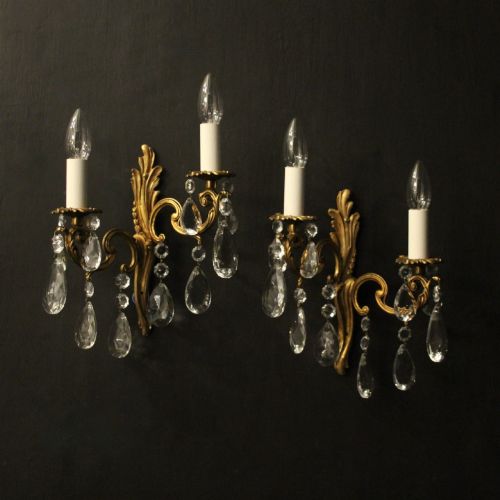
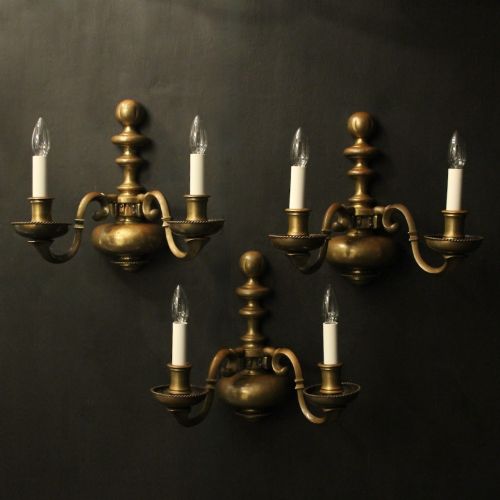
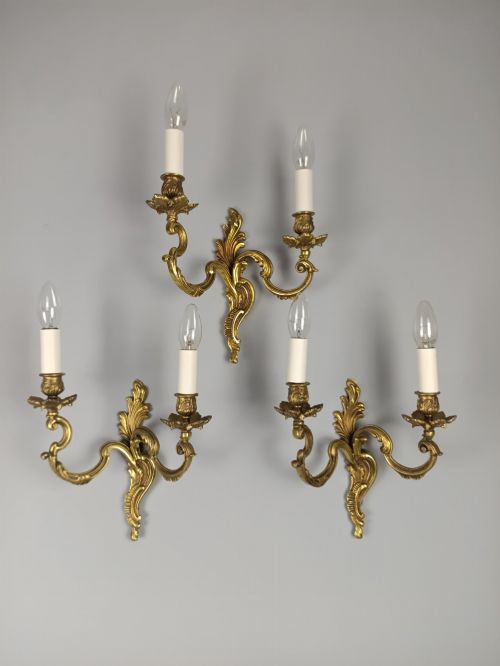
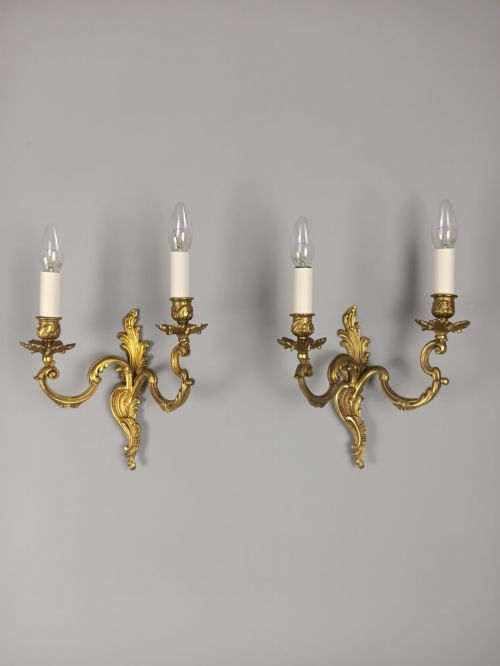
When you search for antique bronze double sconces, you encounter wall-mounted lighting fixtures designed to hold two candles or bulbs, predominantly originating from French workshops during the nineteenth and early twentieth centuries. The selection on this page consists largely of matched pairs and sets dating from the Victorian era up to the nineteen-thirties, spanning styles from French Rococo and Empire to Art Nouveau.
The most common formats on this page are twin-arm wall lights and two-branch sconces cast in bronze, brass, or gilt metal. These pieces frequently incorporate classical ribbon motifs, acanthus scrolls, and figurative elements, reflecting the interior decoration tastes of periods such as the Louis XV revival and the Edwardian era.
Materials and construction methods
The construction of these pieces relies heavily on bronze casting, brass fabrication, and metal gilding techniques. Makers utilised ormolu and gilded finishes to coat the base metal, creating a bright metallic sheen that reflected candlelight effectively in period drawing rooms.
Many items combine cast bronze frames with applied details such as crystal drops or hand-chiselled surface decorations. The arms are typically joined securely to a backplate designed to mount flat against a wall panel or plaster surface.
Several pairs feature sculpted ribbons tied in permanent bronze bows, keeping walls perpetually dressed for a party that ended a century ago.
Distinctions in quality
The distinction between ordinary production and superior craftsmanship lies in the crispness of the metal chasing and the depth of the original gilding. Finer examples display sharp, well-defined casting details in the foliage and scrollwork, whereas simpler pieces show softer, more generalised contours.
Weight and rigidity also separate the tiers of production. Heavier cast bronze or ormolu sconces maintain structural integrity across their arms over generations, while lighter brass and gilt metal alternatives can feel more fragile at the joints.
Casier
The Antique Bronze Double Sconces Glossary
- Ormolu
- A technique of applying finely ground high-carat gold to an object of bronze. This mercurial gilding method produces a rich golden lustre characteristic of French decorative arts.
- Sconce
- A wall-mounted lighting fixture designed to project illumination into a room. These fixtures historically held candles before being adapted for electricity.
- Rococo
- A decorative style characterised by asymmetrical ornamentation, curves, and plant scrolls. It appears frequently in nineteenth-century French bronze work.
- Empire
- A neoclassical design style inspired by the art of ancient Greece and Rome. Pieces in this manner often display military motifs, symmetry, and classical restraint.
- Twin arm
- A configuration featuring two distinct branching arms extending from a central backplate to hold separate light sources.
Antique Bronze Double Sconces: Frequently Asked Questions
How do I mount antique sconces?
These wall lights attach via backplates intended to be secured directly to wall studs or appropriate plaster anchors. Professional installation is recommended to support the weight of the metal.
Wiring considerations depend on whether the fixtures retain their original candle sockets or have been modernised for electrical use. A qualified electrician can integrate them safely into domestic circuits.
Were these originally for candles or electricity?
The earlier pieces in this selection were made exclusively for wax candles before gas and electric lighting became common. Many retain their original drip pans and socket cups.
Later twentieth-century examples and converted items accommodate electrical wiring while maintaining the twin-arm silhouette of traditional candle sconces.
How do I clean gilded bronze?
Dusting gently with a soft dry cloth preserves the fragile gilt surfaces on bronze and ormolu. Avoid harsh chemical cleaners that strip the metallic finish.
Moisture should be kept away from older metalwork to prevent corrosion and oxidation of the base brass or bronze beneath the surface coating.
How do I date a bronze wall light?
Dating relies on stylistic clues such as the symmetry of Empire design versus the asymmetrical curves of Rococo revival pieces. Manufacturing marks and construction screw types also offer chronological context.
Comparative study of period catalogues helps narrow down whether a piece originates from the nineteenth century or the nineteen-thirties.