
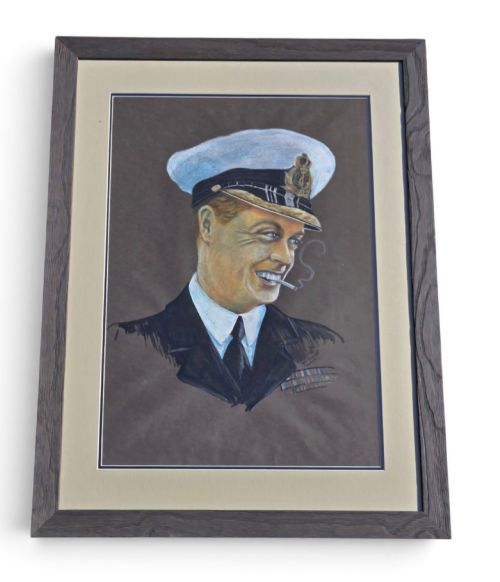


Antique British Naval Portrait
An antique british naval portrait captures the likeness of officers and midshipmen in oil or watercolour, bringing maritime history directly onto the wall.
Antique British Naval Portrait
When someone searches for an antique british naval portrait, they encounter depictions of admirals, captains, and lieutenants executed across several centuries. The selection ranges from large oil paintings on canvas to intimate enamel miniatures set in gold frames.
Works originate from the seventeenth century through to the mid-twentieth century, recording changes in uniform and artistic style from the Georgian and Victorian eras onwards. Midshipmen and high-ranking naval officers appear alike, rendered by named artists or anonymous hands associated with regional British schools.
Buyers most frequently meet nineteenth-century canvas paintings and watercolours on paper depicting decorated commanders. These vary from formal waist-length studies to detailed portrayals showing sitters holding swords or standing near shorelines.
Materials and Techniques
Artists painted primarily with oil or watercolour, applying pigment onto prepared canvas, paper, or agate panels. Miniature works required meticulous brushwork on specialised surfaces like enamel, often secured within protective glass and precious metal mountings.
Supports varied according to the period, with wooden panels and heavy canvases common in earlier centuries giving way to finer paper and standard canvas stretchers later on. Frames contributed substantially to the finished object, utilising carved wood, glass, and gold housings to preserve the artwork.
The available artworks encompass formats ranging from pocket-sized portrait miniatures in gold frames to large-scale canvas depictions of admirals.
Variations in Quality
The skill of the brushwork and the preservation of the original medium distinguish the finest examples from standard commercial portraiture. Untouched surfaces retaining their early pigments and original framing elements hold greater artistic and historical cohesion.
Henry Bone ARA·Sir Thomas Lawrence PRA·George Frederick Clarke·Henry L Gates·Samuel Lane·John Laviers Wheatley·Sir William Charles Ross·Robert Ker Porter·Ambrosini Jerome·Richard Hall·Richard Livesay
The Antique British Naval Portrait Glossary
- Oil on canvas
- Pigment bound in drying oil applied to a woven fabric support stretched over a wooden frame. This medium allowed artists to achieve rich colour depth and subtle tonal gradations.
- Portrait miniature
- A small, highly detailed painting executed on materials such as enamel, ivory, or agate. These intimate pieces were often designed to be worn or kept in protective folding cases.
- Watercolour painting
- Pigments suspended in a water-based, translucent solution applied to paper. It gained popularity for portable portraits and preparatory studies during the eighteenth and nineteenth centuries.
- Enamel miniature
- A painting created by fusing vitreous glass pastes onto a metal backing through high-temperature firing. This technique ensured the colours remained bright and resistant to fading over centuries.
Antique British Naval Portrait: Frequently Asked Questions
How do I date a naval portrait?
Dating relies primarily on the style of the naval uniform, the cut of the lapels, and the specific insignia worn by the officer. Comparing these details with documented dress regulations for the Royal Navy provides a reliable timeframe.
Secondary clues include the stretcher construction of canvas supports, framing styles, and any inscriptions or artist signatures recorded on the reverse or front of the piece.
What is the difference between a miniature and a full portrait?
Miniatures are small-scale paintings, frequently created on agate, enamel, or paper, designed for personal carriage or close viewing. They require microscopic precision and are often housed in gold or wooden pocket frames.
Full portraits executed in oil on canvas are scaled for display on interior walls, offering a commanding presence that emphasises the social rank and historical status of the sitter.
How should I hang and light these paintings?
Portraits executed on canvas or paper require stable indoor humidity away from direct sunlight to prevent the fading of watercolours and the cracking of aged oil paint. Indirect, low-heat illumination preserves the integrity of the pigments.
Heavy oil paintings need secure wall anchorings matched to the weight of the wooden frame, ensuring the structural safety of both the artwork and the wall.
How do I identify the subject of the portrait?
Identification often begins with contemporary inscriptions, labels on the frame, or biographical details documented by the artist. Naval historians cross-reference the medals, epaulettes, and rank stripes visible in the artwork against Admiralty records.
Unidentified sitters still offer significant historical interest through their depiction of period uniforms, even when personal records are lost to time.