


Antique British Militaria
These pieces of antique british militaria span centuries of service, offering collectors tangible connections to campaigns, regiments and the individuals who carried them.
Antique British Militaria
When searching for antique british militaria, you encounter a varied assortment spanning the eighteenth, nineteenth and twentieth centuries. The selection ranges from edged weapons and firearms to medals, headwear and scientific instruments.
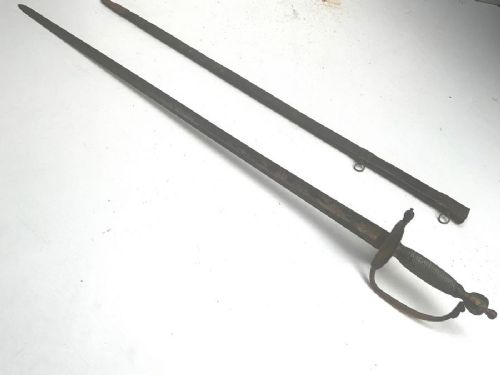
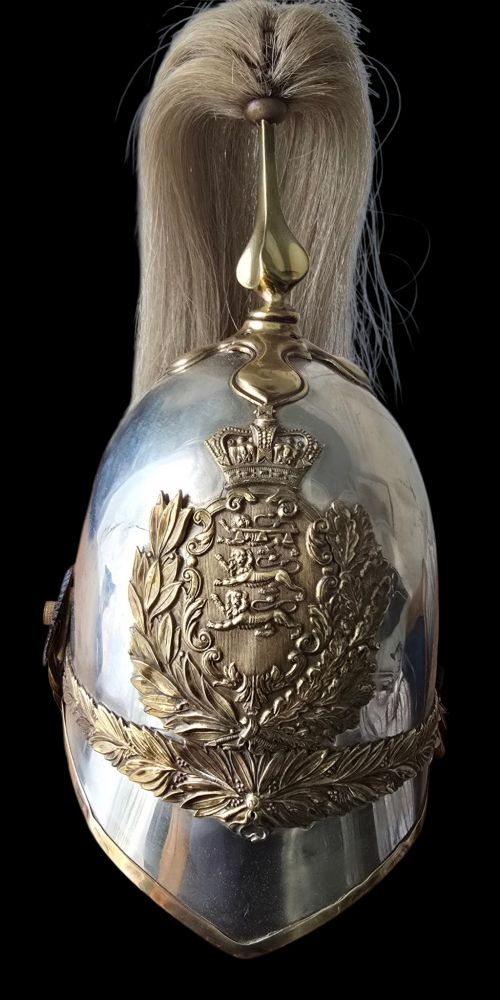
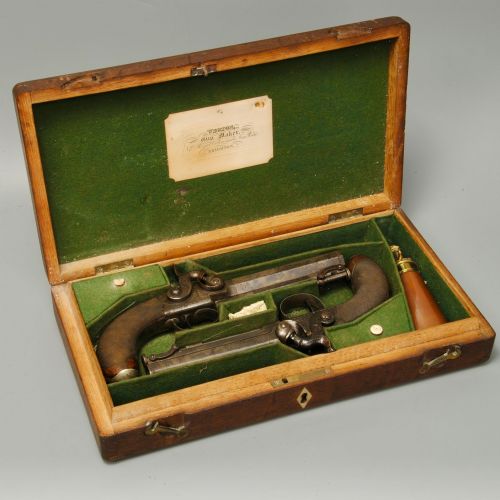
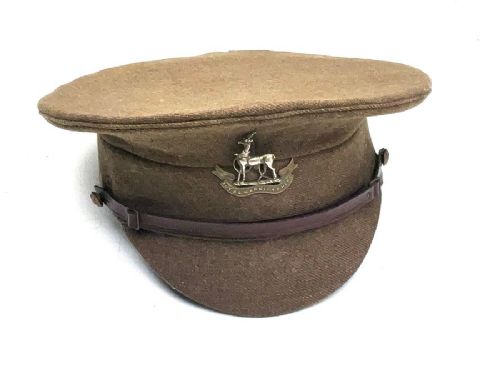
You are most likely to meet nineteenth-century items, alongside examples from the Georgian and First World War eras. These artefacts record the operational history of British forces through helmets, caps, sabres and percussion pistols.
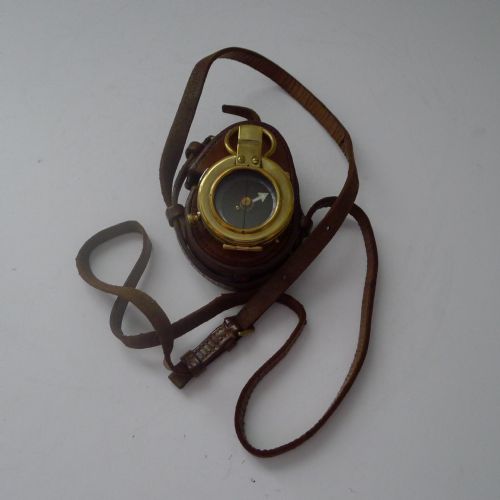
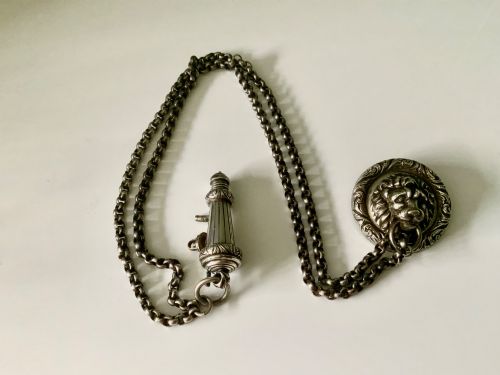
The material record includes personal equipment like whistles and compasses, alongside commemorative watercolours and framed embroideries. Each object reflects the specific manufacturing standards and demands of its period of active service.
Materials and construction
Makers utilised robust combinations of brass, steel and iron for firearms, swords and helmets, ensuring durability in the field. Wood components such as walnut appeared on pistol grips and stocks, shaped to fit the hand.
Textiles and organic materials played a significant role, with leather, silk and horsehair utilised in caps, scabbards and plumes. Decorative elements frequently featured gilt or silver plating applied to metalwork.
Precision instruments incorporated glass lenses and delicate dials, while personal gear like powder flasks relied on heavy copper construction. Craftsmanship balanced utilitarian strength with regimental ornamentation.
The listings span the eighteenth to the twentieth centuries, featuring walnut, silk, silver, iron and brass across edged weapons, medals and instruments.
Distinctions in quality
The upper tier of the range is defined by makers' signatures, official proof marks and documented regimental provenance. Pieces bearing the stamp of notable gunsmiths or outfitters command greater attention than unsigned ordnance.
Quality reveals itself in the crispness of engravings, the original patination of brass and steel, and the survival of matching components like scabbards and cap boxes. Alterations or replacements diminish historical integrity.
Condition and completeness separate standard issue gear from superior officer-private purchase items. The survival of fragile textiles, original horsehair plumes or complete medal sets elevates the significance of an artefact.
French Ltd·Henry Nock·Deane Adams And Deane·Hawkes And Co·Potter
The Antique British Militaria Glossary
- Spadroon
- A lightweight, straight-bladed edged weapon favoured by officers in the eighteenth and nineteenth centuries. It was designed for both cutting and thrusting.
- Percussion
- A firearms ignition system developed in the nineteenth century that used a small percussion cap struck by a hammer to ignite the powder charge. This replaced earlier flintlock mechanisms.
- Bicorn
- A historical hat folded at the sides, worn by officers during the nineteenth century. It is often referred to as a cocked hat.
- Bayonet
- A blade designed to fit onto the muzzle end of a rifle for close combat. Nineteenth-century examples often featured socket or sword designs.
- Provenance
- The documented history of ownership and origin that authenticates an artefact. For military items, it links the piece to specific regiments or campaigns.
Antique British Militaria: Frequently Asked Questions
How do I identify military pistol periods?
Examine the ignition mechanism, as flintlocks generally precede percussion cap systems found in later nineteenth-century pieces. Maker signatures and London proof marks provide further chronological markers.
Compare barrel construction and bore sizes against standard military patterns of the eighteenth and nineteenth centuries. Regimental markings often confirm the exact era of active service.
Were these swords used in battle?
Many edged weapons served as regulation sidearms for officers and cavalry troopers during major campaigns. Service wear and proper balance indicate active military use.
Inspection of scabbards and blades reveals whether a weapon saw field conditions or remained purely ceremonial. Officer pieces were typically privately purchased for active campaigns.
How should I display militaria safely?
Keep metal objects in stable humidity conditions to prevent active rust on steel and brass components. Support heavy items like helmets and sabres securely to avoid stress on leather and textiles.
Avoid direct sunlight on framed embroideries, watercolours and silk flags to prevent fading. Display cases protect delicate headwear and medals from dust and handling.