
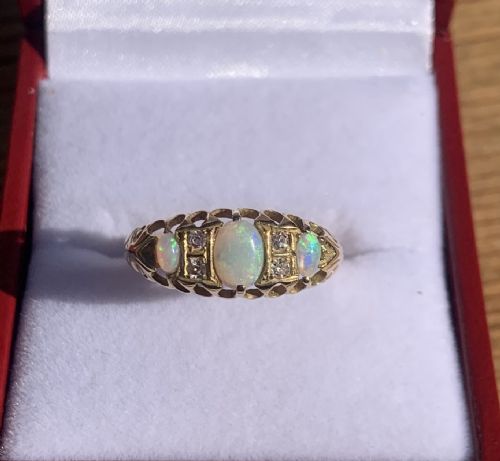


Antique Bridge Ring
These antique bridge ring examples bring together gem-set stones and precious metals in historic forms that collectors seek.
Antique Bridge Ring
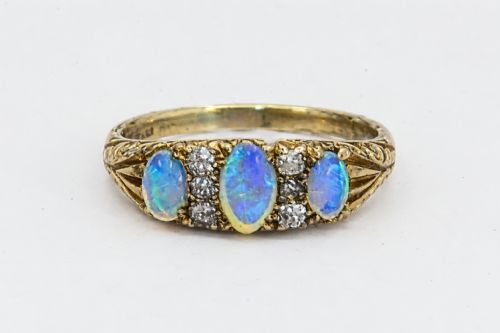
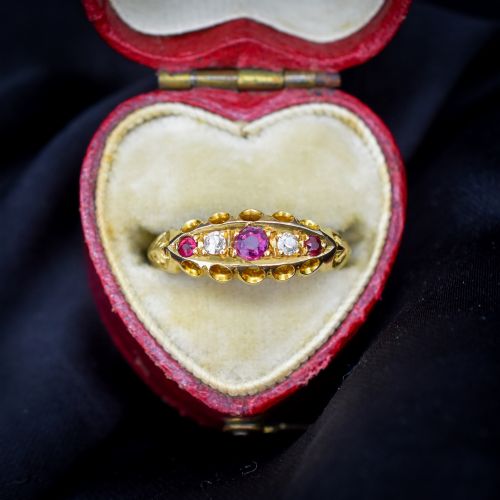
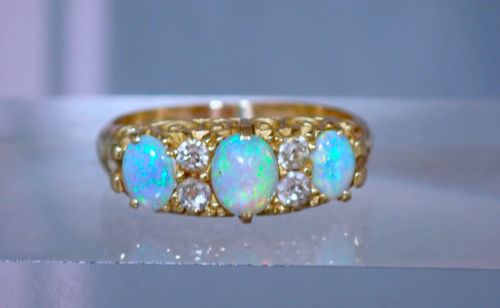
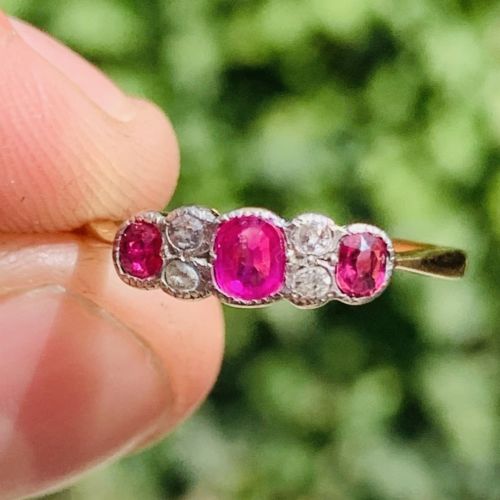
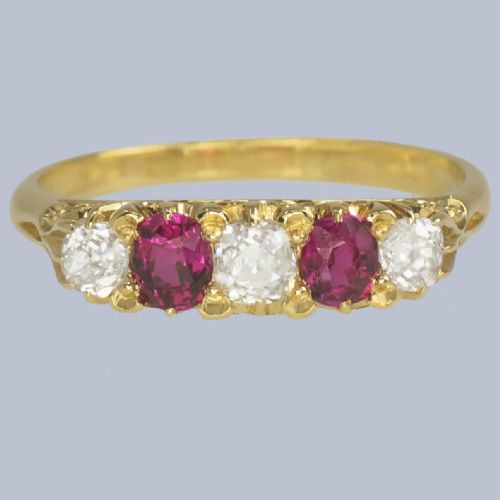
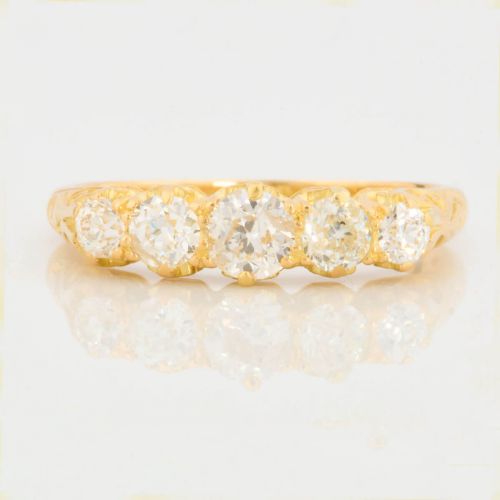
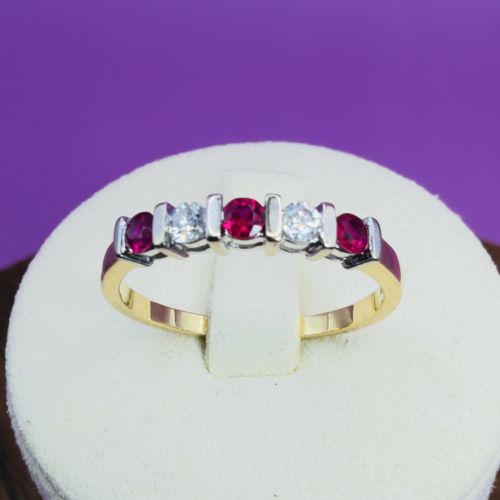
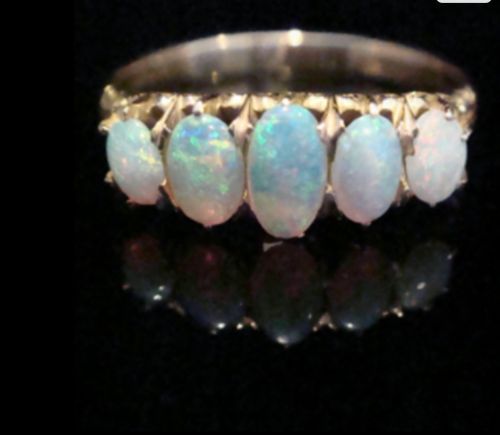
An antique bridge ring typically presents stones arranged linearly or in multi-tiered settings across the finger, echoing historical jewellery design from the Victorian, Edwardian, and Art Deco periods. Buyers search for these pieces to secure genuine examples featuring old cut diamonds, natural opals, rubies, sapphires, and turquoise set in yellow gold or platinum.
The inventory on this page centres on rings created across distinct eras, spanning late Victorian designs, Edwardian creations, and 1930s work. These rings frequently take the form of boat rings, five-stone configurations, and trilogy layouts.
Makers and goldsmiths utilised higher purity gold alloys such as 15ct and 18ct yellow gold, alongside platinum mounts, creating durable mountings for precious gems. The pieces range from straightforward gem clusters to complex boat and bateau shapes designed to sit flat upon the hand.
How they were made
Goldsmiths constructed these rings primarily using 18ct yellow gold, 15ct yellow gold, and platinum, hammering and casting metal to house the stones securely. Setting styles relied on precise claw and bezel arrangements to hold old cut diamonds, rubies, sapphires, and opals.
The integration of platinum with yellow gold became prominent in later Victorian and Edwardian iterations, offering a bright white metal surface that enhanced the appearance of diamonds. Artisans shaped the gold into boat, bateau, and five-stone settings by hand, demonstrating period craftsmanship.
Early archive records show wooden Tunbridge Ware string boxes appearing under this search term.
What varies in quality
Quality in these rings rests upon the selection and condition of the central gems, such as natural opals displaying strong play-of-colour, untreated rubies, and well-matched old mine cut diamonds. The integrity of the gold or platinum shank and the crispness of the original setting work also define the superior tiers.
Pieces that retain clear hallmarks, minimal metal thinning on the band, and securely seated stones represent the higher end of the range. Variations in hand-finishing and the symmetry of the boat or five-stone layout distinguish exceptional examples from standard production.
The Antique Bridge Ring Glossary
- Boat ring
- A ring setting shaped like the hull of a boat, curving upwards across the finger to hold a row of graduating stones.
- Old cut diamond
- A diamond cut by hand in the nineteenth or early twentieth century, characterised by a small table, high crown, and large culet.
- Trilogy ring
- A ring featuring three principal stones set side by side, often representing the past, present, and future.
- Bateau ring
- A French term for a boat-shaped setting, functioning similarly to traditional English boat ring designs.
- Five stone ring
- A linear arrangement of five graduated gemstones stretching across the top of the band.
Antique Bridge Ring: Frequently Asked Questions
What is an antique bridge ring?
An antique bridge ring refers to a piece of historic jewellery featuring gems mounted in distinctive linear, multi-tiered, or boat-shaped settings across the finger.
These designs emerged predominantly during the Victorian, Edwardian, and Art Deco eras, utilising yellow gold and platinum.
How do I care for my ring?
Care requires gentle cleaning with warm soapy water and a soft brush, avoiding harsh chemical dips that can damage softer gems like opal.
Storing the ring separately prevents scratching against other metal jewellery in your collection.
How do I date an antique ring?
Dating relies on examining the gold purity marks, assay office stamps, style of setting, and the cut of the diamonds or coloured gemstones.
Victorian pieces often display higher carat yellow gold and old mine cut stones, while Edwardian versions frequently introduce platinum mountings.
Can these rings be resized?
Most gold and platinum rings from these periods can be altered by a skilled jeweller who understands historic mountings.
Resizing requires care to preserve any hallmarks stamped on the interior of the shank.
What stones are common?
Diamonds, rubies, sapphires, and opals appear frequently in these listings, often combined in multi-stone arrangements.
Turquoise and other coloured gems also feature in Victorian and Edwardian examples.