





Antique Brass Thermometer
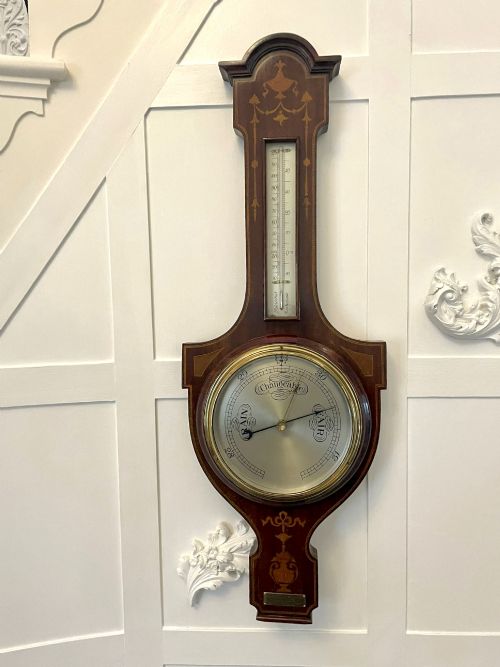
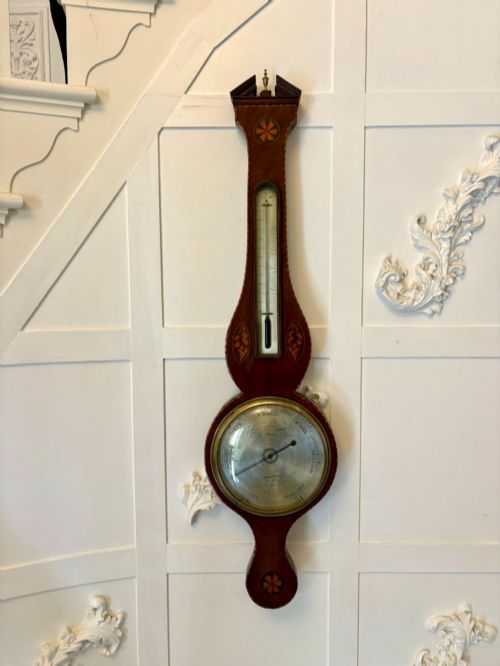
An antique brass thermometer measures temperature through precision mercury or spirit tubes set into metal mounts, bringing dependable Victorian and Georgian science into a room.
Antique Brass Thermometer
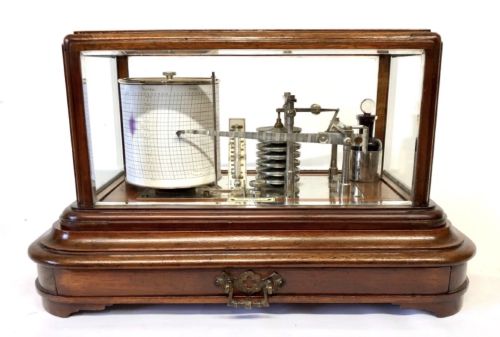
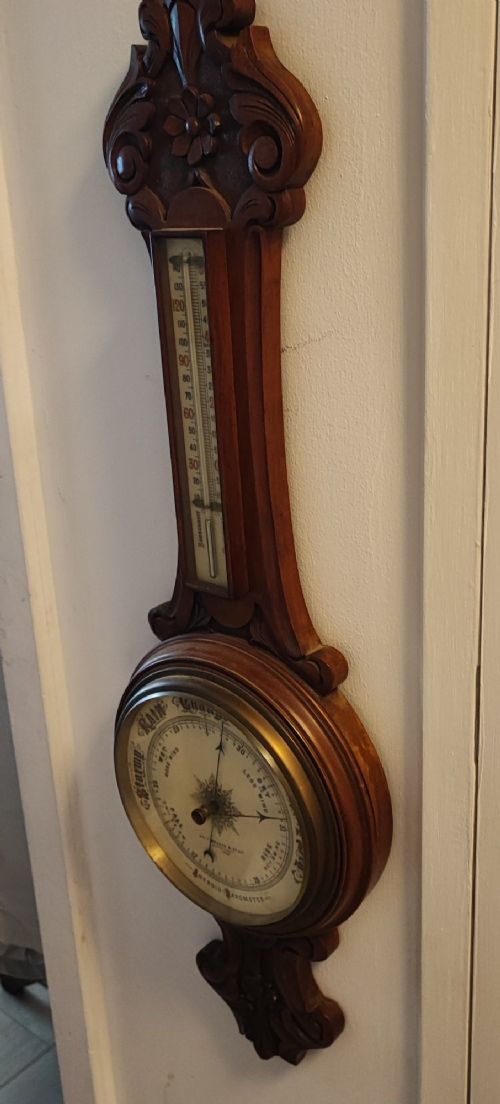
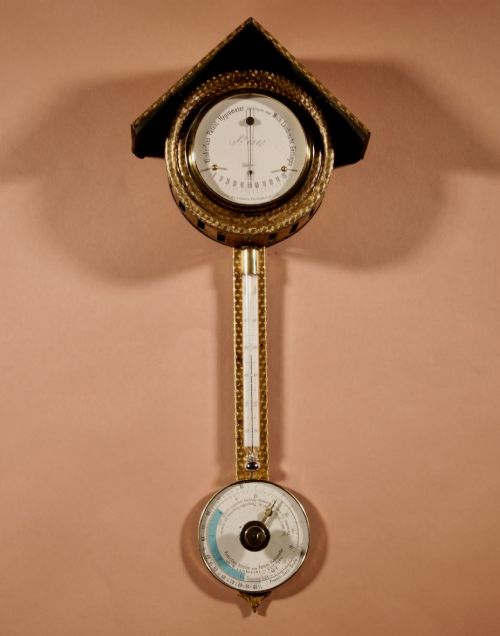
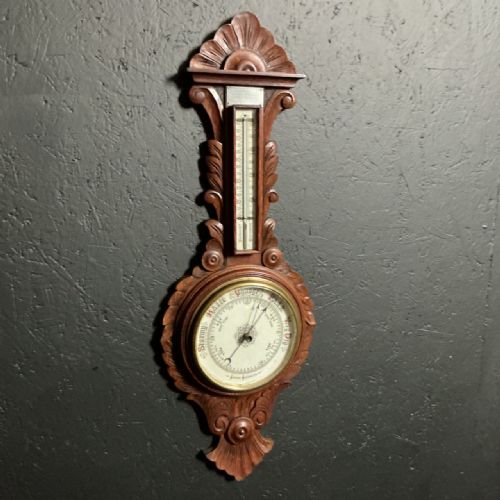
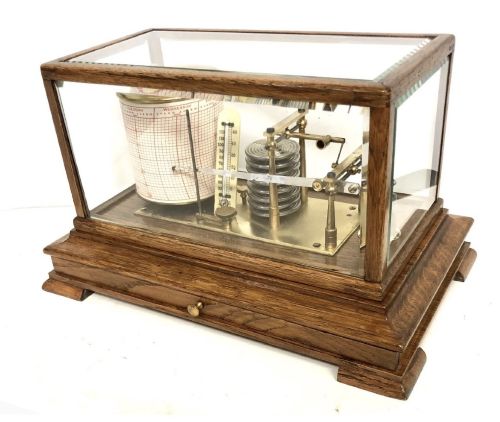
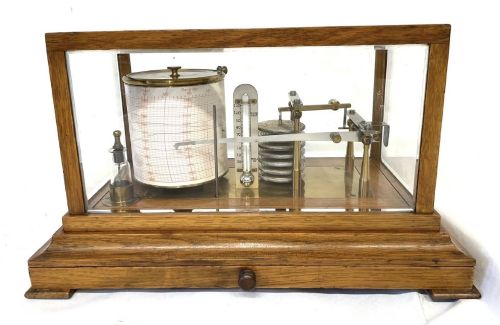
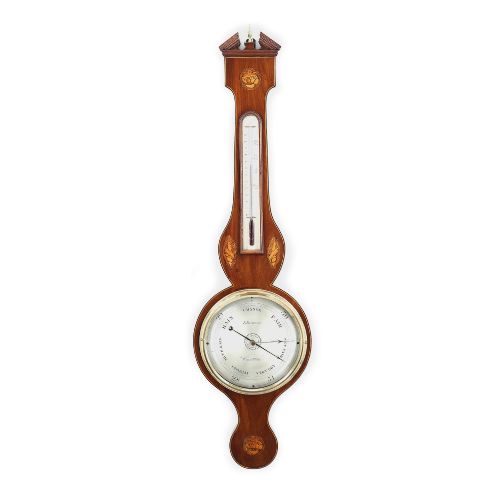
An antique brass thermometer forms part of a wider group of domestic weather instruments and desk devices found across the nineteenth century. These items range from simple desk thermometers mounted on serpentine stone or wood bases to complex barographs and wheel barometers incorporating temperature scales.
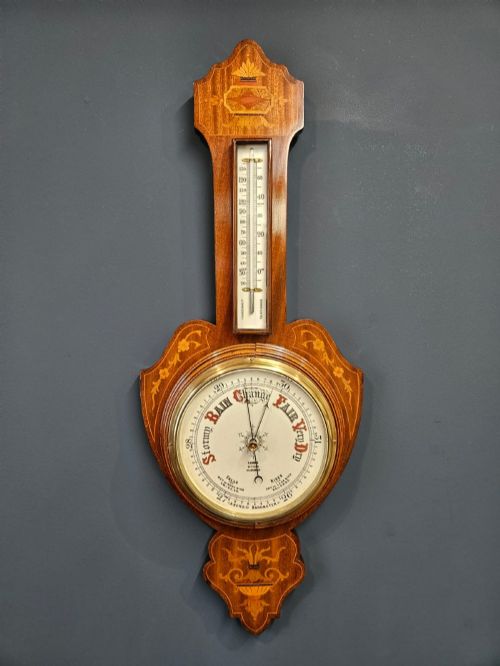
The most common examples encountered here date from the Victorian period, often featuring brass register plates mounted on mahogany, oak, or rosewood backboards. Many integrate directly into banjo barometers or desk compendiums made by notable scientific instrument makers.
Materials and construction methods
Brass serves as the primary metal for engraved scales, bezels, and thermometer plates, frequently paired with dense cabinet timbers such as mahogany, rosewood, and oak. Glass protects the delicate thermometer tubes and barometer dials, while bevelled edges and inlaid boxwood or shell motifs add decorative refinement.
Maker details and graduations appear via precise hand-engraving or acid-etching directly onto the brass plates. Enamel dials and steel indicators supplement the metalwork, ensuring clear readings across varying atmospheric conditions.
Antique Brass Thermometer Retail Price Guide 2026
Typical asking prices for brass thermometer among the pieces listed under this phrase on Sellingantiques today, from the lower quarter to the upper quarter. They describe what is for sale here now, not the wider market.
Some Victorian hot bed thermometers were built specifically to check the warmth of fermenting manure in estate greenhouses.
Assessing quality and craftsmanship
The distinction between standard domestic pieces and superior examples rests in the crispness of the brass engraving and the quality of the timber housing. Fine instruments exhibit deeply carved wooden cases, substantial cast brass bezels, and clearly legible graduated scales signed by reputable makers.
Completeness dictates lasting merit, particularly the presence of original bevelled glass, intact mercury columns, and matching hygrometer or barometer dials. Simpler mass-produced items lack the hand-finished precision and architectural detailing seen on professional scientific apparatus.
Negretti and Zambra·Short and Mason·Patrick Adie·James H Kelly·M Pillischer·Dollond London
The Antique Brass Thermometer Glossary
- Aneroid barometer
- A device measuring atmospheric pressure without liquid, using a flexible metal box that expands or contracts with pressure changes.
- Barograph
- A self-recording meteorological instrument that plots barometric pressure over time onto a rotating paper chart.
- Compendium
- A multi-functional desk set combining several instruments such as a clock, barometer, and thermometer within one housing.
- Hygrometer
- An instrument used to measure the humidity or moisture content of the air.
- Register plate
- The engraved metal faceplate bearing the numerical scales and graduations for temperature or pressure.
Antique Brass Thermometer: Frequently Asked Questions
How do I read an antique thermometer?
Read the temperature by aligning the top of the mercury or spirit column with the engraved brass scale markings alongside the tube.
Take note whether the scale uses Fahrenheit or Centigrade divisions, as nineteenth-century British instruments commonly rely on the former.
Where were these instruments placed?
Domestic thermometers and barometers hung in hallways, libraries, or drawing rooms where household temperature could be monitored.
Larger wheel barometers mounted to wooden backboards were designed to stay fixed to prominent wall spaces.
How should I clean the brass?
Dust the brass components gently with a dry, soft cloth to remove surface particles without disturbing the aged patina.
Avoid abrasive chemical polishes that strip away the original historical finish from the engraved plates.
Can these instruments still function?
Many mercury thermometers and aneroid barometers remain operational if the internal glass tubes and linkages stay intact.
Temperature scales usually stay accurate, though barometric movements occasionally require professional calibration by a specialist.