

Antique Brass Taper Stands
These antique brass taper stands are small, historic lighting pieces designed to hold narrow wax lights, offering both utility and character.
Antique Brass Taper Stands
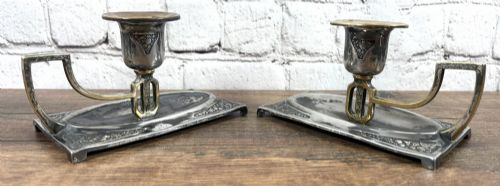
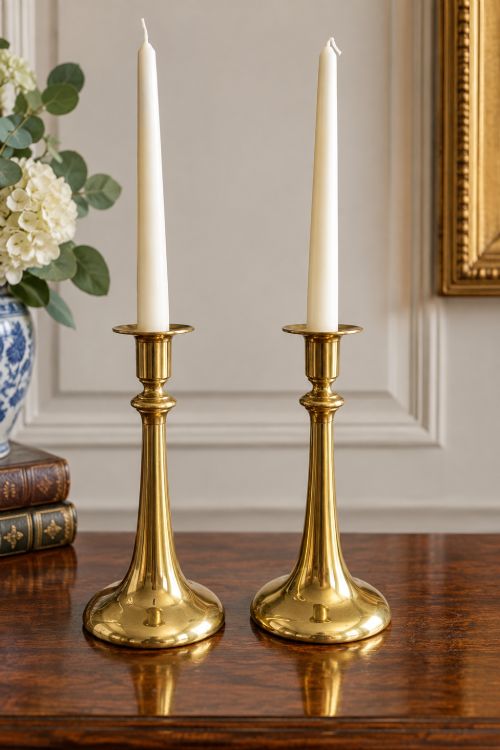
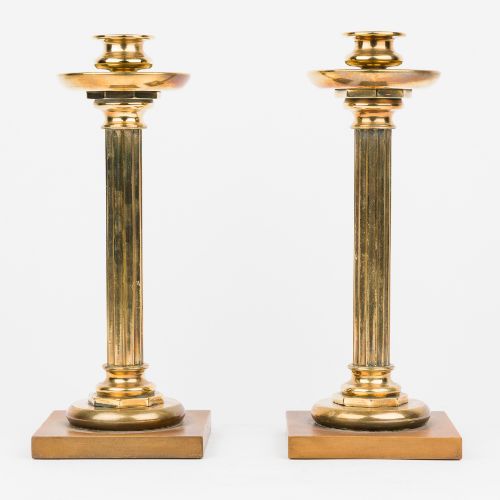
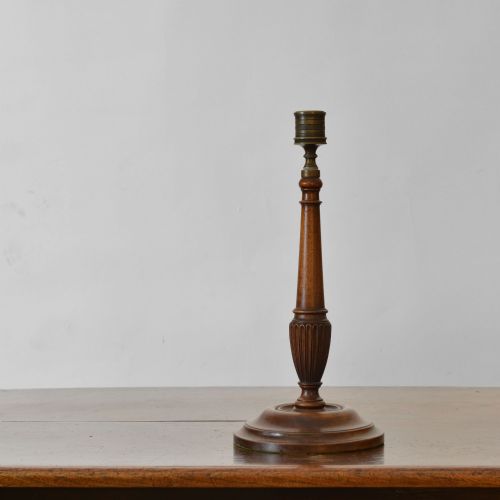
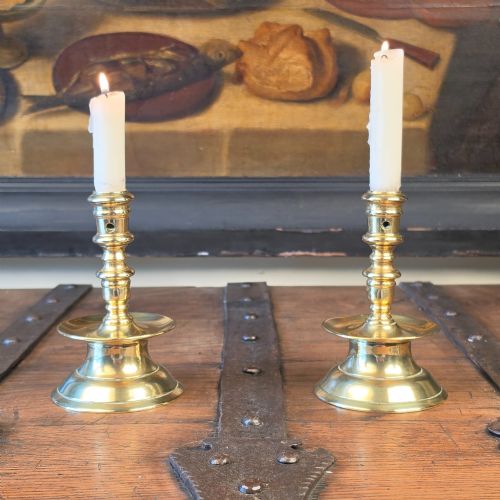
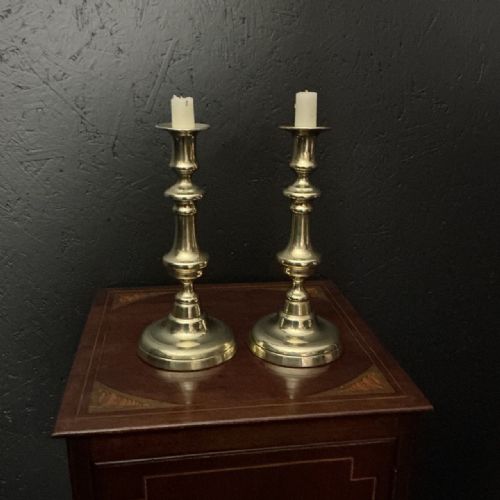
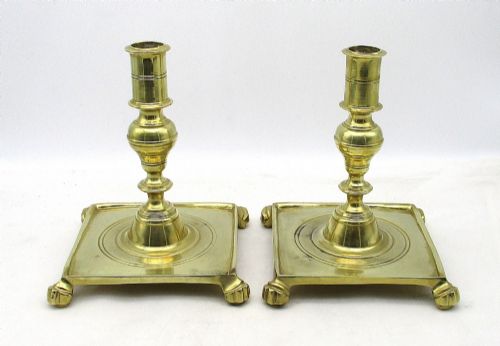
Antique brass taper stands appear primarily as candlesticks spanning the Georgian, Victorian and Edwardian eras, alongside related domestic lighting accessories. Buyers searching this phrase encounter examples stretching from the eighteenth century into the early twentieth century, showing diverse regional origins.
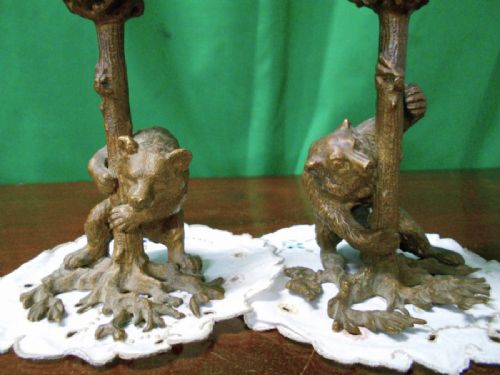
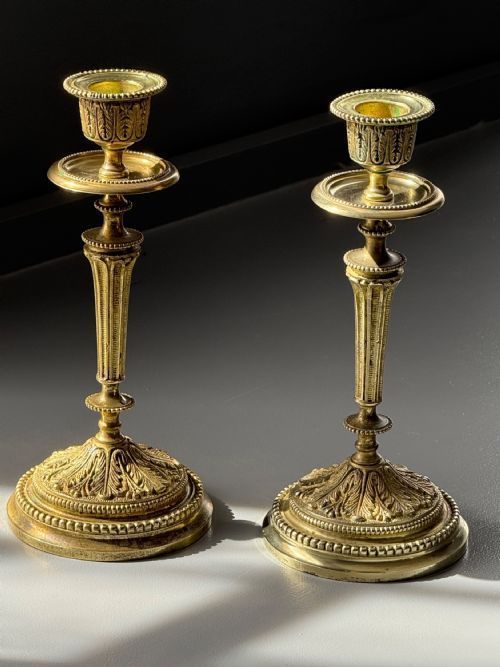
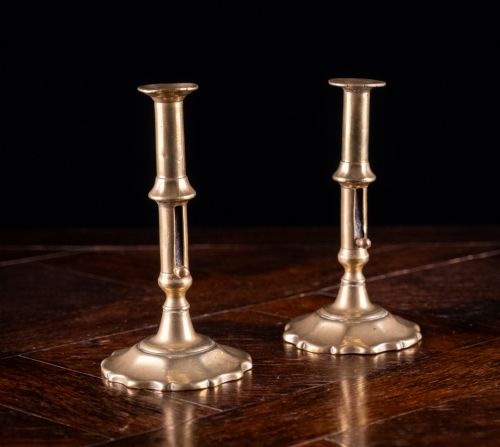
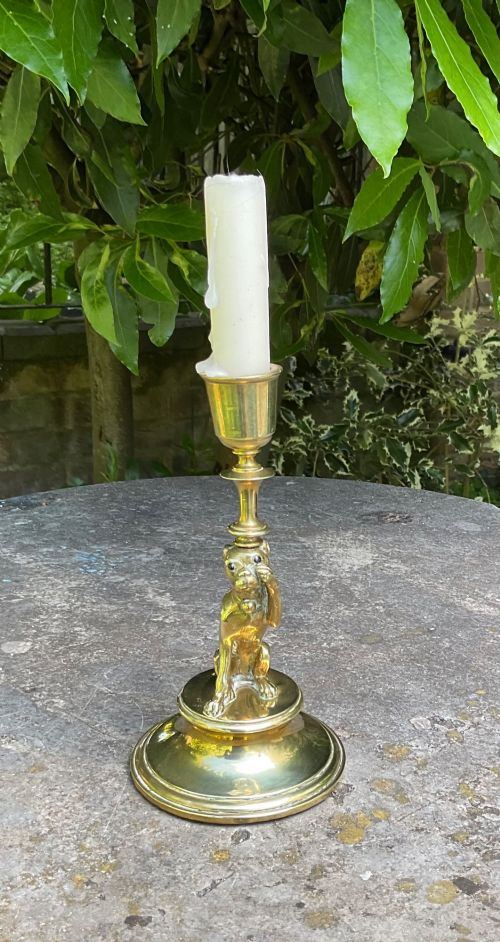
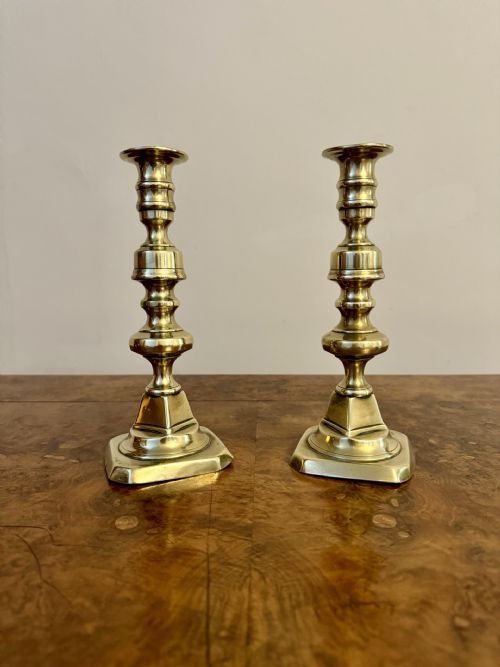
The selection includes matched pairs and individual holders, ranging from simple domestic designs to ornate church pieces and figural motifs such as bears and pug dogs. Forms shift from early petal bases and seamed brass construction to later stylistic revivals including Art Nouveau and Art Deco.
Materials and construction
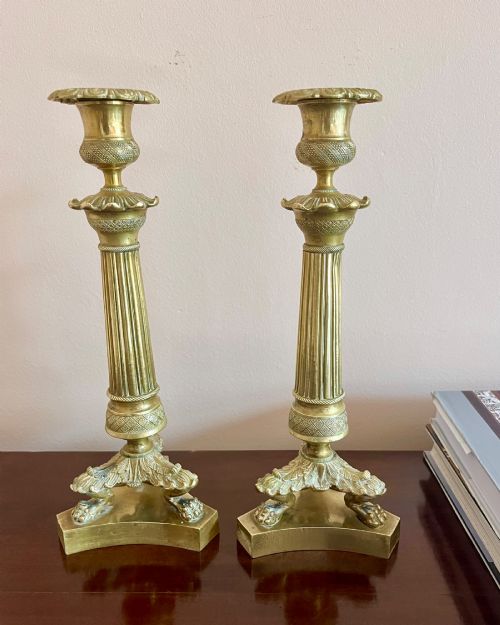
Makers utilised cast brass, seamed brass and bronze, often incorporating secondary materials like mahogany, boxwood, oak and porcelain into related stands and furniture details. Gilt bronze and ormolu appear on high-status decorative examples.
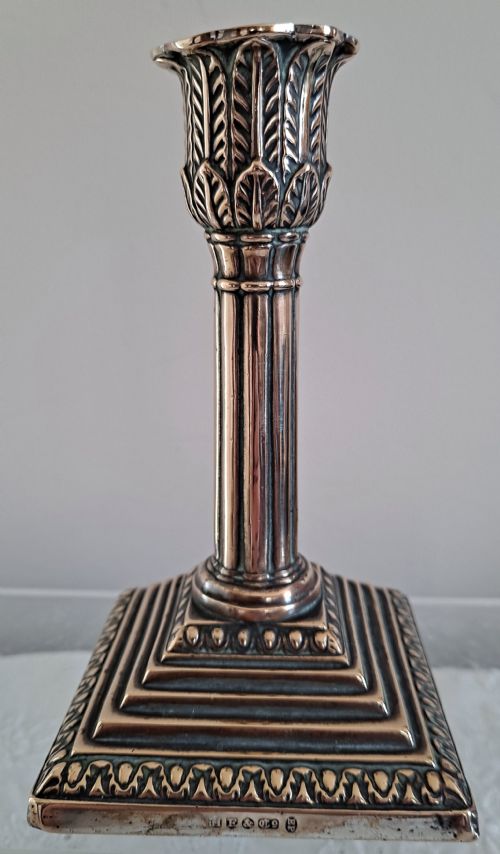
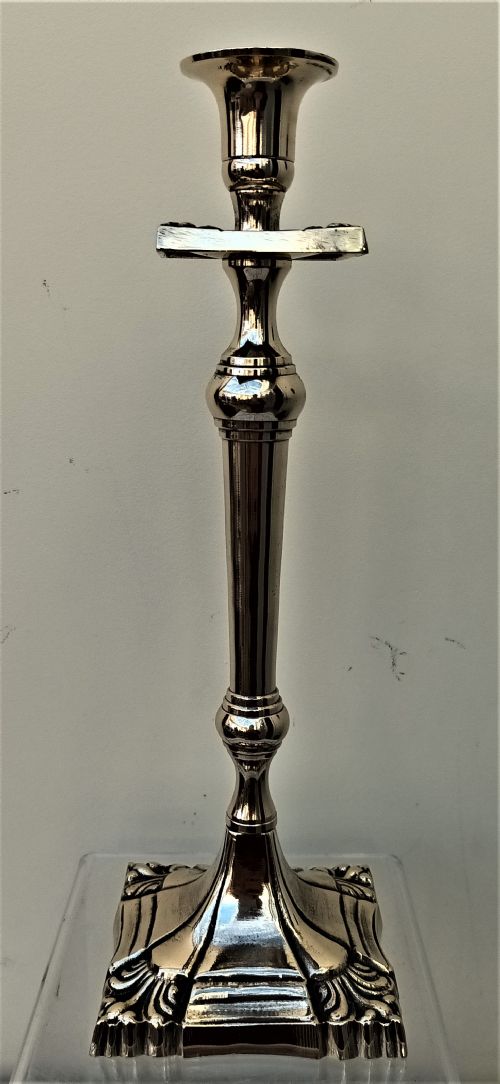
Construction techniques evolved from early seamed methods to sophisticated casting and turning processes, yielding twisted stems, column forms and scalloped bases that reflect the period of manufacture.
Several Victorian designs abandon traditional stems entirely to feature sculpted pug dogs and bears holding the candle sockets.
Distinctions in standard
Quality rests in the crispness of the casting, the weight of the metal and the integrity of the joins. Superior pieces retain clear surface texture and proportion without heavy modification or loss of original components.
The skill of the maker dictates the refinement of the turned stems and the balance of the base, separating standard domestic production from finer workshops.
J.T. & Co·Frederick J Smith & Co
The Antique Brass Taper Stands Glossary
- Taper stand
- A small candlestick designed specifically for a thin wax taper used to melt sealing wax or light larger lamps.
- Seamed brass
- Metal rolled and joined at a vertical seam, typical of earlier manufacturing methods before advanced mass casting.
- Petal base
- A foot design moulded into overlapping lobes resembling flower petals, common on eighteenth-century candlesticks.
- Ormolu
- Gilt bronze ornamentation applied to decorative objects, offering a bright golden finish.
- Ejector candlestick
- A domestic holder fitted with an internal mechanism to push out the remaining wax stub.
Antique Brass Taper Stands: Frequently Asked Questions
What is an antique brass taper stand?
It is a compact candlestick intended for burning narrow tapers rather than thick household candles. These pieces provided focused illumination for desks, letters and sealing wax.
They combine practical function with the decorative metalwork of their respective centuries.
How do I date a brass candlestick?
Dating relies on manufacturing techniques, base shapes and stylistic markers such as Georgian proportions or Edwardian motifs. Seamed construction often points to earlier production.
Comparing the weight, casting method and patina helps place an object within its correct period.
Were these stands used for lighting rooms?
They were generally used for close tasks or carrying light between rooms rather than illuminating large spaces. Their small size made them portable and convenient for desks or bedside tables.
Households utilised them where precise, localized flame was required.
How should I clean antique brass?
Gentle dusting with a soft cloth preserves the historic surface and natural patina accumulated over centuries. Harsh chemical polishes strip away age and diminish the character of the metal.
Maintaining the original finish preserves both the appearance and historical integrity of the piece.