
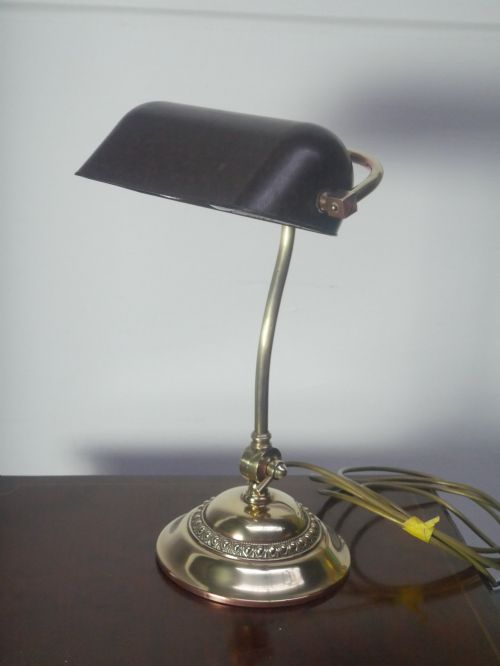


Antique Brass Study Light
An antique brass study light brings focused illumination and period character to a desk, drawing on decades of functional design.
Antique Brass Study Light
An antique brass study light encompasses functional desk lamps, reading lamps, and student lamps designed for practical task illumination. The examples found here span the Victorian, Edwardian, and Art Deco periods, showcasing designs from the nineteenth and early twentieth centuries.
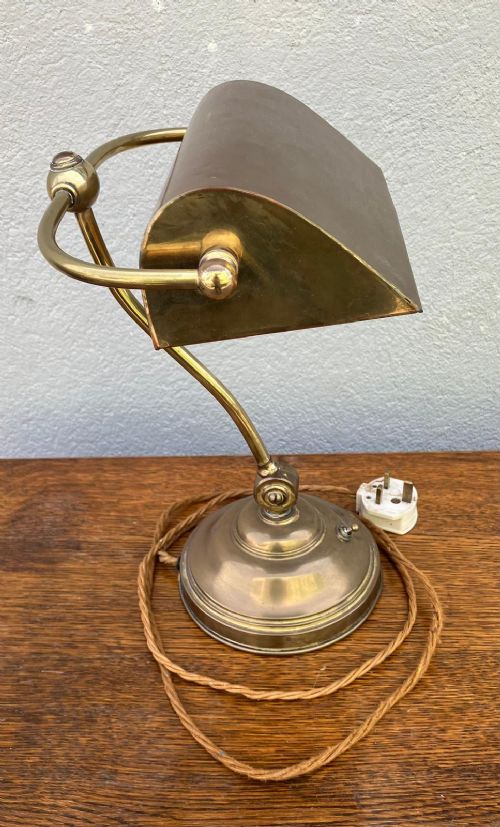
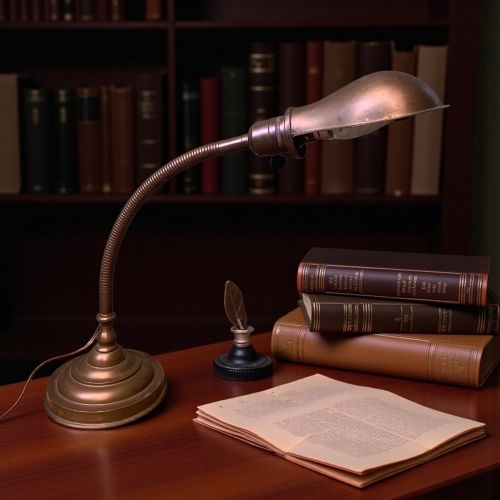
Buyers will most frequently encounter adjustable brass desk lamps and banker style lamps originating from the 1920s and the Edwardian era. These pieces often feature articulated arms, swan neck profiles, or heavy weighted bases intended for steady placement on a writing surface.
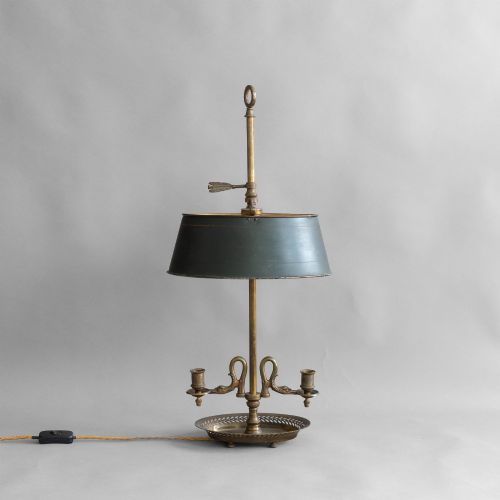
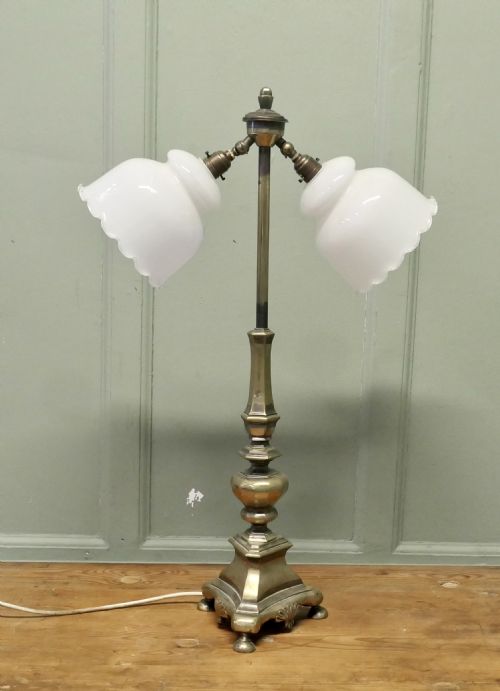
Forms range from traditional oil lamps converted for electric use to specialised reading lamps in bronze, copper, and gilt metal. Alongside standard brass construction, variants incorporate toleware shades, glass elements, and porcelain components.
Materials and construction
Makers shaped these study lights primarily from brass, bronze, and copper, often utilising heavy metal casting for stability at the base. Components were frequently turned, spun, or joined with articulated joints to allow adjustable positioning of the light source.
Shades and decorative details incorporate glass, etched glass, crystal, and painted toleware, paired with fitted metal elements and period wiring such as fabric flex. Surface finishes vary from polished metal to patinated bronze and gilt applications.
Keep an eye out for ship gimbal lights, designed to stay level when a desk decided to roll away at sea.
Factors of quality
The standard of an antique study light rests on the heaviness and integrity of its metal casting, particularly in the weighted bases and articulating arms. Superior examples demonstrate smooth adjustment mechanisms that hold their position securely without slack.
Subtlety in detailing separates standard production from finer pieces, visible in the quality of the brass work, the finish of applied patination, and the originality of shades made from glass or painted tole.
Wild and Wessel
The Antique Brass Study Light Glossary
- Articulated
- Fitted with joints that allow the arm or shade to be adjusted into different positions. This mechanical feature provides targeted light for reading or writing.
- Toleware
- Enamelled or painted sheet metal used to form decorative lamp shades. It frequently appears in traditional green or dark finishes on desk lamps.
- Swan neck
- A curved tubular metal arm resembling the neck of a swan, commonly found on Edwardian desk lamps. This form raises the light source above the workspace.
- Gimbal
- A pivoted ring mounting that allows a lamp to remain level regardless of movement. It appears on marine lighting designed for ships.
- Bouillotte
- A traditional French table lamp featuring an adjustable shade on a central upright column. These pieces often combine bronze and tole materials.
Antique Brass Study Light: Frequently Asked Questions
How do I date a brass desk lamp?
Dating relies on stylistic markers such as the heavy stepped bases of the 1920s or the softer, organic curves of Edwardian and Art Nouveau pieces. Manufacturing techniques like cast construction versus pressed sheet metal also indicate specific periods.
Hardware details, switch types, and original fabric flex wiring help narrow the decade of production when makers marks are absent.
Are these lamps safe for daily use?
Many antique lamps require rewiring with modern cable to meet current electrical safety standards before regular use in a study or office. Professional rewiring ensures the brass framework is properly earthed.
Retaining original components like lamp holders and switches is often possible while updating the internal wiring for modern bulbs.
How do I care for antique brass?
Maintaining brass surfaces requires gentle dusting with a soft, dry cloth to prevent the accumulation of dirt in intricate joints and castings. Avoid abrasive metal cleaners that strip away the aged patina built up over decades.
Preserving the natural surface coloration maintains the historical character and visual depth of the metal.